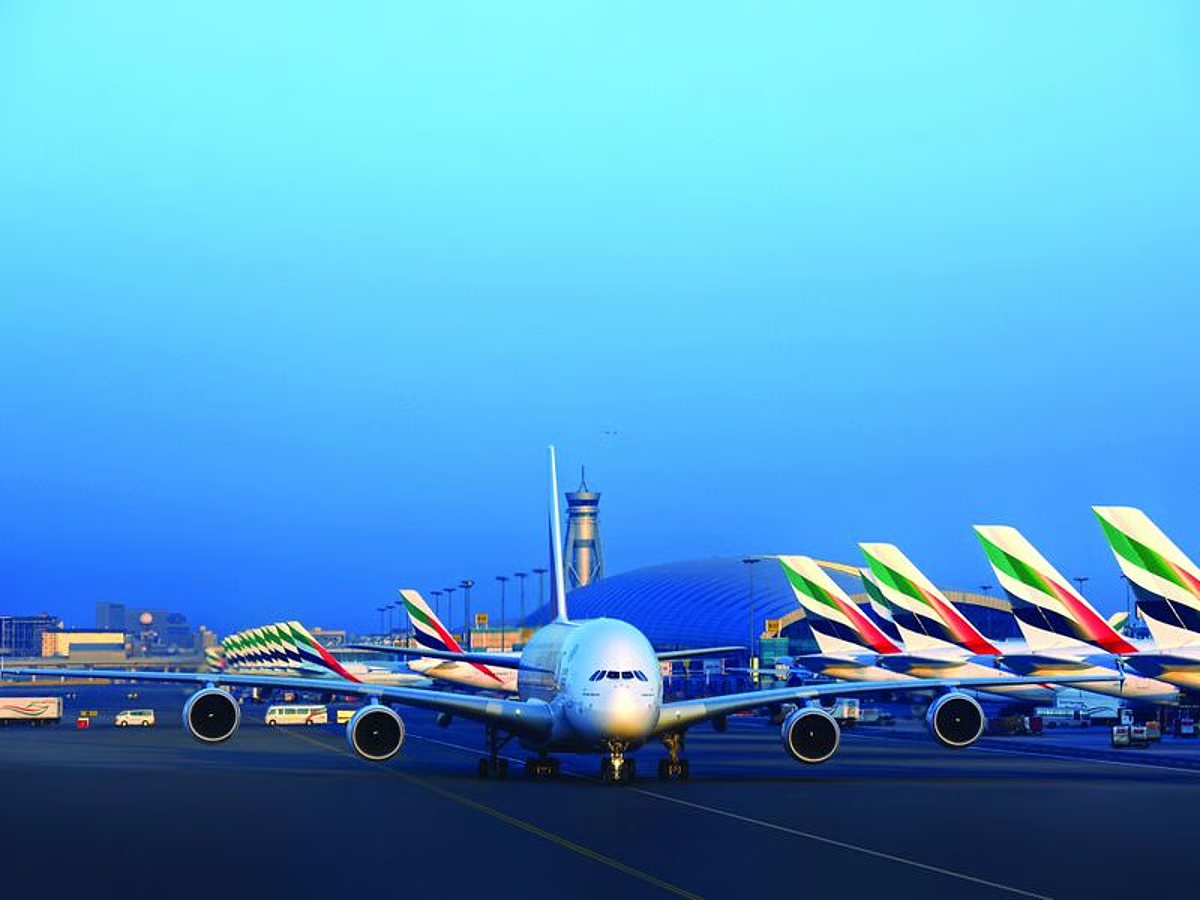

A major winter storm sweeping across the United States has caused significant disruptions to air travel, including several flight delays and cancellations impacting both domestic and international carriers. Emirates announced early departures for some flights from New York’s JFK airport on December 26th, alongside cancellations affecting services through Athens and Newark, as airlines grapple with hazardous conditions and passenger safety concerns. The situation is evolving rapidly, and travelers are strongly advised to stay informed.
Widespread Flight Disruptions Due to Severe Weather
The Emirates adjustments are part of a larger pattern of travel chaos across the US. As of Friday evening, FlightAware reported over 1,600 flights cancelled and more than 7,400 delayed nationwide, impacting millions of holiday travelers. The storm, affecting a vast area, has prompted winter storm warnings and advisories for over 40 million Americans, just days after the Christmas holiday.
Emirates Specific Impacts
Emirates proactively adjusted some flight schedules to mitigate the impact of the storm. EK202, originally scheduled to depart JFK at 11 PM local time, left at 6 PM, arriving in Dubai at 3:25 PM on December 27th. Similarly, EK206, with a connection through Milan, departed JFK at 7:30 PM instead of 10:20 PM.
However, the airline was forced to cancel portions of flights EK209 and EK210, both involving connections through Athens. The Dubai-Athens leg of EK209 operated as planned, but the subsequent Athens-Newark segment was cancelled. Conversely, the Newark-Athens portion of EK210 was cancelled, while the Athens-Dubai flight continued as scheduled. Passengers affected by these cancellations are being directed to their travel agencies or Emirates directly for rebooking assistance.
National Travel Picture
The Northeast is bearing the brunt of the storm. Airports in New York, Boston, and Chicago are experiencing substantial delays and cancellations. New York’s JFK, Newark, and LaGuardia airports are particularly affected, collectively accounting for approximately 850 cancelled flights. This level of disruption is straining airport resources and impacting connecting flights across the country.
Several major US airlines have responded by cancelling hundreds of their own services. Delta Air Lines cancelled 241 flights, while JetBlue Airways cancelled 229. Republic Airways and Southwest Airlines also reported significant cancellations, with 180 and 151 flights removed from schedules respectively. American Airlines and United Airlines each cancelled around 100 flights.
Heavy Snowfall and Further Warnings
The US National Weather Service issued a winter storm warning for New York and southern Connecticut, forecasting up to 9 inches of snow. New York City is bracing for potentially 10 inches, which would be the heaviest snowfall the city has seen in four years. The forecast also includes a sharp drop in temperatures as an Arctic blast moves southward from Canada, exacerbating hazardous travel conditions.
Officials are urging caution. New York Governor Kathy Hochul has advised residents to avoid non-essential travel and to plan ahead if travel is unavoidable. New York City Mayor Eric Adams confirmed the deployment of city crews and snow ploughs to clear roads once snowfall reaches two inches. Similar travel advisories have been issued in New Jersey, Connecticut, Pennsylvania, Massachusetts, and Rhode Island.
The impact isn’t limited to the East Coast. Parts of California recently experienced flooding from heavy rains, leading to a temporary closure of Santa Barbara Airport, which has since reopened. This highlights the widespread nature of extreme weather events impacting travel across the US.
Travelers are strongly encouraged to monitor their flight status directly with their airlines and to ensure their contact information is current to receive timely updates. The situation remains fluid, and further flight disruptions are likely as the storm progresses and conditions worsen. The coming days will be critical in assessing the full extent of the impact on air travel, and passengers should anticipate potential delays or cancellations even after the initial storm passes. Continued monitoring of weather forecasts and airline announcements is essential for those with planned travel.