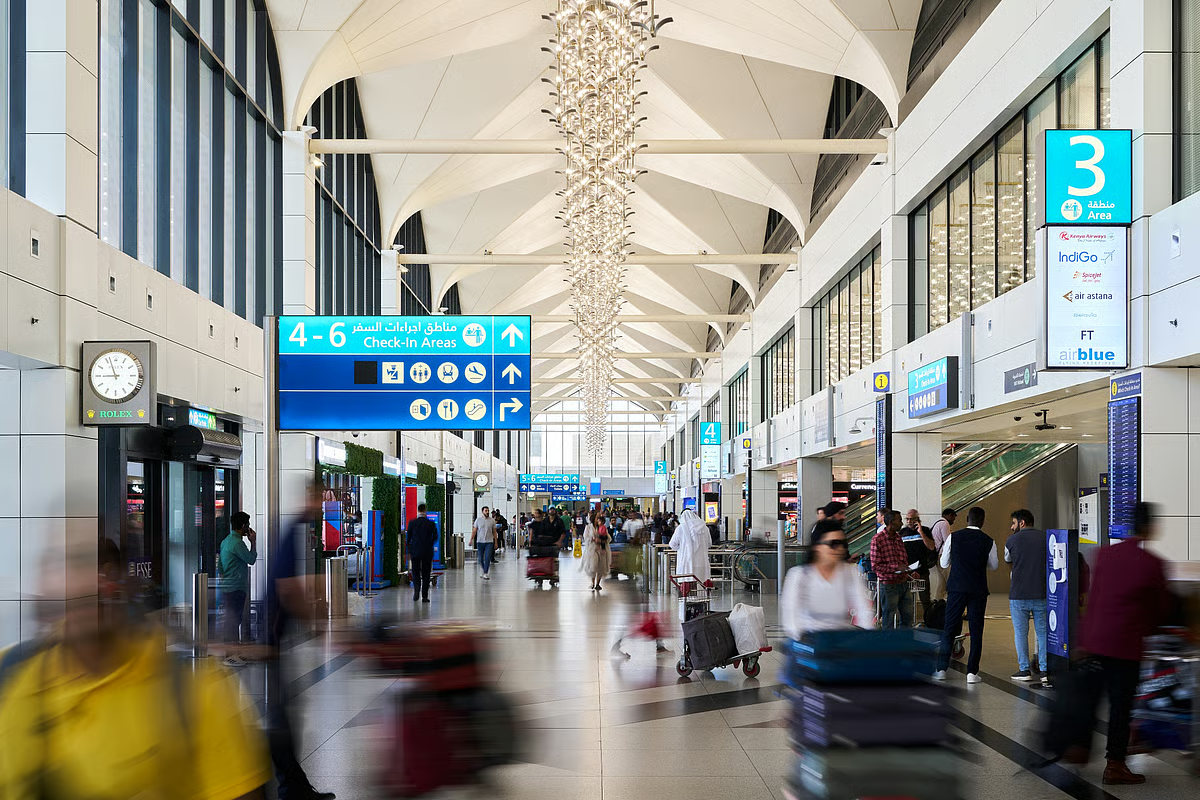

Dubai has solidified its position as a leading global aviation hub, recently ranking as the world’s busiest airport based on scheduled seat capacity, according to data from OAG. The ranking, released in May 2026, indicates continued strong demand and airline confidence in the Dubai market. This achievement underscores Dubai’s strategic importance in international travel and its ongoing development as a key transit point.
The OAG report reveals that Dubai International (DXB) surpassed Atlanta, which had previously held the top spot for several years. This shift reflects a sustained period of growth for DXB, driven by increased passenger traffic, expansion of airline networks, and a robust winter travel season. The data focuses on seat capacity, representing the number of seats airlines have available for sale, rather than actual passenger numbers.
Dubai’s Rise as a Global Aviation Hub
Dubai’s success isn’t accidental. Years of strategic investment in infrastructure, including the expansion of Dubai International and the development of Dubai World Central (DWC), have been crucial. Additionally, the city’s proactive policies supporting airline growth and tourism have played a significant role. The UAE government’s commitment to aviation as a key economic driver is evident in these ongoing efforts.
Factors Driving Growth
Several factors contributed to Dubai’s top ranking. A strong winter season, traditionally a peak travel period for the region, saw a significant influx of tourists and transit passengers. Major events hosted in Dubai, such as industry conferences and sporting events, also boosted passenger numbers. Furthermore, the continued expansion of long-haul routes by Emirates and other airlines operating through DXB has increased connectivity.
However, it’s important to note that OAG’s ranking is based on scheduled seat capacity, a forward-looking indicator. This metric reflects airline planning and confidence in future demand, rather than actual passenger throughput. While DXB recorded its highest annual passenger traffic in 2025, according to Gulf News, the seat capacity ranking provides insight into anticipated future growth. This distinction is crucial when interpreting the data.
The competition between Dubai and Atlanta has been a consistent feature of OAG’s rankings in recent years. Atlanta remains a major global hub, particularly for domestic US travel. The shift to Dubai at the top suggests a changing landscape in global air travel, with increasing importance placed on international connectivity and the Middle East as a transit region. The growth of airlines like Emirates, Qatar Airways, and Etihad Airways has been instrumental in this shift.
Impact on Tourism and Economy
The increased connectivity facilitated by DXB has a significant impact on Dubai’s tourism sector. More flights mean more visitors, contributing to revenue for hotels, restaurants, and other businesses. The airport’s role as a major transit hub also generates economic activity through connecting passengers who spend time and money in the city. The broader UAE economy benefits from this increased activity.
Meanwhile, the growth in air travel also necessitates continued investment in airport infrastructure and staffing. Dubai is actively working to address these challenges, with ongoing projects to expand capacity and improve passenger experience. The development of new technologies, such as biometric identification and automated baggage handling, is also a priority. These improvements aim to maintain Dubai’s competitive edge.
The rise of Dubai as a major air travel hub also impacts the wider aviation industry. It encourages competition among airlines and drives innovation in airport operations. The city’s success serves as a model for other regions seeking to develop their own aviation infrastructure and attract international travelers. This competition ultimately benefits passengers through increased choice and potentially lower fares.
Looking ahead, Dubai is expected to continue investing in its aviation infrastructure and expanding its airline network. The opening of the new Al Maktoum International Airport (DWC) is a key component of this long-term strategy. However, geopolitical factors and global economic conditions could influence future growth. Monitoring passenger numbers and airline capacity in the coming months will be crucial to assess the sustainability of Dubai’s current position. The next OAG ranking is expected in May 2027, providing a further indication of trends in global air connectivity.