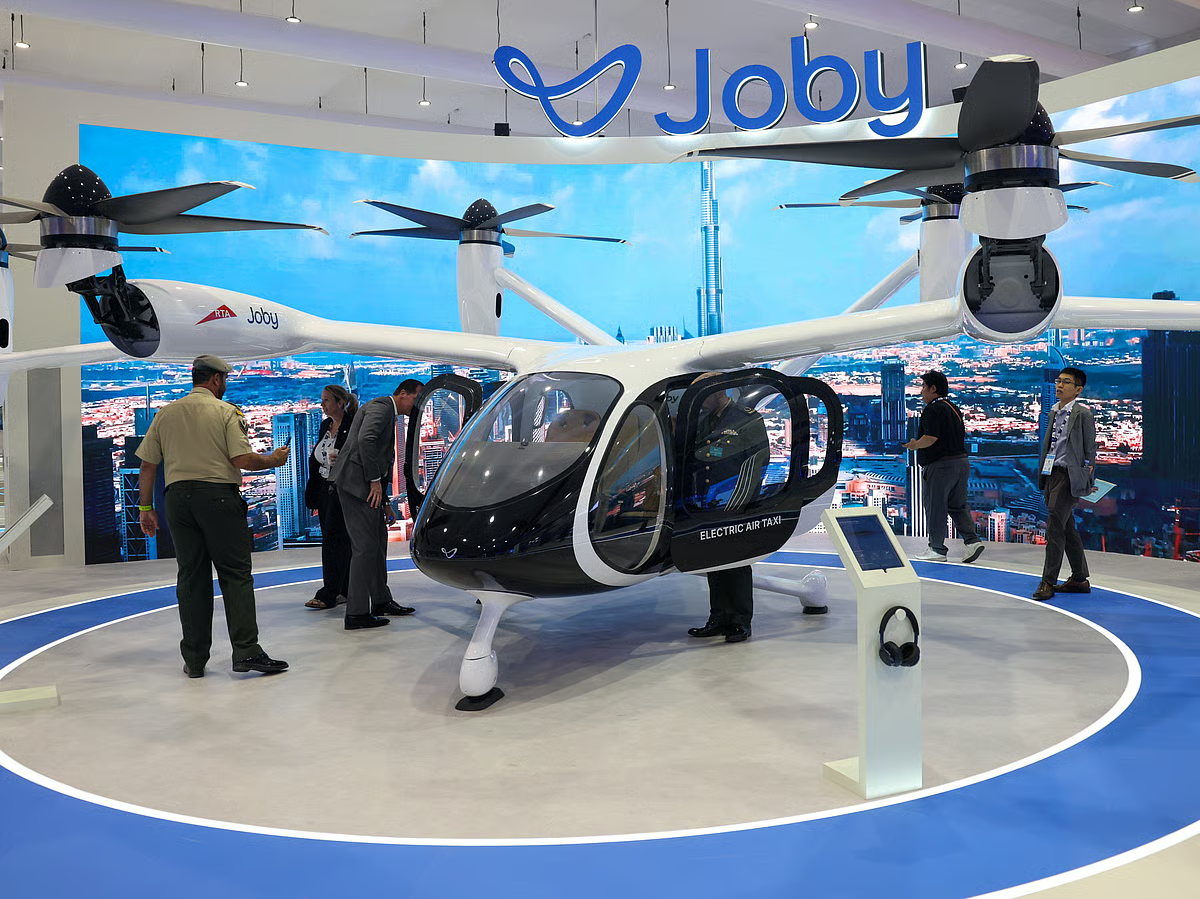

Dubai is poised to revolutionize its transportation network with the upcoming launch of both air taxi services and self-driving taxis. Officials have confirmed that commercial air taxi operations are expected to begin before the end of 2024, while autonomous taxi deployment is slated for the first quarter of 2026. These initiatives aim to alleviate traffic congestion, reduce commute times, and position Dubai as a global leader in innovative transportation solutions.
Dubai’s Air Taxi Project Set for Takeoff
The announcement regarding the air taxi service came from Mattar Al Tayer, Director-General, Chairman of the Board of Executive Directors of the Roads and Transport Authority (RTA). According to Al Tayer, the necessary infrastructure, developed in collaboration with Skyports and other aviation partners, is nearing completion. The project has undergone extensive refinement through consultations with global experts and discussions at events like the World Governments Summit.
The RTA anticipates the air taxi network will provide a premium transportation option, particularly for time-sensitive travel across the city. This service is intended to complement existing transport modes, rather than replace them, and will likely focus on connecting key destinations like airports, business centers, and tourist attractions. The initial fleet size and specific routes have not yet been disclosed.
Addressing Urban Mobility Challenges
Dubai, like many rapidly growing cities, faces significant challenges related to traffic congestion and the efficiency of urban mobility. The introduction of air taxis represents a bold attempt to bypass ground-level traffic and offer a faster, more direct route for passengers. This aligns with Dubai’s broader vision of becoming a smart and sustainable city.
Self-Driving Taxis to Hit Dubai Roads in 2026
Alongside the air taxi initiative, Dubai is also making substantial progress in the deployment of self-driving taxis. Al Tayer stated that the project has moved from the planning phase to execution in a remarkably short timeframe of ten months, driven by high-level directives from Sheikh Hamdan bin Mohammed bin Rashid Al Maktoum, Crown Prince of Dubai. This rapid development underscores the emirate’s commitment to embracing autonomous vehicle technology.
A dedicated command and control center has been established and integrated with Dubai’s existing intelligent transport systems and telecommunications networks. This center will enable real-time monitoring and management of the autonomous taxi fleet, ensuring safety and optimizing traffic flow. The RTA is prioritizing robust safety protocols and regulatory frameworks to govern the operation of these vehicles.
The “First and Last Mile” Solution
A key focus of Dubai’s transportation strategy is addressing the “first and last mile” problem – the difficulty people often face in getting to and from public transportation hubs. To tackle this, the RTA is collaborating with autonomous vehicle companies, including Chinese technology firm Baidu, to test and deploy self-driving vehicles in designated pilot zones.
These pilot programs allow for real-world evaluation of the technology and provide valuable data for refining its implementation. The goal is to create a seamless and integrated transportation experience, making it easier for residents and visitors to navigate the city. This also supports the growth of public transportation options.
Infrastructure as a Cornerstone of Growth
Al Tayer emphasized the critical role of infrastructure development in driving economic growth, attracting investment, and enhancing the overall quality of life in Dubai. He stated that a strong infrastructure base is essential for supporting business activity and fostering a thriving economy. This investment extends beyond taxis to include broader transportation infrastructure projects.
Dubai’s approach is to translate innovative ideas discussed at international forums into tangible projects on the ground. This proactive strategy aims to position the city at the forefront of technological advancements and create a competitive advantage in the global marketplace. The RTA is actively seeking partnerships with leading technology companies to accelerate the development and deployment of these solutions.
The success of these initiatives will depend on factors such as public acceptance, regulatory approvals, and the continued development of supporting infrastructure. While the timelines are ambitious, Dubai has a track record of successfully implementing large-scale projects. The next steps involve finalizing safety certifications for the air taxis, expanding the pilot programs for self-driving vehicles, and establishing a comprehensive regulatory framework for autonomous transportation. Ongoing monitoring of these projects and adaptation to emerging technologies will be crucial for ensuring their long-term viability and impact.