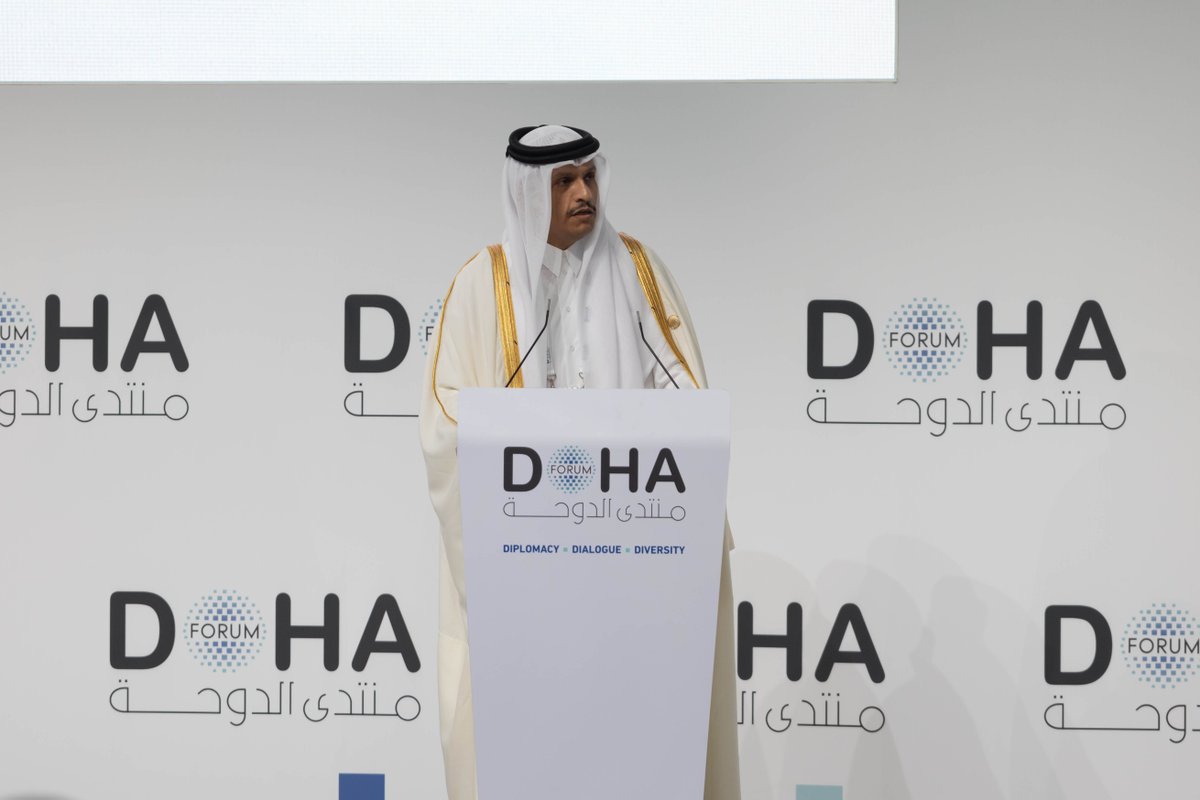

Doha, Qatar – Prime Minister Sheikh Mohammed bin Abdulrahman bin Jassim Al-Thani opened the 23rd Doha Forum on Tuesday, emphasizing the critical role of justice in achieving lasting international peace and stability. The annual forum, themed “Justice in Action: Beyond Promises to Progress,” convened global leaders to address escalating crises and the growing gap between international commitments and concrete action. Qatar reaffirmed its commitment to mediation as a cornerstone of its foreign policy, citing recent successes in Colombia as evidence of its effectiveness.
The forum, held in Doha, brings together policymakers, experts, and thought leaders from around the world to discuss pressing global challenges. Sheikh Mohammed’s opening address underscored Qatar’s belief that a rules-based international order, grounded in accountability and fairness, is essential to prevent further conflict and build a more secure future. The Prime Minister highlighted the increasing frequency of crises stemming not from a lack of resources, but from a lack of accountability.
Qatar Champions Justice and Mediation Efforts
Sheikh Mohammed stressed that Qatar views justice not as a mere political aspiration, but as a fundamental requirement for safeguarding international peace. He stated that the nation’s foreign policy is guided by the principle that words must be matched with action and that international responsibilities must be upheld impartially. This commitment is demonstrated through Qatar’s active role in mediating disputes and facilitating dialogue between conflicting parties.
A significant achievement highlighted during the opening session was Qatar’s recent collaboration with Norway, Spain, and Switzerland to broker a breakthrough agreement between the Colombian government and the self-designated “EGC” group. According to Sheikh Mohammed, this agreement offers a pathway to enhanced safety and dignity for Colombians and provides hope for communities affected by years of violence. The deal aims to facilitate disarmament, combat narcotics trafficking, and establish a framework for sustainable peace.
Addressing Regional and Global Conflicts
The Prime Minister also addressed ongoing conflicts in the Middle East and beyond. He expressed concern over the plight of the Palestinian people and the ongoing tragedies in Sudan, emphasizing that achieving justice and protecting human rights are indispensable for regional stability. He noted that the absence of accountability in these situations fuels further instability and fragmentation.
Regarding Syria, Sheikh Mohammed expressed hope that the Syrian people are moving towards recovery through a framework of transitional justice that promotes inclusivity and rejects sectarianism. He acknowledged the challenges facing the region are intertwined with global trends, including a decline in respect for international law and the excessive use of force without accountability. These trends, he warned, are eroding public trust in the international order.
Additionally, Sheikh Mohammed pointed to a growing need for a fairer international system and a strengthened role for communities and humanitarian organizations. He argued that durable peace cannot be achieved through symbolic resolutions but requires collective action that prioritizes human dignity. The concept of sustainable development was implicitly linked to the need for long-term, just solutions.
However, the Prime Minister cautioned that crisis management focused solely on temporary consensus without addressing root causes is no longer viable. He emphasized that unresolved crises inevitably return in more complex forms, extending beyond their initial borders. The need for conflict resolution was a recurring theme throughout his address.
Looking ahead, the Doha Forum is expected to continue through Wednesday, with discussions focusing on practical solutions to global challenges. Participants will likely explore avenues for strengthening international institutions and promoting greater accountability. The success of the forum will be measured by its ability to translate commitments into concrete actions and foster a renewed commitment to justice on the international stage. Further details on specific outcomes and agreements reached during the forum are anticipated in the coming days.