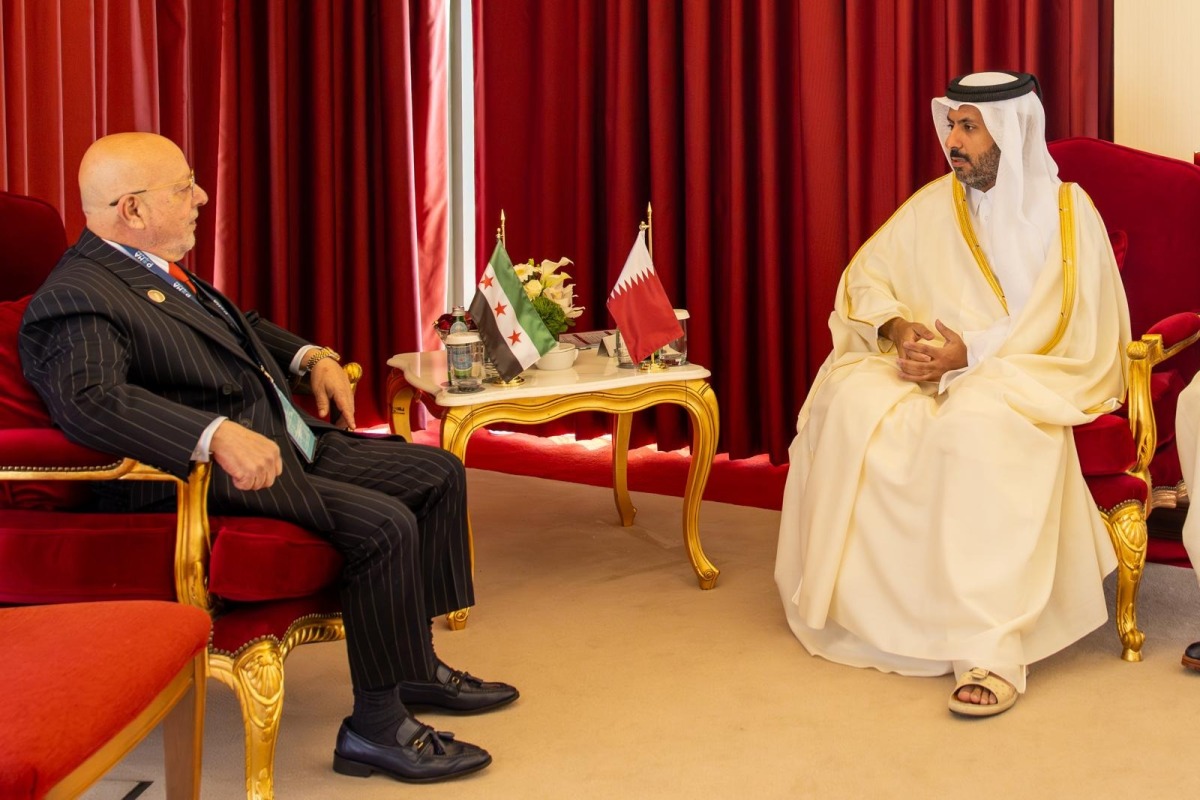

Doha, Qatar – Qatar and Syria have reaffirmed their commitment to strengthening Qatar-Syria relations, focusing on increased collaboration in commerce, investment, and industrial development. The discussions took place on December 6, 2025, on the sidelines of the 23rd Doha Forum, a significant international platform for dialogue and policy-making. These talks signal a renewed push for economic ties following years of regional instability and diplomatic shifts.
The meeting between Qatar’s Minister of Commerce and Industry, HE Sheikh Faisal bin Thani bin Faisal Al-Thani, and Syria’s Minister of Economy and Industry, HE Mohammed Nidal Al Shaar, centered on identifying opportunities to expand bilateral trade and investment. Both ministers expressed a desire to solidify existing connections and explore new avenues for cooperation, according to a statement released by the Qatari Ministry of Commerce and Industry. This development occurs amidst Syria’s ongoing efforts to rebuild its economy and reintegrate into the regional landscape.
Strengthening Qatar-Syria Economic Partnerships
Qatar and Syria have historically maintained economic relationships, although these were significantly impacted by the Syrian Civil War, which began in 2011. Qatar initially supported opposition groups during the conflict, but in recent years has signaled a change in approach with increased engagement and humanitarian aid to the Syrian government. The Doha Forum provided a crucial venue to publicly address mechanisms for reopening trade corridors and fostering economic stability.
The ministers specifically focused on details pertaining to joint projects and initiatives. These included discussions about potential Qatari investments in Syrian infrastructure, particularly in sectors vital to economic recovery such as energy, construction, and agriculture. The ministry stated that both sides agreed on the importance of creating a favorable investment climate to encourage participation from Qatari businesses.
Areas of Potential Collaboration
Beyond infrastructure, potential collaborations discussed encompassed several key areas. These reportedly involve exploring joint ventures in the manufacturing sector, leveraging Qatar’s financial capacity and Syria’s skilled labor force. Increased focus opportunities for Qatari companies in Syria’s recovering markets were also noted.
Furthermore, discussions touched upon enhancing cooperation in the realm of industrial development, including technology transfer and training programs. Syria is seeking to modernize its industrial base, and Qatar’s expertise in this domain could prove invaluable. The expansion of economic cooperation also aligns with broader regional efforts to de-escalate tensions and promote stability.
However, challenges remain in fully realizing these ambitions. Sanctions imposed on Syria by various international bodies, including the United States and the European Union, continue to hinder foreign investment and trade. Qatar will need to navigate these complexities carefully to ensure compliance with international regulations while pursuing its economic objectives.
Analysts suggest Qatar’s engagement with Syria is driven by several factors. These consist of a desire to play a mediating role in the region, a strategic interest in securing access to Syrian markets, and a broader effort to diversify Qatar’s economic partnerships. The bilateral trade between the two nations has been limited in recent years, but the potential for growth is substantial.
The meeting also addressed broader issues of mutual concern, including regional security and the need for a political solution to the Syrian conflict. While economic cooperation was the primary focus, the ministers acknowledged the interconnectedness between political stability and economic prosperity. The discussions underscored the importance of continued dialogue and collaboration to address these challenges.
Looking ahead, the next step will likely involve the formation of joint working groups to delve deeper into specific areas of cooperation and develop concrete action plans. The timeframe for these plans remains uncertain, dependent on both internal developments within Syria and the evolving geopolitical landscape. Observers will be watching closely for any announcements regarding Qatari investments in Syria and the easing of trade restrictions. The success of this renewed engagement will be a key indicator of Qatar’s evolving regional strategy and Syria’s path towards economic recovery.