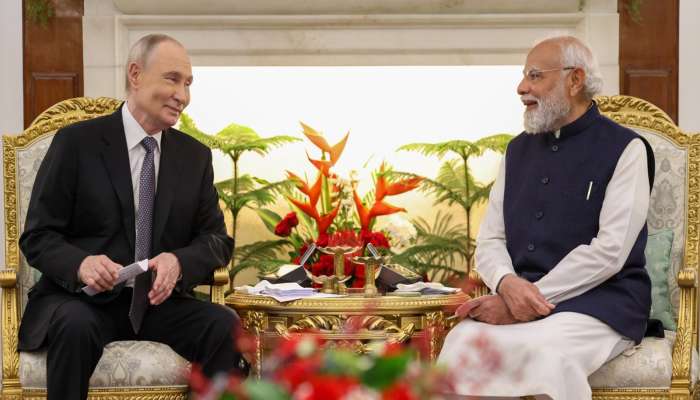

India and Russia reaffirmed their commitment to a robust and expanding partnership during the 23rd India-Russia Annual Summit held in New Delhi this past week. The summit, attended by Prime Minister Narendra Modi and Russian President Vladimir Putin, focused on strengthening the ‘Special and Privileged Strategic Partnership’ across a multitude of sectors, with a particular emphasis on bolstering India-Russia cooperation in critical areas like energy security and defense. The visit signals a continued prioritization of ties between the two nations, navigating a complex global landscape.
Intensifying Strategic Ties: Outcomes of the India-Russia Summit
The meeting resulted in a joint statement detailing progress and future plans across several key domains. Both leaders expressed satisfaction with the existing level of collaboration and laid out a roadmap for deeper engagement in the coming years. This isn’t simply a continuation of past agreements, but a clear intention to broaden the scope and depth of their long-standing relationship.
Nuclear Energy: A Cornerstone of the Partnership
A significant portion of the discussions revolved around nuclear energy, a sector where India-Russia cooperation has been particularly fruitful. The leaders acknowledged the importance of furthering discussions on a second site in India for a Nuclear Power Plant (NPP), building on the success of the Kudankulam project.
Kudankulam NPP: Ensuring Operational Capacity
President Putin reiterated Russia’s commitment to bringing the Kudankulam NPP to full operational capacity. Currently, two of the six reactor units are functioning, with the remaining four under construction. Putin highlighted the plant’s potential to significantly contribute to India’s energy needs, a crucial aspect of the nation’s growth trajectory. The focus isn’t just on construction, but also on ensuring the long-term viability of the plant through life cycle support and the exploration of non-power applications of nuclear technology.
Expanding Nuclear Collaboration
The joint statement outlined plans to elaborate a new agenda for interaction in the peaceful use of atomic energy and related high technologies. This includes accelerating technical and commercial discussions on Russia’s VVER reactors, joint research and development of NPPs, and crucially, the localisation and joint manufacturing of nuclear equipment and fuel assemblies. This move aligns with India’s ambitious goal to increase its nuclear energy capacity to 100 GW by 2047, and aims to create a self-reliant nuclear energy ecosystem.
Strengthening Defense Cooperation and Joint Manufacturing
Military and military-technical cooperation remains a vital pillar of the India-Russia partnership. Both nations agreed to encourage joint manufacturing in India of spare parts and components for Russian-origin arms and defense equipment, a direct boost to the “Make-in-India” program. This initiative will facilitate technology transfer and the establishment of joint ventures, not only serving the Indian Armed Forces but also potentially opening up export opportunities to other friendly countries.
Regular military exercises, like the INDRA series, were also highlighted as a key component of maintaining momentum and fostering stronger ties between the armed forces. Both sides confirmed their commitment to continued exchanges and collaborative activities.
Beyond Energy and Defense: New Avenues for Collaboration
The summit wasn’t limited to traditional areas of cooperation; it also explored opportunities in emerging fields.
Space Exploration and Technology
The enhanced partnership between the Indian Space Research Organisation (ISRO) and the Russian State Space Corporation “Roscosmos” was welcomed, particularly in areas like human spaceflight programs, satellite navigation, and planetary exploration. Progress in jointly developing rocket engines was also noted, signifying a commitment to advanced space technologies.
Fertilizer Supply and Agricultural Cooperation
Recognizing the importance of food security, both sides agreed to ensure the long-term supply of fertilizers to India. A Memorandum of Understanding (MoU) was signed between JSC UralChem and Indian fertilizer companies – Rashtriya Chemicals and Fertilizers Limited, National Fertilisers Limited, and Indian Potash Limited – with the potential for establishing joint ventures in the fertilizer sector.
Transportation & Connectivity – INSTC and Beyond
The leaders reaffirmed their dedication to building stable and efficient transport corridors. An MoU on training specialists for ships operating in polar waters was signed, focusing on improving logistics links and infrastructure capacity for crucial corridors like the International North-South Transport Corridor (INSTC) and the Chennai-Vladivostok (Eastern Maritime) Corridor. The Northern Sea Route also received attention, with both sides agreeing to intensify consultations on Arctic-related issues. India expressed its interest in becoming an Observer in the Arctic Council.
Economic Ties and Financial Cooperation
To mitigate the impact of global financial volatility, Russia and India agreed to continue developing bilateral settlements using national currencies. Discussions are also underway to enhance interoperability between their respective payment systems, financial messaging systems, and central bank digital currency platforms. This move aims to ensure uninterrupted trade and reduce reliance on third-party financial intermediaries. The Program of Cooperation in the Russian Far East, spanning 2024-2029, will further facilitate trade and investment in sectors like agriculture, energy, and mining.
In conclusion, the 23rd India-Russia Annual Summit was a resounding success, solidifying the ‘Special and Privileged Strategic Partnership’ between the two nations. The agreements reached, particularly in nuclear energy, defense, and transportation, demonstrate a shared commitment to long-term collaboration and mutual benefit. The focus on joint manufacturing, technology transfer, and diversifying economic ties signals a proactive approach to navigating the evolving geopolitical landscape. This strengthened India-Russia cooperation is poised to play a significant role in both countries’ future growth and security. Further details on specific projects and timelines are expected to be released in the coming months, offering a clearer picture of the tangible benefits of this enduring partnership.