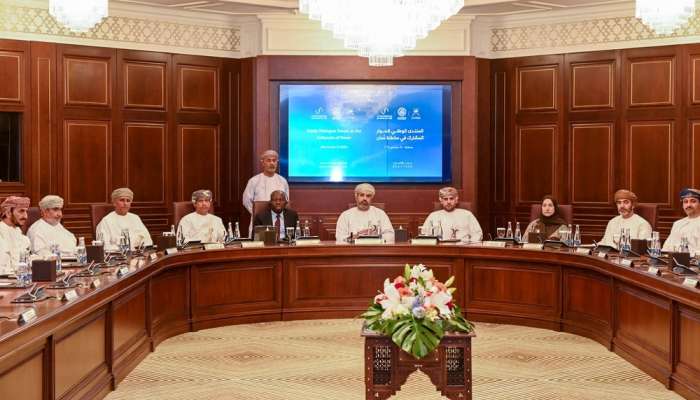

Oman is reinforcing its commitment to a strong and equitable labor market with the recent commencement of the National Forum for Joint Dialogue in Muscat. This critical forum, which began on Wednesday, underscores the nation’s dedication to fostering collaboration between the government, employers, and workers to address evolving economic challenges and build a more sustainable future. Central to the discussions is the ongoing effort to strengthen social dialogue within the Sultanate, a process repeatedly highlighted as key to Oman’s progress.
The Importance of Social Dialogue in Oman’s Labor Market
The forum’s opening remarks, delivered by Dr. Mahad bin Said Ba’owain, Minister of Labour, powerfully emphasized that social dialogue isn’t just a communication method, but a deeply ingrained national value. He stated it’s an “effective instrument for resolving challenges, balancing rights with responsibilities, and fostering a cohesive work environment.” This tripartite approach – uniting the government, employers, and employees – is viewed as foundational for both economic growth and social stability.
Legislative Framework Supporting Collaboration
This commitment is codified in Oman’s Labour Law, specifically Article (141), which formally established the Social Dialogue Committee. Chaired by the Ministry of Labour, this committee includes representatives from all key stakeholders in the production process. This legal structure has facilitated the resurgence of the Joint Dialogue Committee and the creation of specialized bodies designed to tackle specific labor issues.
These specialized committees include those focused on settling and arbitrating collective labor disputes, as well as ensuring occupational safety and health. Furthermore, recognizing the need for localized solutions, the scope of social dialogue has been broadened through the establishment of subcommittees operating in each of Oman’s governorates.
Partnership with the ILO and International Standards
Oman is actively partnering with the International Labour Organization (ILO) to strengthen its workforce and labor practices. A Technical Committee, operating under a Memorandum of Understanding initially signed in 2010 and renewed in 2022, oversees the National Decent Work Program. This collaboration ensures Oman benefits from technical support, expert consultations, and programs designed to create a robust and sustainable labor market.
The ILO’s Director-General, Gilbert Houngbo, attending the forum, commended Oman’s dedication to building a cohesive and equitable working environment. He specifically highlighted the positive progress made in enterprise-level collective agreements and the beginning stages of sectoral negotiations as evidence of a growing culture of dialogue.
A Comprehensive Framework for Labor Rights
Beyond the ILO partnership, Oman is actively building a national framework that prioritizes international labor rights and the protection of vulnerable workers. Multi-stakeholder national committees, such as the Oman Human Rights Committee and the National Committee for Combating Human Trafficking, play a crucial role in fostering compliance, safeguarding freedoms, and strengthening protective measures for those who need it most. The focus also includes adapting to shifts in the future of work, such as the platform economy.
Focus Areas Within the National Framework
The national framework developed doesn’t solely concentrate on broad principles. Specific attention is being given to empowering persons with disabilities within the workplace and navigating the complexities of the increasingly prevalent platform economy. These targeted approaches demonstrate Oman’s commitment to inclusivity and adaptability.
Aligning with Oman Vision 2040
The overarching goal of the National Forum for Joint Dialogue is to showcase Oman as a leading example of institutionalizing social dialogue. The current initiatives are specifically aligned with the strategic objectives of Oman Vision 2040—the nation’s plan for a competitive, knowledge-based, and innovation-driven economy.
Discussions at the forum are centered around key achievements in legislative modernization, trade union development, workforce upskilling, training program expansion, and the strengthening of collective bargaining. Presentations from the Ministry of Labour, the Oman Chamber of Commerce and Industry, and the General Federation of Oman Workers provide diverse perspectives on these critical issues, including effective dispute resolution. Furthermore, conversations extended to the role of the Social Protection Fund.
Moving Forward: A Commitment to Continuous Improvement
The Minister of Labour concluded by reaffirming the Ministry’s dedication to collaborating with all social partners. The aim is to deepen constructive dialogue, cultivate a fair and sustainable work environment, and enhance Oman’s national economic competitiveness. The forum serves as a platform for reviewing progress, identifying challenges, and charting a course for continued improvement in Oman’s labor relations.
The National Forum for Joint Dialogue represents a significant step forward in Oman’s journey towards a more inclusive and prosperous future. By prioritizing collaboration and embracing international best practices, Oman is positioning itself as a leader in the region, committed to building a thriving labor market that benefits all its citizens.