
Abu Dhabi is undergoing a significant urban transformation, driven by the Department of Municipalities and Transport (DMT), to enhance quality of life and build more sustainable communities. This comprehensive overhaul encompasses real estate consolidation, improved building safety regulations, the integration of artificial intelligence, and expansion of public transportation options. The initiative aims to create vibrant living spaces while strengthening the emirate’s infrastructure and smart services.
The DMT’s transformational program, launched in 2023, is focused on comprehensive urban planning that supports long-term sustainability and societal well-being. Phase One of Abu Dhabi’s Livability Strategy, backed by a Dh42 billion budget, has already increased area integration from 67% to 81%, with further improvements planned by 2025. This progress is directly informed by community feedback incorporated into planning and policy-making, according to the DMT.
Consolidating Real Estate and Boosting Investment
A key component of the transformation has been the consolidation of all municipal real estate functions under the Abu Dhabi Real Estate Center. This streamlining reduced the number of services offered from over 250 to fewer than 100, simplifying processes for residents and investors. The move appears to be yielding positive results, with the center reporting a 24% increase in real estate transactions in 2024, totaling Dh96.2 billion.
Additionally, foreign direct investment (FDI) in the real estate sector saw a substantial increase, surpassing Dh7.86 billion in 2024. This momentum continued into the first quarter of 2025, with 384 transactions valued at Dh1.582 billion, indicating sustained investor confidence in Abu Dhabi’s property market.
Improved Efficiency and Safety
The DMT has also focused on strengthening infrastructure through an integrated value-chain model, aiming to improve financial resilience and project delivery efficiency. This model, supported by digital tools for real-time monitoring and data-driven decision-making, ensures alignment with government priorities and maximizes long-term value.
Building safety has been reinforced through the Occupancy Certification and Regulation Program, issued in early 2024. This program prioritizes fundamental safety standards, transparency, and market confidence. The “Benaa” platform, integrating Building Information Modeling (BIM) and artificial intelligence, has significantly accelerated auditing and review processes, reducing transaction completion times by 70% across the emirate.
Harnessing Artificial Intelligence for Smart City Development
Abu Dhabi is actively leveraging artificial intelligence to enhance various aspects of city management. In 2023, the DMT introduced smart inspection vehicles for real-time waste detection and maintenance needs. This initiative expanded in 2024 with the use of digital twins to analyze lifestyle patterns and support predictive planning.
During GITEX 2025, the DMT unveiled several new AI-powered platforms, including “LivAI,” the “City Eye” system, a real-time traffic safety system, and smart robotics. These innovations are designed to improve city management efficiency and elevate the quality of public services. The integration of smart services is a central tenet of the emirate’s long-term vision.
Municipalities across Abu Dhabi, Al Ain, and Al Dhafra have also enhanced their services related to park and beach maintenance, public health, and community programs. The restructuring of the DMT has unified service delivery and streamlined operational processes, leading to improved responsiveness to community needs. Seventeen municipal presence centers have been inaugurated, with plans for further expansion to ensure seamless access to municipal services throughout the emirate.
Future Mobility and Sustainable Transport Networks
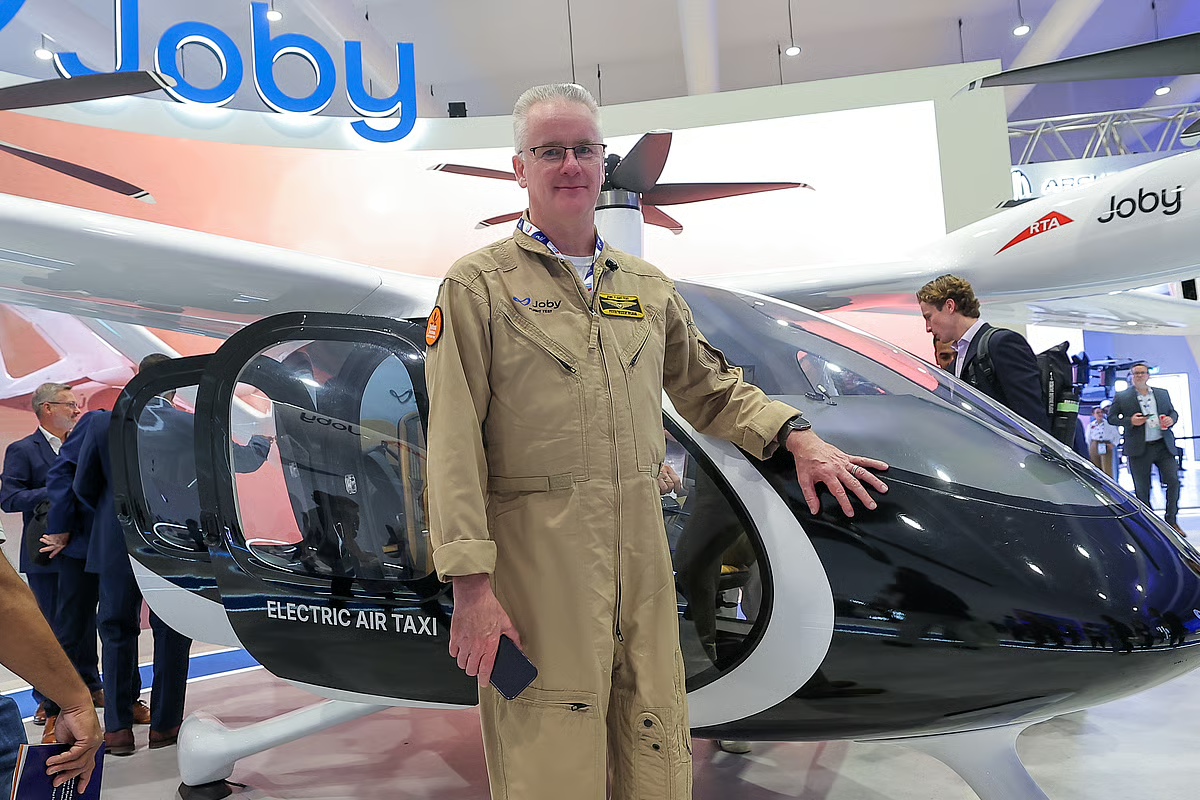
Alongside these developments, Abu Dhabi continues to invest in expanding its public transport networks and developing future mobility solutions. Improvements include optimized bus routes, enhanced fleet efficiency, and the adoption of innovative technologies aimed at increasing accessibility and reducing congestion. These efforts support the emirate’s vision of a resilient and sustainable transport ecosystem.
Looking ahead, the DMT is expected to continue implementing the Livability Strategy, with a focus on data analysis and community engagement to refine urban planning initiatives. The success of the program will depend on continued investment in technology and infrastructure, as well as ongoing collaboration between government entities and the private sector. Monitoring the impact of the new regulations and technologies on real estate transactions and FDI will be crucial in assessing the overall effectiveness of Abu Dhabi’s urban transformation.