
Qatar’s commitment to women’s empowerment was a central theme at the 4th International Forum entitled Women of the Third Millennium, held in Moscow, Russia, this week. The forum, which drew representatives from parliaments and women’s organizations globally, provided a platform to discuss the evolving role of women in international cooperation, diplomacy, and sustainable development. Deputy Speaker of the Shura Council, HE Dr. Hamda bint Hassan Al Sulaiti, led the Qatari delegation and highlighted the nation’s strategic investments in gender equality.
The two-day forum focused on leveraging women’s networks to address global challenges and foster peace. Discussions centered on the increasing importance of non-governmental actors, particularly women-led initiatives, in shaping international relations and driving development outcomes. The event underscored the need for continued collaboration to advance women’s rights and opportunities worldwide.
Qatar’s Approach to Women’s Empowerment
Dr. Al Sulaiti emphasized that Qatar views investing in human capital, and specifically women’s empowerment, as a cornerstone of its national vision. According to her address, the country has made significant strides in increasing women’s participation across key sectors, including education, healthcare, culture, and social development. This progress extends to traditionally male-dominated fields like diplomacy, politics, humanitarian work, entrepreneurship, and technology.
Recent Legislative Changes
Recent amendments to Qatar’s Human Resources Law were presented as evidence of the government’s dedication to supporting working women. These changes aim to strengthen benefits and create a more supportive environment for balancing professional and family responsibilities. The intention is to unlock the full potential of Qatari women and contribute to a more inclusive workforce, fostering economic growth and social progress.
Dr. Al Sulaiti articulated that Qatar’s strategy isn’t solely based on social ideals, but a deliberate approach recognizing women as vital partners in building both peace and development. This perspective positions women not just as beneficiaries of aid, but as key contributors to formulating national initiatives and strengthening institutions. The focus on strategic partnerships reflects a broader trend in international development, prioritizing local ownership and leadership.
The Rise of Opportunity Diplomacy
A key concept discussed by Dr. Al Sulaiti was “opportunity diplomacy,” which posits that traditional diplomatic tools are insufficient in today’s complex geopolitical landscape. She argued that cross-border initiatives led by women are uniquely positioned to overcome political obstacles and forge new avenues for cooperation. This approach leverages the ability of women’s groups to build trust and foster human connections, transforming social and humanitarian efforts into practical tools for international integration.
Her presentation on “Diplomacy of Opportunities” highlighted how women’s communities are increasingly active in shaping international relations. Modern diplomacy, she explained, relies heavily on initiatives from communities and civil networks, with women’s networks demonstrating a particular aptitude for establishing dialogue in conflict zones and developing joint projects that promote sustainable development. This shift acknowledges the crucial role of civil society in complementing governmental efforts.
Dr. Al Sulaiti also pointed to the significance of international frameworks like UN Security Council Resolution 1325, which emphasizes the importance of women’s full participation in conflict prevention, resolution, and peacebuilding. She noted that women’s involvement in mediation and peacemaking is now considered a fundamental element of achieving human security. Relatedly, initiatives in education, health, and economic development led by women’s organizations serve as practical models for long-term sustainability.
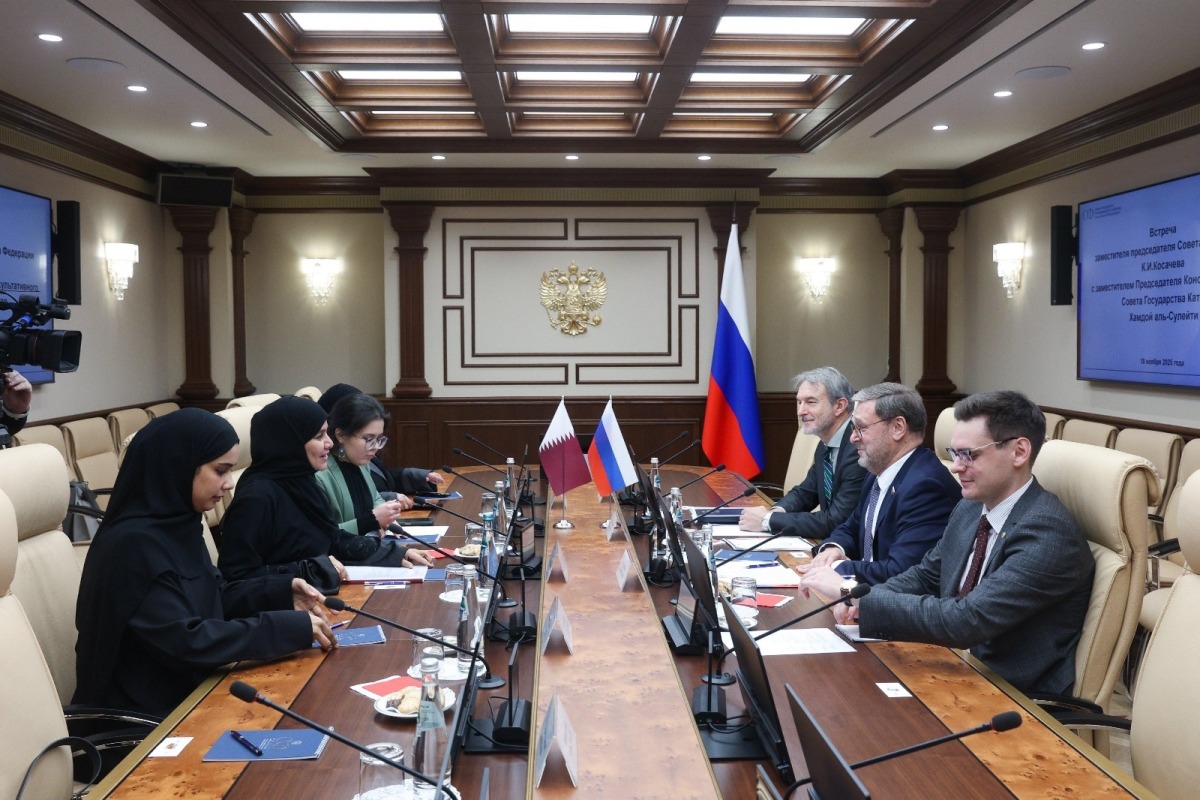
On the sidelines of the forum, Dr. Al Sulaiti engaged in bilateral meetings with key Russian and Libyan officials, including Konstantin Kosachev, Deputy Chairman of the Federation Council of the Russian Federation, Alexander Babakov, Deputy of the State Duma of the Russian Federation, Amirova Alvia, President of the Women’s International Federation, Fatima Tleiwih, Member of the High Council of State of Libya, and Huda Abdul Latif Al-Banani, Member of the High Council of State of Libya. These meetings focused on strengthening parliamentary and women’s empowerment cooperation and exploring joint projects in areas like education and healthcare.
Looking ahead, Qatar is expected to continue its support for international initiatives focused on women’s empowerment, both through its engagement with the United Nations and through targeted programs in vulnerable regions. The long-term impact of these efforts, and the extent to which they can contribute to lasting peace and development, remains to be seen, but will be a key area to monitor in the coming years. Further developments in Qatar’s national policies regarding gender equality and its role in international forums will also be important to observe.