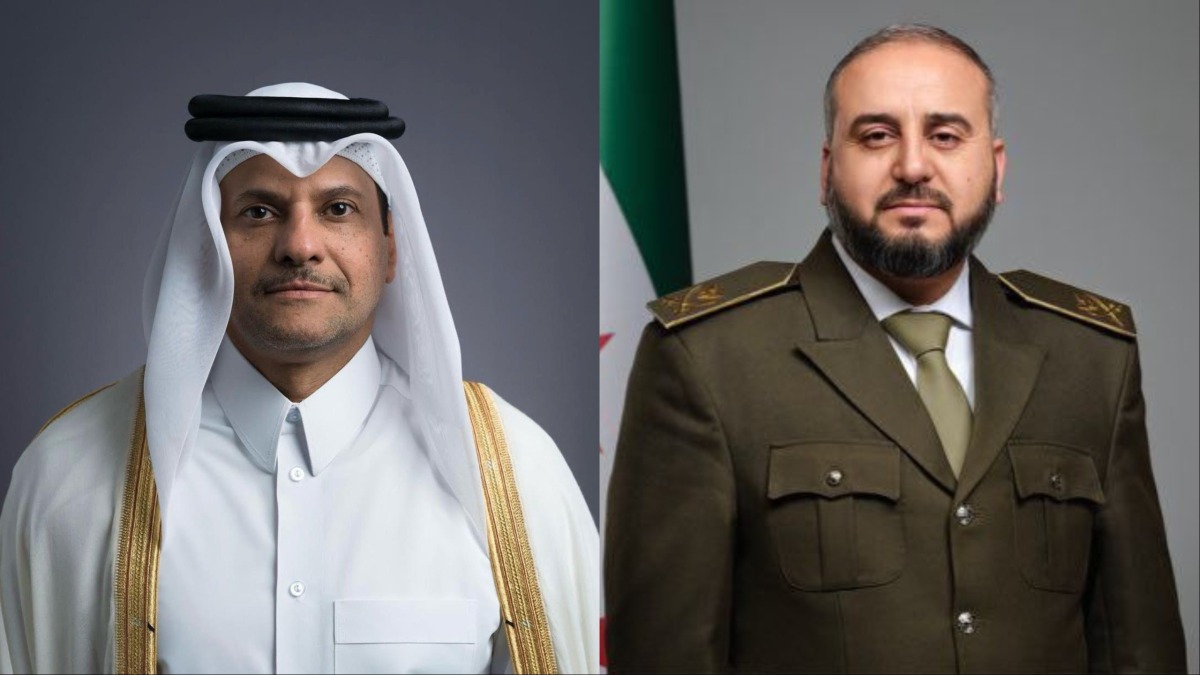

Doha, Qatar – A telephone conversation took place today between Sheikh Saud bin Abdulrahman Al-Thani, Deputy Prime Minister and Minister of State for Defense Affairs of Qatar, and Maj. Gen. (Eng.) Murhaf Abu Qasra, the Minister of Defense of Syria. The discussion centered on Qatar-Syria relations and current events impacting the broader Middle East region. The call signals a potentially significant shift in diplomatic engagement between the two nations after a prolonged period of strained ties.
The communication, which occurred on December 28, 2023, involved a review of mutual interests and an exchange of perspectives on recent regional and international developments. While details released by the Qatari Ministry of Defense were limited, the call itself represents a notable event in the context of evolving geopolitical dynamics. This interaction comes amid increasing Arab normalization efforts towards the Syrian government.
Strengthening Qatar-Syria Relations: A Regional Context
Qatar severed diplomatic relations with Syria in 2012, following the outbreak of the Syrian Civil War and expressing strong opposition to the government of President Bashar al-Assad. This decision aligned with many other Arab states and Western powers at the time. However, in recent months, there has been a discernible trend of re-engagement with Syria from several countries in the region, including the United Arab Emirates and Bahrain.
This shift is largely attributed to a desire for greater regional stability and a pragmatic assessment of the situation on the ground in Syria. The Syrian government has consolidated its control over much of the country, and the humanitarian crisis, while still severe, has evolved. The ongoing conflict in Gaza and its wider implications have also prompted a reassessment of existing alliances and diplomatic strategies.
Recent Diplomatic Overtures
Prior to Sheikh Saud’s call, there had been indications of warming ties. Syria reopened its embassy in the UAE in late 2023, and several high-level meetings have taken place between officials from various Arab nations and their Syrian counterparts. These meetings have focused on issues such as counter-terrorism, border security, and the return of Syrian refugees.
The Qatari call appears to be a continuation of this trend, suggesting a willingness to explore avenues for dialogue and cooperation. Analysts suggest Qatar may be seeking to play a constructive role in facilitating a political solution to the Syrian conflict, even while acknowledging the complexities and challenges involved. Diplomatic ties are a key component of this potential shift.
Implications for Regional Security
The re-establishment of communication channels between Qatar and Syria could have several implications for regional security. It may facilitate greater cooperation on issues of shared concern, such as combating extremist groups operating in the region. Additionally, it could contribute to a de-escalation of tensions and a more inclusive approach to addressing the multifaceted challenges facing the Middle East.
However, the move is likely to be met with criticism from some quarters, particularly from those who remain strongly opposed to the Assad regime. Concerns about human rights abuses and the lack of political progress in Syria are likely to persist. The United States, for example, has maintained a cautious stance regarding normalization with Syria, emphasizing the need for concrete steps towards a lasting political settlement. Geopolitical strategy is clearly at play.
The call also occurs against the backdrop of Qatar’s significant role in mediation efforts in other regional conflicts, including the ongoing situation in Gaza. Qatar has historically maintained relationships with a diverse range of actors in the Middle East, and its engagement with Syria could be seen as an extension of this policy.
It remains unclear what specific outcomes Qatar hopes to achieve through its renewed engagement with Syria. However, the call signals a willingness to move beyond the previous policy of complete isolation and explore the potential for a more nuanced and pragmatic approach. Further developments in bilateral relations will be closely watched.
Looking ahead, it is anticipated that further discussions between Qatari and Syrian officials will take place in the coming weeks and months. The focus will likely be on identifying areas of potential cooperation and establishing a framework for more regular dialogue. The extent to which these efforts will translate into concrete improvements in the situation on the ground in Syria, and whether they will be met with broader international support, remains uncertain.
The situation is fluid and dependent on numerous factors, including the ongoing conflict in Gaza, the internal dynamics within Syria, and the broader geopolitical landscape. Continued monitoring of diplomatic initiatives and regional developments will be crucial to understanding the long-term implications of this evolving relationship.