
The European Union this week signaled a significant hardening of its stance on illegal migration, enacting a series of measures designed to curb irregular arrivals and expedite deportations. A combination of stricter asylum rules, facilitated deportations, and a new sanctions regime targeting human smugglers marks a renewed push to control EU borders. These developments reflect a broader shift in European policy, increasingly adopting approaches once considered on the fringes of the political spectrum.
The moves come as EU member states grapple with concerns over rising migration flows and the political pressures associated with border management. The new policies, agreed upon by the EU Council on Monday, and announced by the European Commission on Wednesday, aim to disrupt the business model of smugglers and reduce the incentive for irregular journeys to Europe.
Cracking Down on Smugglers and Their Finances
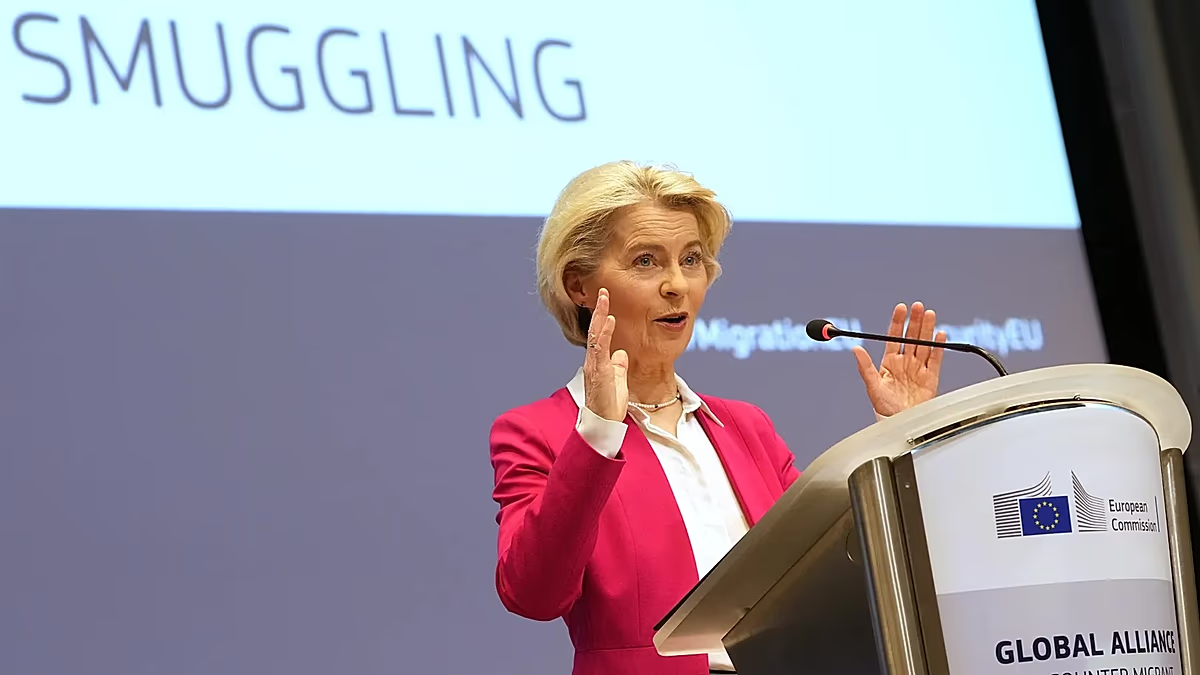
European Commission President Ursula von der Leyen announced a new sanctions regime, coordinated with G7 partners, to target individuals and organizations involved in human smuggling. “Our goal is simple. We want to bankrupt their businesses through all means available,” she stated at the International Conference of the Global Alliance to Counter Migrant Smuggling in Brussels. The sanctions will focus on freezing assets, issuing travel bans, and disrupting the financial networks that enable smuggling operations.
The Commission is currently consulting with member states to finalize the details of the sanctions regime, with concrete proposals expected in the coming weeks. A joint declaration endorsed by over 50 delegations emphasized the importance of preventing smuggling through strengthened national frameworks, developing legal migration pathways, and enhancing financial investigations to seize criminal proceeds. EU Commissioner for Migration, Magnus Brunner, emphasized the need for global cooperation to effectively combat migrant smuggling.
New Laws Aim to Expedite Returns
Alongside the sanctions, the EU Council agreed on three legislative changes intended to streamline asylum procedures and increase the rate of returns for those whose applications are rejected. One key element is the “return regulation,” which would allow member states to establish “return hubs” in non-EU countries. These hubs could serve as transit points for asylum seekers awaiting deportation or, potentially, as final destinations if a third country agrees to accept them, provided human rights standards are met.
However, the concept of return hubs has drawn criticism from human rights organizations, who express concerns about the potential for abuse and the risk of sending individuals to countries with inadequate protections. Another proposed change expands the definition of “safe third country,” potentially allowing for the deportation of asylum seekers to countries with which they have no prior connection, provided an agreement exists with an EU state and human rights are respected. This framework has been compared to the UK’s recently ruled unlawful Rwanda deportation policy.
A third law establishes a list of “safe countries of origin,” including Kosovo, Bangladesh, and Egypt, where asylum applications will be processed through fast-track procedures. While applicants from these countries will still be able to seek asylum, their claims will be subject to expedited review.
Concerns Over Human Rights and Legal Challenges
These new measures have sparked criticism from advocacy groups like Amnesty International, who argue they could violate international law and put vulnerable individuals at risk. Olivia Sundberg Diez, EU Advocate on Migration and Asylum for Amnesty International, pointed to previous concerns raised by the European Commission itself regarding the potential for refoulement, torture, or arbitrary detention.
Meanwhile, data from Frontex indicates a 22% decrease in irregular crossings of EU borders in the first ten months of 2023, with notable declines along several key routes. This suggests that existing measures may already be having an impact, although it remains to be seen whether the new policies will sustain this trend.
The coming months will be crucial as the European Parliament negotiates the final details of these legislative changes. The outcome of these negotiations will determine the extent to which the EU’s new approach to illegal migration will be implemented and the impact it will have on both migrants and member states. Stakeholders on both sides of the issue will be closely watching for further developments and potential legal challenges.