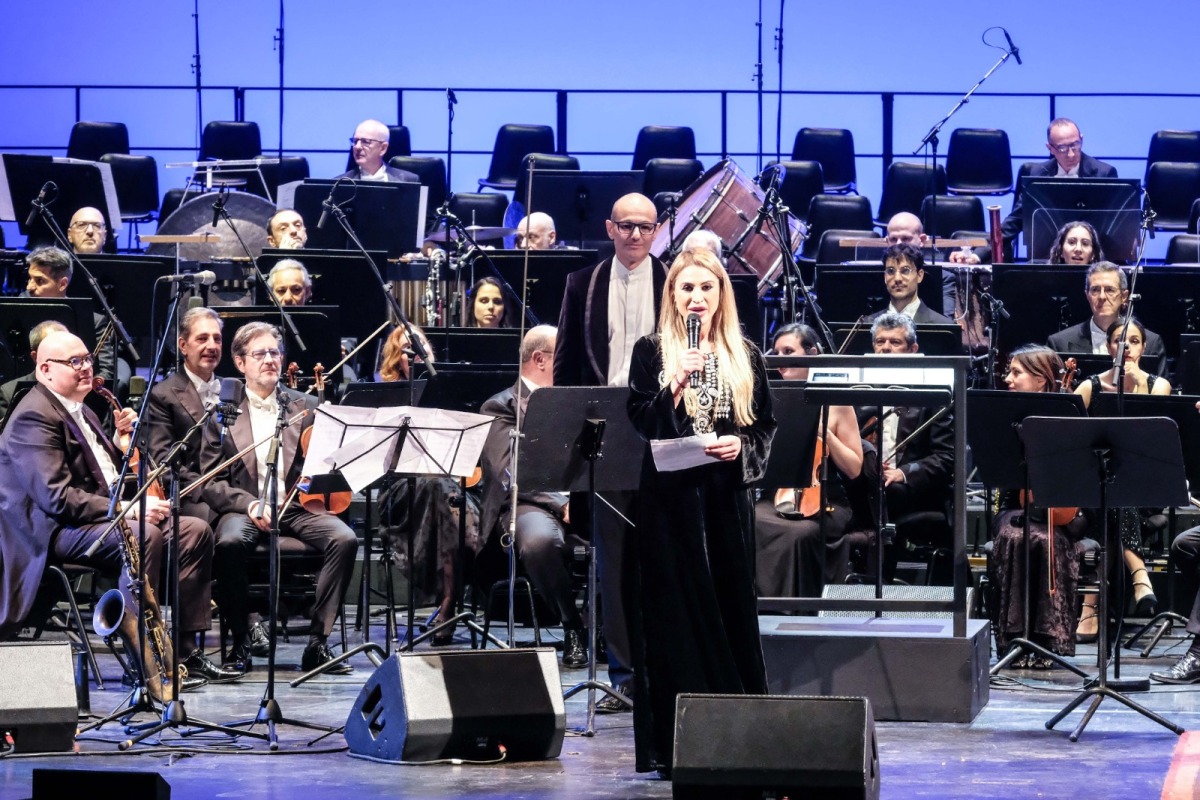

A unique concert, “Il Canto di Due Mari” (The Song of the Two Seas), held on New Year’s Eve in Cagliari, Sardinia, marked the beginning of a cultural exchange program between Italy and Qatar. The performance showcased the work of Qatari composer Dana Al Fardan alongside Sardinian musicians, signaling a deeper collaboration in the arts and potentially opening doors for increased cultural tourism between the two regions.
The event, hosted at the Teatro Lirico di Cagliari, featured a blend of orchestral pieces, vocal performances, and the distinctive sounds of Sardinian sonic sculptures, known as “Sounding Stones.” The concert was attended by high-ranking officials from both Sardinia and Qatar, demonstrating the importance placed on this burgeoning relationship.
Bridging Cultures Through Music and the Arts
The collaboration centers around Al Fardan, a pioneering composer who seamlessly integrates traditional Qatari sounds into orchestral arrangements. Since 2016, her innovative work has gained international recognition, culminating in performances in London’s West End and the Doha Coliseum. This performance in Cagliari presented the world premiere of a new choral arrangement of her album, Tempest.
Tempest, released recently, acts as a sonic preservation of “Fjiri,” traditional Qatari pearl diving music. The album, recorded with over 100 musicians, weaves these seafaring traditions with broader global maritime themes, according to Al Fardan’s statements following the concert. She described the project as an exploration of universal human experiences connected to the sea.
A Collaboration Led by Maestro Pasini
The concert was expertly led by conductor Giovanni Pasini, who has strong ties to both Sardinia, where he was born, and Qatar, where he has been a prominent artistic figure. Pasini’s direction brought together a diverse group of artists, including violinist Anna Tifu, saxophonist Gavino Murgia, and singer Alice Marras, alongside a Fijiri percussion ensemble from Qatar.
A particularly poignant element of the performance was the inclusion of the “Sounding Stones,” ancient limestone and basalt sculptures crafted by the late Sardinian artist Pinuccio Sciola. These instruments, played by Maria Sciola and Andrea Granitzio, create a uniquely resonant, metallic sound that Al Fardan integrated into her compositions. She noted feeling a connection to the “frequency of the land” through this musical interaction.
The performance wasn’t merely a musical event, but a deliberate attempt to foster stronger ties between Sardinia and Qatar. President of the Region of Sardinia, Alessandra Todde, and Cagliari Mayor Massimo Zedda were both in attendance, signaling the regional government’s support for the initiative. Representing the Teatro Lirico di Cagliari were Andrea Cigni and Lorenzo del Pecchia, both of whom emphasized the opera house’s commitment to international collaboration.
Beyond the arts, organizers signaled intentions for partnerships in tourism and economic enterprise. Al Fardan conveyed that this event represents “the opening movement of a much larger international symphony,” pointing towards a broader set of collaborative efforts planned for the future. She highlighted a shared appreciation for cultural values as a key driver behind the initiative.
Looking ahead, the success of this concert is expected to spur further discussions and planning for joint cultural projects throughout 2026. Specific details regarding new initiatives remain to be announced, and the long-term impact of this collaboration on both regions’ cultural landscapes and economies remains to be seen. Stakeholders will be closely watching for concrete developments in the coming months.