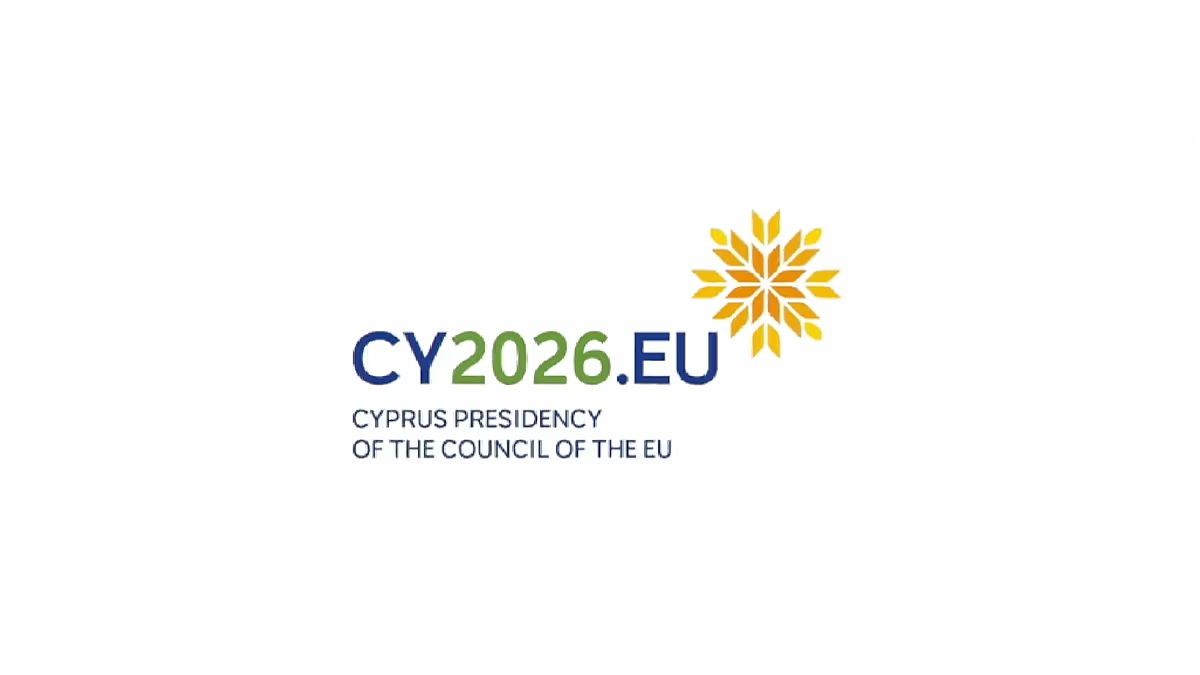

Cyprus is preparing to assume the Presidency of the Council of the European Union on January 1, 2026, for a six-month term. The program and logo for the Cyprus Presidency were unveiled on Sunday in Pano Lefkara, a village renowned for its traditional Lefkari embroidery, which inspired the design. President Nicos Christodoulides outlined a vision for an “Autonomous Union Open to the World” as the guiding principle for the upcoming term, emphasizing key priorities amidst ongoing geopolitical challenges.
The presentation, hosted by the Secretariat of the Cyprus EU Presidency, signifies a pivotal moment for the Republic of Cyprus. President Christodoulides described the occasion as a milestone, highlighting the nation’s readiness to take on the institutional responsibilities of leading the Council and representing the 27 EU member states. He acknowledged the unique position of Cyprus as the southeasternmost EU member state and the last one currently under occupation, adding weight to the significance of its leadership role.
Priorities for the Cyprus Presidency
The Cyprus Presidency will be structured around five interconnected pillars, according to President Christodoulides. These pillars are autonomy through security and defence, autonomy through competitiveness, a Union open to the world, a Union built on shared values, and a robust budget to support these ambitions. Each pillar will inform the policy initiatives pursued during the six-month term.
Security and Defence
In the realm of security and defence, Cyprus intends to champion major initiatives and accelerate the implementation of the White Paper on European Defence and the Roadmap for Defence Preparedness by 2030. Strengthening transatlantic relations, particularly through enhanced Euro-NATO cooperation, is also a cornerstone of the Cypriot approach. Additionally, the Presidency will focus on ensuring freedom of navigation and bolstering maritime safety within the EU.
Economic Resilience and Competitiveness
Addressing economic security is another key priority. The Cyprus Presidency will work to enhance energy security, diversify supply routes, and maintain affordable energy prices for citizens. This includes promoting investments in clean and innovative technologies, strengthening energy interconnectivity infrastructure, and focusing on sustainable reductions in gas emissions. Administrative simplification and further European integration will also be pursued to boost competitiveness.
A Global Role for the EU
Cyprus aims to position the EU as a more assertive and capable actor on the global stage. The Presidency will prioritize strengthening the EU’s relationships with Ukraine, Moldova, the Western Balkans, and Turkey. Advancing the enlargement agenda in a credible manner, with a focus on tangible results, is a central objective. Furthermore, the Presidency will seek to deepen cooperation with countries in the Southern and Eastern Neighbourhood, as well as with Gulf nations, potentially through initiatives like the India-Middle East-Europe Economic Corridor (IMEC). The EU’s relationship with the Gulf Cooperation Council is seen as increasingly important.
Values and the Rule of Law
The Cyprus Presidency will also dedicate significant attention to upholding the rule of law across the EU and strengthening democratic principles. Specific initiatives will focus on affordable housing, implementing the European plan in this area, and combating poverty through programs ensuring access to safe and quality food. Protecting children online, promoting gender equality, and supporting mental health policies are also key components of this pillar.
Financial Framework
Finally, the Presidency will actively engage in negotiations regarding the proposed Multiannual Financial Framework for 2028-2034. The goal is to establish a mature negotiating framework with indicative figures by June, ensuring the EU has the necessary financial resources to support its ambitions.
During its term, Cyprus is scheduled to host over 260 meetings across the island and chair over 1500 meetings in Brussels. The country anticipates welcoming approximately 30,000 visitors and negotiating more than 330 legislative and other dossiers. The success of the Cyprus Presidency will be measured by its ability to deliver tangible results for European citizens amidst a complex and evolving geopolitical landscape.
As Cyprus prepares to take the helm, stakeholders will be closely watching its efforts to navigate ongoing challenges, particularly the war in Ukraine and debates surrounding agricultural policy and trade agreements like Mercosur. The coming months will be crucial in shaping the future direction of the European Union and demonstrating its continued resilience and commitment to its core values.