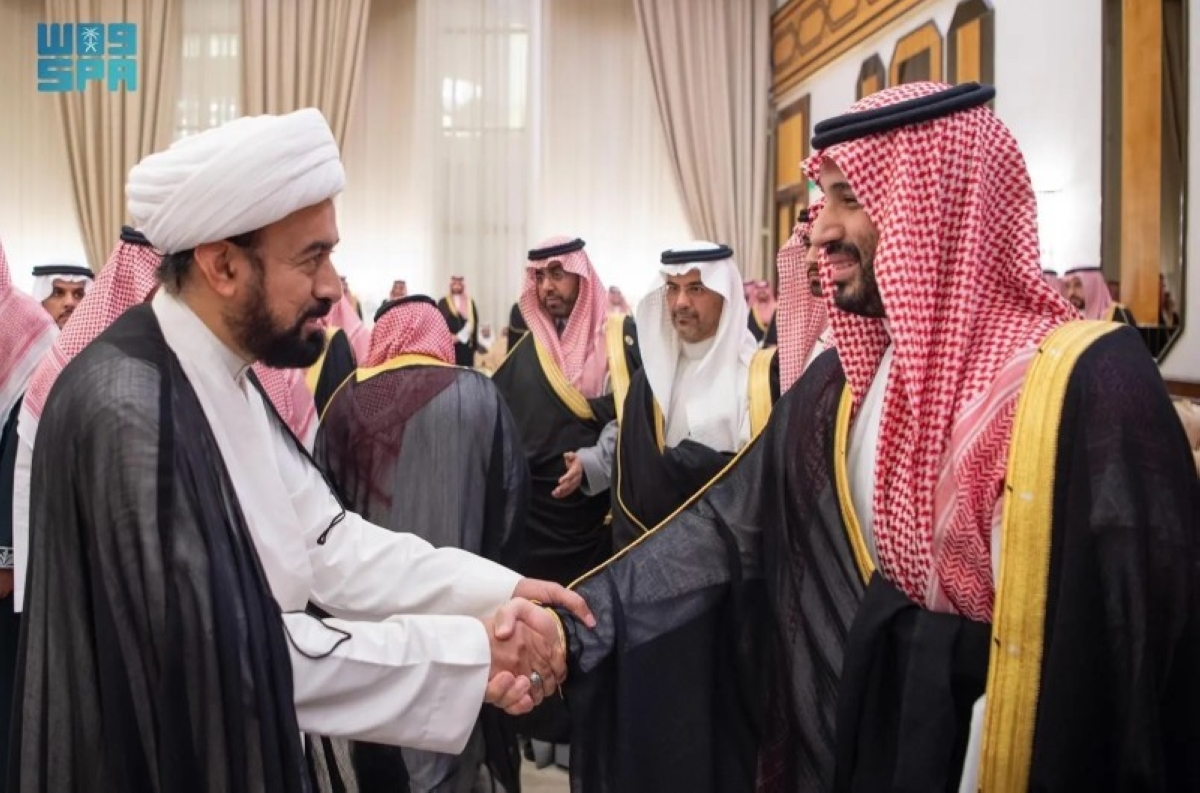

Crown Prince Mohammed bin Salman received greetings from a broad delegation of Saudi officials and citizens at Al-Khaleej Palace in Dammam on Tuesday, signaling continued engagement with regional leaders and the populace. This meeting, focused on domestic affairs and maintaining strong relationships, took place amid ongoing economic diversification efforts within the Kingdom and broader geopolitical considerations. The event offered a platform for reaffirming allegiance and discussing potential future developments in the Eastern Province.
The gathering included prominent figures such as Eastern Province Emir Prince Saud bin Naif, Deputy Emir Prince Saud bin Bandar, and key ministers including Prince Abdulaziz bin Salman (Energy), Prince Faisal bin Farhan (Foreign Affairs), and Prince Abdulaziz bin Saud bin Naif (Interior). The reception underscores the importance the Crown Prince places on direct interaction with both provincial leadership and the general public.
Strengthening Ties in the Eastern Province
The Eastern Province holds significant strategic and economic importance for Saudi Arabia, being the center of the nation’s oil production and home to a sizable portion of the country’s population. The Crown Prince’s reception serves as a visible demonstration of continued commitment to the region’s development and stability. This engagement is particularly noteworthy given the region’s critical role in achieving Saudi Arabia’s Vision 2030 goals.
Historically, the Eastern Province has been a focal point for both economic investment and security concerns. The presence of oil infrastructure makes it a vital asset, but also a potential target. Consequently, consistent dialogue and collaboration between the central government and local authorities are paramount. Recent reports indicate increasing investment in non-oil sectors within the province in line with Vision 2030, including tourism and logistics.
Key Attendees and Their Roles
The participation of Prince Abdulaziz bin Salman, Minister of Energy, highlights the province’s essential position in the global energy market. His presence suggests continued discussion regarding production levels, energy transition initiatives, and the overall health of the oil industry. The Ministry of Energy recently announced plans for further exploration in the region, seeking to maximize resource utilization.
Prince Faisal bin Farhan’s attendance as Minister of Foreign Affairs signifies the Crown Prince’s focus on maintaining strong diplomatic relationships, likely including discussions concerning regional stability and international partnerships pertinent to the Eastern Province. Saudi Arabia has been actively pursuing de-escalation efforts in neighboring countries, aiming for a more secure and prosperous region.
Meanwhile, the involvement of Prince Abdulaziz bin Saud bin Naif, Minister of Interior, points to the ongoing emphasis on internal security and maintaining public order within the province. This is especially important as the Kingdom continues to undergo social and economic reforms. The ministry said it remains dedicated to safeguarding the well-being of citizens and residents in the Eastern Province.
The reception of greetings from a diverse group of citizens, alongside high-ranking officials, indicates the Crown Prince’s intention to foster a sense of inclusivity and accessibility. Such events allow for a direct exchange of perspectives and enable the government to gauge public sentiment on important issues. The government has launched several initiatives promoting citizen engagement in policymaking.
Notably, the event took place at Al-Khaleej Palace, a significant location for official engagements in the Eastern Province. Choosing this venue further underscores the importance of the region to the Crown Prince and the central government. The palace has historically been used to host visiting dignitaries and facilitate meetings with local leaders.
Observers suggest the meeting also served as a demonstration of internal cohesion and support for the ongoing reforms championed by Crown Prince Mohammed bin Salman. These reforms, though ambitious, have faced some internal and external challenges. Maintaining strong relationships within Saudi Arabia’s leadership structure is considered crucial for their continued implementation. The country is actively promoting foreign investment in line with these changes.
The broad attendance encompassing Islamic scholars suggests discussions might have included the Kingdom’s efforts to promote moderate Islam and religious tolerance. Saudi Arabia has actively been positioning itself as a leader in interfaith dialogue and has invested in initiatives aimed at combating extremism. This is a key facet of the country’s soft power strategy.
The Crown Prince’s visit to the Eastern Province and the subsequent reception of greetings are part of a pattern of increased engagement with regional stakeholders. This approach contrasts with previous periods of more centralized decision-making. The shift towards greater decentralization is intended to empower local communities and accelerate development.
Looking ahead, further announcements regarding specific projects and initiatives within the Eastern Province are anticipated. The success of Vision 2030 is heavily reliant on the continued development of this vital region. The next major economic forum scheduled for the province will likely provide a platform for unveiling new plans. Monitoring the implementation of these plans and the ongoing dialogue between the central government and local leadership will be crucial in assessing the long-term impact of this engagement. The Eastern Province’s economic performance will be a key indicator of the Kingdom’s overall progress. Continued investment in infrastructure and human capital will be essential for sustained growth in the Eastern Province.