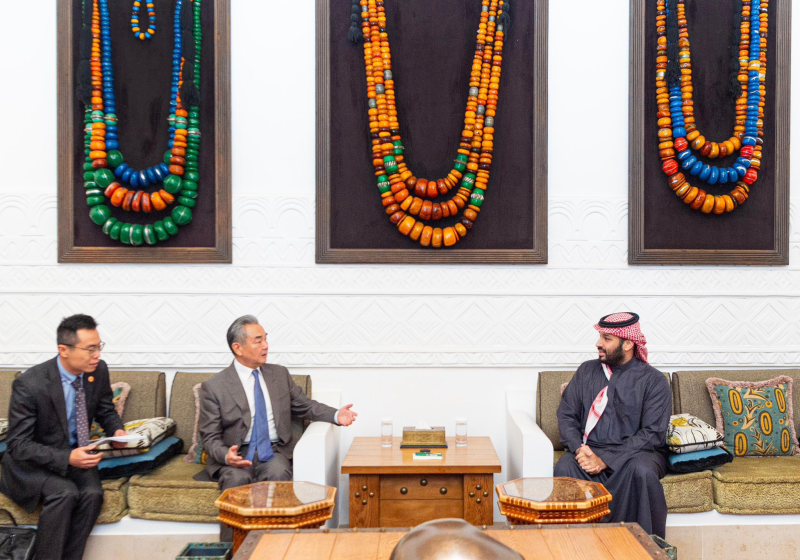

Saudi Arabia and China reaffirmed their commitment to strengthening bilateral ties during a meeting in Riyadh on Sunday between Crown Prince Mohammed bin Salman and Chinese Foreign Minister Wang Yi. The discussions focused on enhancing Saudi-China relations across multiple sectors and addressing pressing regional and international issues. This meeting underscores the growing strategic partnership between the two nations amidst a shifting global landscape.
The meeting took place in Riyadh, Saudi Arabia, on Sunday, September 17, 2023. Both sides emphasized the importance of continued dialogue and collaboration to achieve mutual benefits and promote stability. Attendees included key officials from both governments, signaling the high level of importance attached to the discussions.
Strengthening Saudi-China Relations: A Deepening Partnership
The visit by Foreign Minister Wang Yi is part of a broader effort to deepen economic and political cooperation between Saudi Arabia and China. Saudi Arabia is a major oil supplier to China, and the two countries have been expanding their trade and investment ties in recent years. According to the Saudi Ministry of Investment, China is among the top investors in the Kingdom.
Key Areas of Cooperation
Discussions reportedly covered a range of areas, including energy, infrastructure, and technology. The two countries are exploring opportunities for joint ventures in renewable energy projects, aligning with Saudi Arabia’s Vision 2030 diversification plan. Additionally, collaboration in digital infrastructure and artificial intelligence was likely on the agenda, reflecting China’s technological advancements.
The meeting also addressed regional security concerns. Both Saudi Arabia and China share an interest in maintaining stability in the Middle East, particularly in light of ongoing conflicts and geopolitical tensions. The two sides likely exchanged views on the situation in Yemen, Syria, and the broader regional landscape.
However, navigating differing perspectives on human rights and international norms remains a potential challenge in the relationship. While economic ties are robust, aligning on all geopolitical issues requires ongoing diplomatic efforts. The two nations have historically maintained a pragmatic approach, prioritizing areas of mutual benefit while acknowledging areas of disagreement.
Regional and International Implications
The growing Saudi-China partnership is occurring against the backdrop of evolving global power dynamics. The United States has traditionally been the dominant external power in the Middle East, but China’s increasing economic and political influence is reshaping the regional order. This shift is prompting Saudi Arabia to diversify its partnerships and pursue a more independent foreign policy.
Meanwhile, China’s engagement in the Middle East is driven by its energy needs and its broader Belt and Road Initiative, a massive infrastructure development project aimed at connecting China with markets across Asia, Africa, and Europe. Saudi Arabia is a key transit country for the Belt and Road Initiative, and the two countries are collaborating on infrastructure projects within the Kingdom.
The strengthening of ties between Riyadh and Beijing also comes as the United States seeks to recalibrate its relationships in the region. The Biden administration has emphasized human rights and accountability in its foreign policy, which has sometimes strained relations with traditional allies like Saudi Arabia. This has created space for China to expand its influence.
Furthermore, the discussions likely touched upon the ongoing efforts to mediate conflicts in the region. China has recently played a role in brokering a deal between Saudi Arabia and Iran to restore diplomatic relations, a significant diplomatic achievement. This demonstrates China’s growing willingness to take on a more active role in regional peacemaking. The normalization of relations between Saudi Arabia and Iran is a key development in regional diplomacy, and China’s involvement highlights its increasing influence.
Looking Ahead: Continued Engagement and Future Developments
Following the meeting, both sides expressed their commitment to continuing the dialogue and strengthening cooperation. The Saudi Ministry of Foreign Affairs indicated that further meetings and exchanges are planned in the coming months. The next major event to watch will be the implementation of the agreements discussed during the meeting, particularly in the areas of energy and infrastructure.
The long-term implications of the China-Saudi Arabia relationship remain to be seen. However, it is clear that the two countries are forging a strategic partnership that will have a significant impact on the Middle East and the global economy. Monitoring the evolution of this relationship, and its impact on regional security and international trade, will be crucial in the coming years. The success of joint projects and the ability to navigate potential geopolitical challenges will determine the future trajectory of this important alliance.