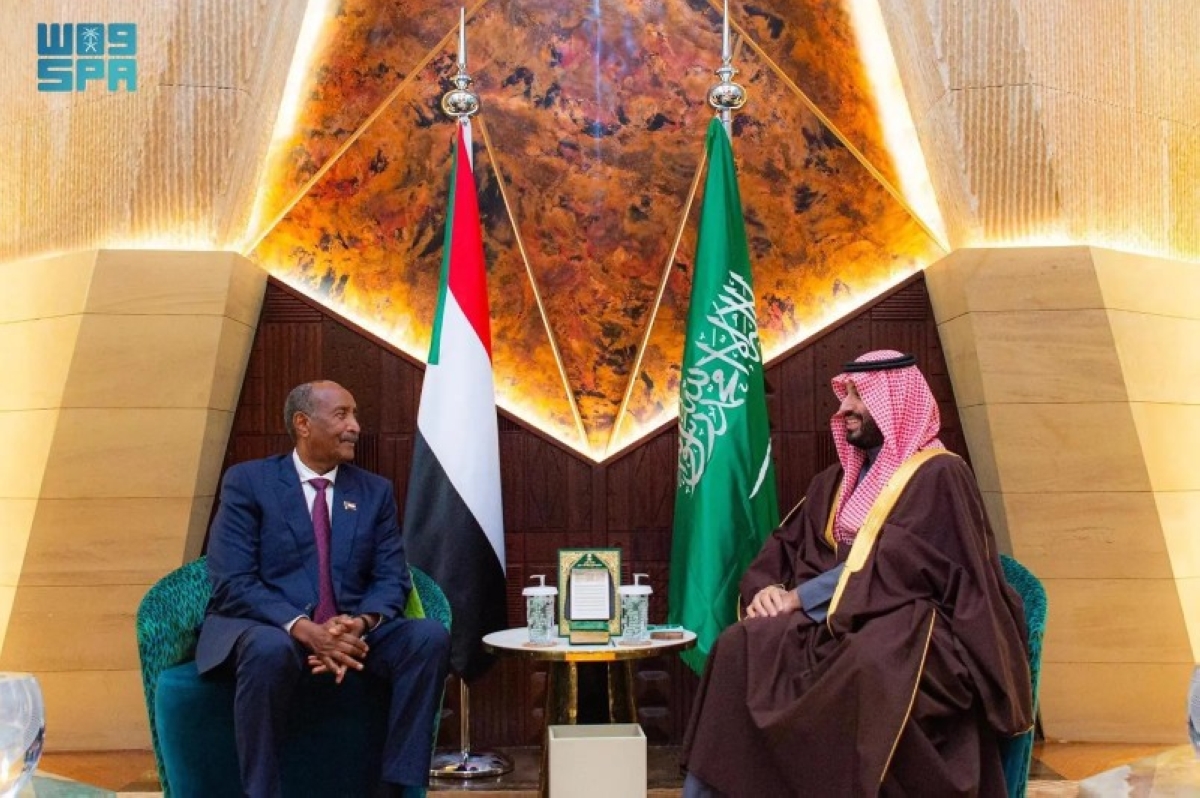

RIYADH — Saudi Crown Prince Mohammed bin Salman held discussions with Abdel Fattah Al-Burhan, President of Sudan’s Transitional Sovereignty Council, in Riyadh on Monday, focusing on the escalating crisis in Sudan. The meeting addressed the ongoing conflict and its regional implications, as well as potential pathways toward a resolution and lasting stability in Sudan. The talks represent a significant diplomatic effort by Saudi Arabia to mediate an end to the fighting that erupted in April.
The meeting took place at Al-Yamamah Palace and included key Saudi officials such as Minister of Defense Prince Khalid bin Salman, Minister of Foreign Affairs Prince Faisal bin Farhan, National Security Advisor Dr. Musaed Al-Aiban, and Minister of Finance Mohammed Al-Jadaan. Saudi Ambassador to Sudan Ali Jafar was also present. The discussions centered on the urgent need for de-escalation and humanitarian access within Sudan, a nation grappling with a complex political transition.
Efforts Towards Stability in Sudan Intensify
Saudi Arabia has been actively involved in diplomatic initiatives aimed at resolving the conflict between the Sudanese Armed Forces (SAF) and the paramilitary Rapid Support Forces (RSF). The current fighting, which began on April 15th, stems from a power struggle between SAF leader Abdel Fattah Al-Burhan and RSF commander Mohamed Hamdan Dagalo, commonly known as Hemedti. Both men previously collaborated in a 2021 coup that derailed Sudan’s transition to civilian rule.
According to reports from the Saudi Ministry of Foreign Affairs, the Crown Prince and Al-Burhan reviewed the latest developments in the security situation and the humanitarian challenges facing the Sudanese people. The meeting underscored Saudi Arabia’s commitment to supporting a peaceful and stable Sudan, recognizing the potential for wider regional instability if the conflict continues unchecked. The discussions also likely touched upon previous ceasefire attempts, which have repeatedly failed to hold.
Regional Concerns and Humanitarian Impact
The conflict in Sudan has raised significant concerns among neighboring countries and international organizations. The fighting has triggered a large-scale humanitarian crisis, with widespread displacement, shortages of essential supplies, and a growing number of casualties. The United Nations estimates that millions are in need of assistance.
Additionally, the violence has the potential to exacerbate existing tensions in the region, particularly in the Horn of Africa. The influx of refugees into neighboring countries like Chad and South Sudan is straining resources and creating new challenges for those nations. The disruption of trade routes through Sudan also poses a threat to regional economic stability.
Previous Mediation Attempts and Saudi Role
Prior to the current escalation, Saudi Arabia, along with the United States, had been involved in mediation efforts to facilitate a return to civilian governance in Sudan. These attempts were hampered by deep-seated mistrust between the military factions and a lack of consensus on the future political structure of the country. The failure of these earlier efforts contributed to the current volatile situation.
However, Saudi Arabia has maintained a consistent position of advocating for a peaceful resolution and has offered its good offices to mediate between the warring parties. The Crown Prince’s meeting with Al-Burhan is the latest in a series of diplomatic engagements aimed at de-escalating the conflict and creating a conducive environment for negotiations. The Kingdom’s financial resources and regional influence position it as a key player in resolving the crisis.
The meeting also comes amid increased international pressure for a ceasefire and a return to talks. Several countries and organizations have called for an immediate end to the violence and urged the parties to engage in constructive dialogue. The African Union has been actively involved in mediation efforts, and the Intergovernmental Authority on Development (IGAD) is also playing a role.
In contrast to some external actors, Saudi Arabia has maintained direct communication with both Al-Burhan and Hemedti, seeking to understand their respective positions and identify potential areas of compromise. This approach is seen by some analysts as crucial for building trust and facilitating a sustainable peace agreement. The situation remains incredibly fluid, and the positions of both sides are subject to change.
The ongoing conflict has also impacted Sudan’s already fragile economy. The disruption of economic activity, coupled with the destruction of infrastructure, is expected to have a severe impact on the country’s development prospects. Restoring economic stability in Sudan will be a major challenge in the aftermath of the conflict, requiring significant international assistance and investment. The political crisis has further complicated economic recovery efforts.
While details of the specific proposals discussed during the meeting have not been publicly released, it is likely that the Crown Prince emphasized the importance of protecting civilians, ensuring humanitarian access, and resuming negotiations under a clear and credible framework. The Saudi government has previously expressed its willingness to provide financial and logistical support for a peace process.
Looking ahead, the immediate priority is to secure a durable ceasefire and create a safe environment for humanitarian assistance to reach those in need. The long-term goal is to facilitate a return to civilian governance and address the underlying causes of the conflict. The success of these efforts will depend on the willingness of all parties to compromise and prioritize the interests of the Sudanese people. Further diplomatic initiatives and potential sanctions remain possibilities as the international community seeks to influence the outcome of the Sudan conflict. The next few weeks will be critical in determining whether a path towards lasting peace can be established.
It remains uncertain whether these talks will yield a breakthrough, but they represent a crucial step in the ongoing efforts to address the Sudan situation and prevent further deterioration.