


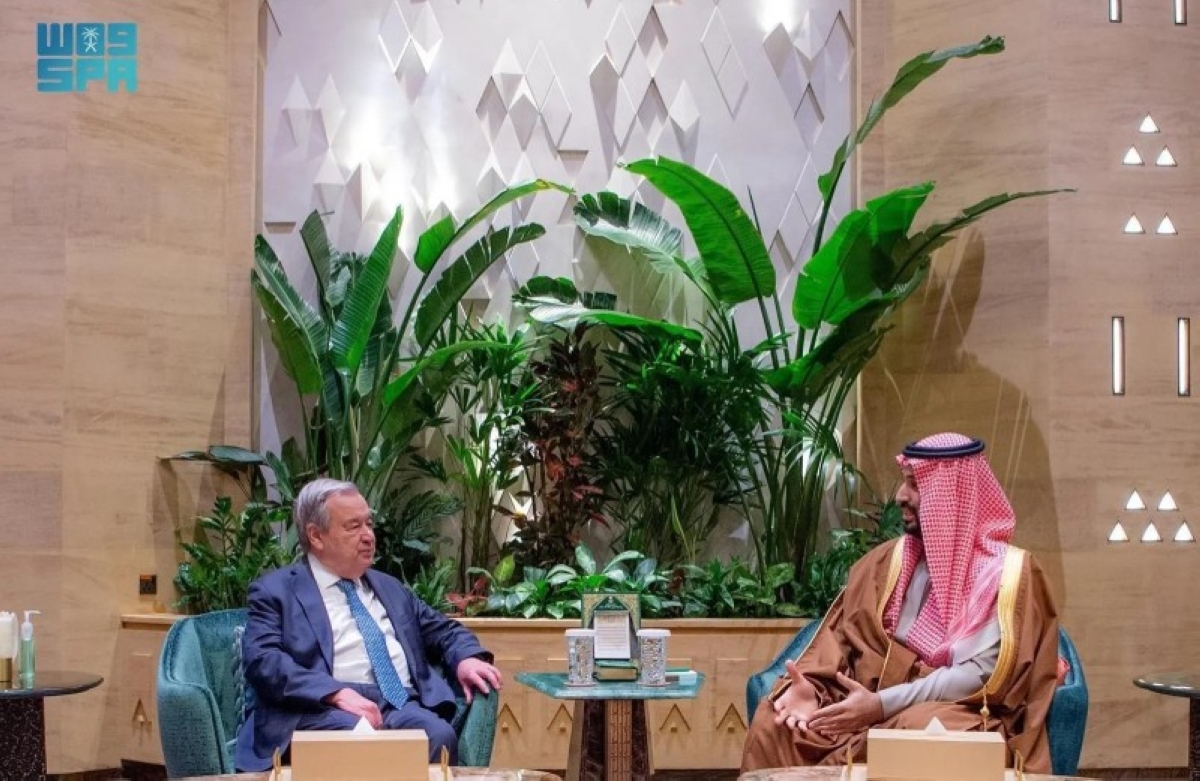

Saudi Crown Prince Mohammed bin Salman engaged in diplomatic talks with both United Nations Secretary-General António Guterres and Eritrean President Isaias Afwerki in Riyadh on Wednesday, focusing on regional stability, global security, and strengthening bilateral ties. These meetings underscore Saudi Arabia’s active role in international diplomacy and its efforts to mediate and foster cooperation amidst ongoing geopolitical challenges. The discussions surrounding Saudi Arabia diplomacy are particularly noteworthy given the complex regional landscape.
The meetings, held at Al-Yamamah Palace, took place as the Kingdom continues to navigate its position as a key player in the Middle East and a significant economic force globally. Both engagements involved high-level delegations from each side, signaling the importance placed on the conversations. The timing of these talks is likely influenced by escalating tensions in several regional hotspots and the ongoing need for humanitarian assistance.
Strengthening International Partnerships Through Saudi Arabia Diplomacy
The meeting with UN Secretary-General Guterres centered on a broad review of current regional and international developments. Both leaders reportedly explored avenues for bolstering efforts to enhance global security and stability, according to official statements released by the Saudi Ministry of Foreign Affairs. This collaboration is crucial as the UN seeks to address multifaceted crises, from conflicts in Ukraine and Sudan to climate change and food insecurity.
Saudi Arabia has historically maintained a close working relationship with the United Nations, contributing financially and participating in peacekeeping operations. However, the Kingdom’s diplomatic approach has evolved in recent years, becoming more assertive in pursuing its national interests and mediating regional disputes. This shift is reflected in its recent normalization of relations with Iran, brokered by China, and its ongoing efforts to resolve the conflict in Yemen.
Focus on Regional Security
Specific areas of concern discussed with the UN Secretary-General likely included the situation in Yemen, where Saudi Arabia has been involved in a military intervention since 2015. The ongoing peace talks and the need for a comprehensive political solution were probably key topics. Additionally, the leaders likely addressed the broader implications of the conflict in Sudan and the potential for regional spillover effects.
The Saudi government has consistently advocated for a rules-based international order and has expressed its commitment to combating terrorism and extremism. These principles likely formed a foundation for the discussions with Guterres, as both parties share a common interest in addressing these global threats. The role of multilateral institutions in maintaining peace and security was also likely emphasized.
Meanwhile, the separate talks with Eritrean President Afwerki focused on deepening bilateral relations and exploring new areas of cooperation. Saudi Arabia and Eritrea have been strengthening their ties in recent years, particularly in the realm of economic investment and security collaboration. The discussions reportedly covered prospects for cooperation across various fields, though specific details were not disclosed.
Eritrea’s strategic location on the Red Sea makes it a vital partner for Saudi Arabia in securing maritime trade routes and countering potential threats to regional stability. The Kingdom has been investing in infrastructure projects in Eritrea, including port development and energy initiatives. This economic engagement is seen as a way to foster closer political ties and promote mutual interests. Bilateral relations between the two nations have seen a marked improvement since 2018.
The meeting with Afwerki also comes amid broader Saudi efforts to engage with countries in the Horn of Africa. The Kingdom recognizes the growing importance of this region in addressing issues such as migration, terrorism, and maritime security. Saudi Arabia’s increased engagement in the Horn of Africa is part of a larger strategy to project its influence and promote its vision for a more stable and prosperous Middle East. Regional stability is a key objective for the Kingdom.
Attending both meetings were prominent Saudi officials, including Minister of Foreign Affairs Prince Faisal bin Farhan and National Security Advisor Dr. Musaed Al-Aiban, highlighting the high priority given to these diplomatic engagements. The presence of these key figures underscores the Kingdom’s commitment to actively shaping regional and international events.
Looking ahead, the outcomes of these discussions will likely become clearer in the coming weeks and months through concrete actions and policy announcements. The success of Saudi Arabia’s diplomatic initiatives will depend on its ability to build consensus among key stakeholders and to address the underlying causes of conflict and instability. Further developments in the Yemen peace process and the implementation of economic agreements with Eritrea will be key indicators to watch. The ongoing evolution of Saudi foreign policy will continue to be a significant factor in the geopolitical landscape.
The international community will be observing how Saudi Arabia leverages its growing influence to promote peace, security, and prosperity in the region and beyond. Continued dialogue and cooperation between Saudi Arabia, the United Nations, and countries like Eritrea are essential for addressing the complex challenges facing the world today.