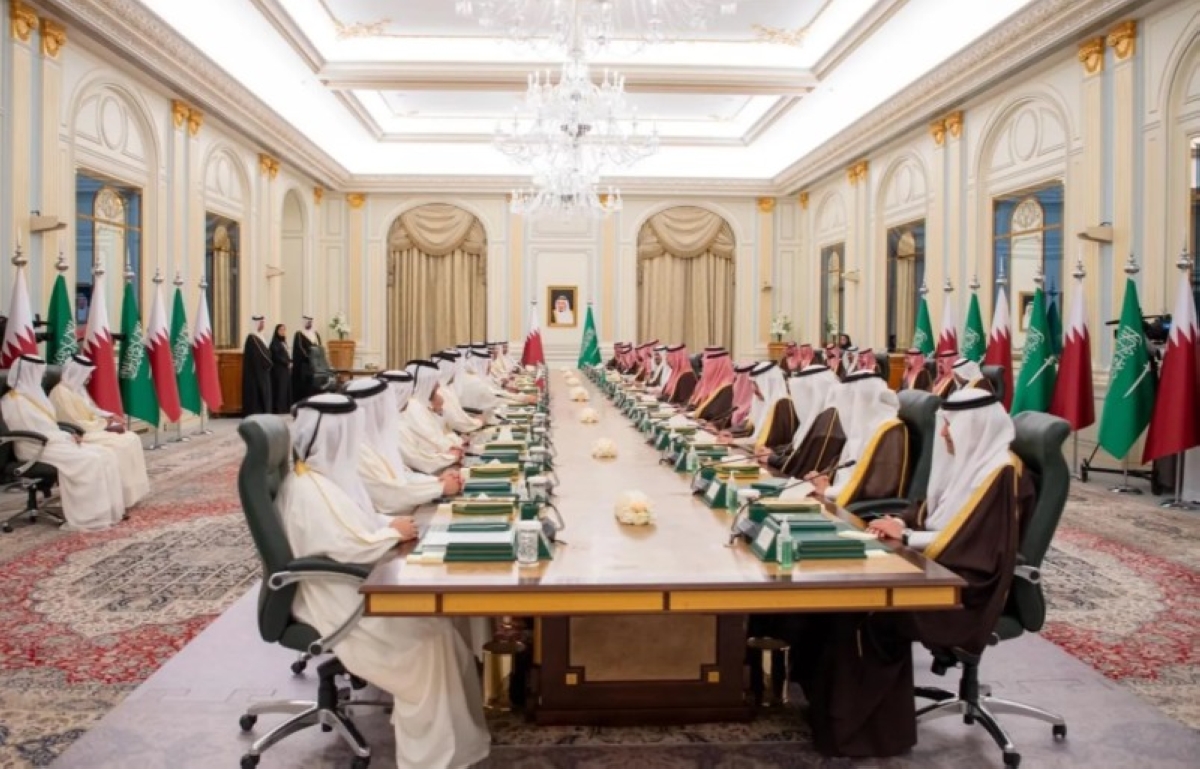

RIYADH — Saudi Crown Prince and Prime Minister Mohammed bin Salman and Emir of Qatar Sheikh Tamim bin Hamad Al Thani convened a high-level meeting in Riyadh on Monday to bolster Saudi-Qatar relations and enhance collaboration across multiple sectors. The gathering of the Saudi-Qatari Coordination Council signals a continued thaw in relations following a period of regional tension. Discussions centered on strengthening ties and coordinating efforts on issues of mutual concern, aiming to foster stability and joint action within the Gulf region.
The meeting, held at Al-Yamamah Palace, involved official talks between the two leaders, reviewing the established fraternal ties and exploring avenues for increased bilateral cooperation. Both sides emphasized a commitment to advancing their shared interests and strengthening collective Gulf initiatives. Sheikh Tamim’s arrival at King Khalid International Airport was marked by a formal reception hosted by Crown Prince Mohammed bin Salman.
Strengthening Saudi-Qatar Relations Through Strategic Coordination
The Saudi-Qatari Coordination Council functions as a crucial forum for deepening cooperation in political, economic, military, and developmental spheres. Established to facilitate a more robust partnership, the council aims to align the two nations’ strategic goals and address shared challenges. This most recent meeting represents the eighth convened session of the council, underlining its consistent role in fostering dialogue.
The move towards increased cooperation comes after a significant diplomatic rift. In 2017, Saudi Arabia, along with the United Arab Emirates, Bahrain, and Egypt, imposed a blockade on Qatar, citing concerns over its support for terrorism and its alignment with Iran. Qatar consistently denied these accusations, characterizing the blockade as a violation of its sovereignty. The blockade was lifted in January 2021, paving the way for renewed diplomatic efforts.
Focus Areas of Collaboration
Recent preparatory meetings between officials, including one between Saudi Foreign Minister Faisal bin Farhan and Qatari Prime Minister and Foreign Minister Mohammed bin Abdulrahman Al Thani, focused on identifying key areas for collaboration. These talks underscored the importance of developing joint initiatives to solidify both bilateral and multilateral partnerships. According to statements released following these ministerial meetings, discussions deepened around energy cooperation and investment opportunities.
Economic ties between Saudi Arabia and Qatar are expected to receive particular attention. Both nations are major players in the global energy market, and increased collaboration could lead to supply chain efficiencies and greater market stability within the Gulf Cooperation Council (GCC). The potential for joint ventures in sectors beyond energy, such as tourism and infrastructure, was also reportedly discussed.
Regional security and political stability were also high on the agenda. Both Saudi Arabia and Qatar share concerns about external interference in the region and the need to counter extremist ideologies. Analysts suggest continued coordination on these fronts is vital for maintaining peace and security throughout the Middle East. The ongoing situation in Yemen and the broader effort to de-escalate tensions with Iran likely factored into the discussions of regional diplomacy.
The Executive Committee of the Saudi-Qatar Coordination Council reviewed the progress of existing projects and committees prior to the main meeting. This review ensured that the eighth session built upon previous advancements and identified areas needing further attention. They are focused on streamlining the implementation of agreed-upon initiatives.
While details of specific agreements reached during the meeting haven’t been extensively publicized, the commitment to strengthened ties is clear. The emphasis on joint action signals a desire to present a united front on regional issues. This aligns with broader efforts to revitalize the GCC and enhance its effectiveness in addressing common challenges.
Despite the positive developments, several underlying issues continue to warrant observation. Divergences in foreign policy approaches, particularly concerning relations with Iran and the role of political Islam, occasionally create friction. Addressing these differences through consistent dialogue will be critical for the long-term success of the diplomatic efforts. This meeting is viewed as a positive incremental step.
Looking ahead, the Saudi-Qatari Coordination Council is expected to continue its work through its various subcommittees. Monitoring the implementation of the discussed initiatives and observing any further signs of policy convergence will be important indicators of the strengthened relationship’s durability. The next scheduled review of the Council’s progress is anticipated within the next six months, though no firm date has been announced.
It remains to be seen how these renewed efforts will translate into concrete outcomes, but the latest meeting signals a willingness from both Riyadh and Doha to prioritize cooperation and work towards a more stable and prosperous future for the Gulf region.