
Governments globally are increasingly recognizing the importance of the creative economy as a major driver of growth, moving past traditional models focused solely on scale and efficiency. The shift acknowledges that innovation, cultural influence, and economic prosperity are intrinsically linked. Recent data highlighted at the United Nations Conference on Trade and Development (UNCTAD) in October 2025 reports that the creative economy contributes over 6% of global gross value added across more than 55 countries studied.
This evolving understanding is prompting new policies and initiatives aimed at fostering creative industries, from arts and crafts to design and technology. The focus is on creating ecosystems that support entrepreneurs, artists, and innovators, recognizing their value beyond simply cultural enrichment. Sharjah, in the United Arab Emirates, provides a compelling example of a region actively prioritizing this economic transformation, and has become a focal point for discussion around economic diversification.
The Growing Significance of the Creative Economy
Historically, creative industries were often viewed as secondary to core economic sectors like manufacturing or finance. However, a growing body of research suggests robust cultural ecosystems are correlated with increased innovation, enhanced export capabilities, and advantageous soft power for nations. This is particularly relevant in the post-pandemic world, where supply chains are being re-evaluated and the demand for unique, locally-sourced products and experiences is rising.
UNCTAD Findings and Global Trends
The recent UNCTAD figures underscore the global impact of the creative sectors. According to the conference discussions, the figures demonstrated a notable increase in the contribution of creative industries over the past decade. These include areas like fashion, film, music, video games, and architecture, indicating a broad base of economic activity. Furthermore, the report indicated that investment in these sectors has consistently outpaced overall economic growth in many nations.
This trend is fueled by several factors, including the rising middle class in emerging markets, increased digital connectivity, and a growing appreciation for intellectual property. The ability to generate value from ideas and artistic expression is becoming a key competitive advantage for countries seeking sustainable development. This is also driving demand for entrepreneurship within these fields.
Sharjah’s Strategy for Cultivating Creativity
Sharjah has positioned itself as a hub for creativity and innovation, long before the global shift in economic ideology. Recognizing that culture is fundamental to progress, the emirate has actively invested in programs and infrastructure to support its creative industries. This commitment has led to international recognition, including its designation as a UNESCO Creative City.
The UNESCO designation acknowledges Sharjah’s dedication to placing creativity at the heart of its urban development strategy. This includes initiatives promoting local arts, supporting cultural heritage, and fostering a vibrant creative community. Additionally, the emirate is actively working to attract international talent and investment within the cultural sector.
The Sharjah Entrepreneurship Festival: A Catalyst for Innovation
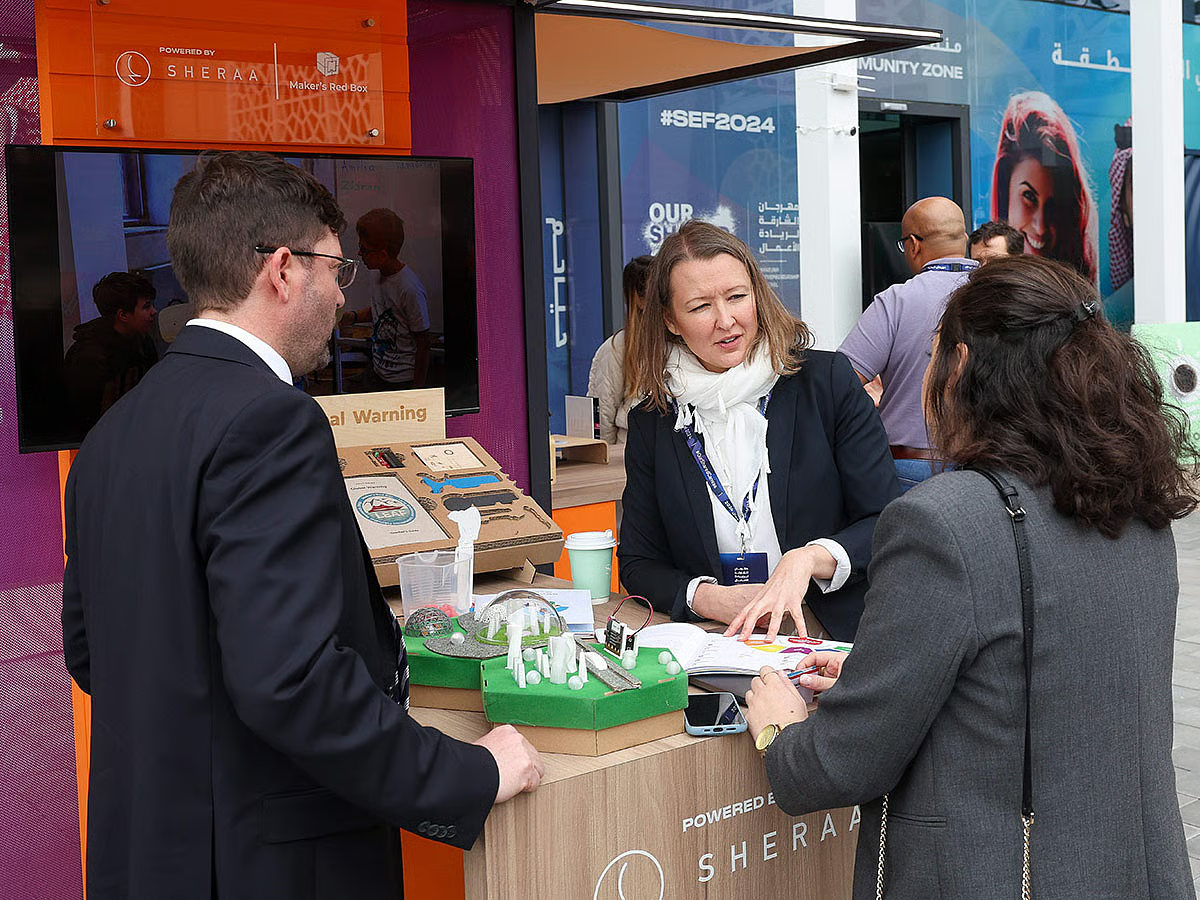
Central to Sharjah’s strategy is the annual Sharjah Entrepreneurship Festival (SEF). Initially launched as a smaller event, SEF has rapidly evolved into a significant regional platform for connecting creativity with enterprise. The festival operates as a temporary, concentrated environment where ideas, talent, and funding opportunities converge.
SEF differs from traditional business conferences by placing a specific emphasis on ventures driven by creative thinking. It aims to bridge the gap between artistic vision and commercial viability, providing entrepreneurs with the resources and network they need to succeed. The festival routinely features workshops, mentorship programs, and pitch competitions.
However, the impact of SEF extends beyond the dates of the event itself. It functions as a magnet for attracting innovative businesses and individuals to Sharjah, contributing to the long-term growth of its creative ecosystem. The focus on immersive experiences and networking opportunities further reinforces Sharjah’s reputation as a forward-thinking and culturally rich destination.
In contrast to some countries still grappling with how to integrate creative industries into broader economic planning, Sharjah offers a model for proactive investment and strategic development. The emirate’s approach prioritizes not just artistic output, but the creation of a sustainable infrastructure that supports the entrepreneurial spirit within the creative sectors.
The continued success of Sharjah’s model hinges on consistent investment in education, infrastructure, and access to capital. Meanwhile, other governments are likely to observe and adapt elements of Sharjah’s strategy to their own unique contexts. The next phase will likely involve further data analysis to refine policy approaches and demonstrate measurable economic outcomes directly attributable to creative industries support. The effectiveness of these policies, particularly in navigating evolving technological landscapes like AI, will be a crucial area of observation in the coming years.