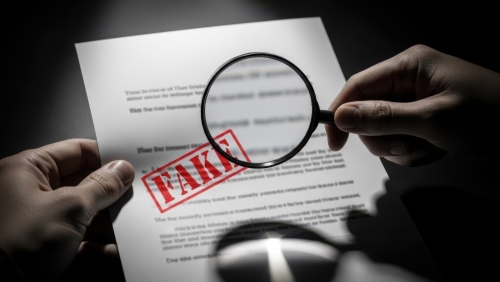

A Bahraini court has commenced the trial of a construction worker facing charges related to the alleged use of forged medical certificates to falsely claim sick leave. The case, heard before the First High Criminal Court, highlights the increasing concern over the authenticity of official documents presented to employers and underscores the legal ramifications of such actions. The defendant, a 28-year-old Asian national, remains in custody as the proceedings unfold, with the next hearing scheduled for January 6, 2026.
Details of the Forged Medical Certificate Case
The Public Prosecution has accused the construction worker of forging official documents – specifically, medical certificates falsely bearing the stamp and authority of the Ministry of Health. These alleged forgeries took place throughout 2024 and 2025. Crucially, the charges also include knowingly using these fabricated documents by submitting them to his employer, attempting to justify absences from work. This case isn’t just about forgery; it’s about a breach of trust within the employment relationship and potential financial implications for the company.
Discrepancies Uncovered by Company Personnel
Testimony presented to the court revealed a pattern of suspicious sick leave claims. The Human Resources manager of the construction company stated that the defendant had submitted four medical certificates purportedly issued by a local health centre.
Upon thorough verification, a significant discrepancy was immediately apparent – only one of the submitted certificates proved to be genuine. The remaining three were flagged as being falsified. The manager further testified that the defendant personally handed these certificates to the company accountant after signing them, suggesting a deliberate effort to legitimize the false claims. This is a key detail as it places the defendant directly involved in the submission of potentially fraudulent paperwork.
Conflicting Accounts of Absenteeism
Further strengthening the prosecution’s case was the testimony of an accountant affiliated with the same contracting firm. The accountant confirmed the defendant had been absent from work on four separate occasions – three days in 2024 and one in 2025.
The defendant had provided medical certificates to cover three of these absences. However, the accountant admitted to not recalling receiving a certificate for the fourth day of absence. This inconsistency adds another layer of doubt regarding the legitimacy of the defendant’s claims.
Expert Testimony and Ministry Confirmation
The court also heard from a family medicine specialist working at the health centre in question. This expert testimony proved pivotal in establishing the fraudulent nature of the documents. The specialist confirmed the validity of the certificate dated December 3, 2024, verifying it through the health centre’s established security code system.
However, the specialist unequivocally stated that the certificates dated November 18, December 12, and January 9, 2025, were complete fabrications. He detailed several telltale signs of forgery, including inconsistencies in writing style, improper spacing, unusual numbering sequences, and overall formatting errors.
Specific Indicators of Fraud
The specialist highlighted that the forged certificates incorrectly included the names of doctors who were not employed at the health centre during the relevant periods. Furthermore, the medical condition details listed on the forged documents did not align with the information typically found on authentic certificates issued by the facility. These specific details demonstrate a level of sophistication in the forgery, but ultimately, were detectable through expert analysis.
Adding further weight to the prosecution’s argument, a letter from the Ministry of Health was presented as evidence. This official document confirmed that the defendant had indeed visited the health centre on December 3, 2024, and was issued a valid sick leave certificate only for that specific date. This directly contradicts the defendant’s submission of additional certificates for other days.
Defendant’s Admission and Next Steps
During the initial investigation, the defendant reportedly acknowledged that the dates listed on the submitted forged medical certificates corresponded to his own personal timeline. This admission, while potentially subject to further legal scrutiny, is a significant development in the case.
The court has adjourned the trial until January 6, 2026, to allow ample time for the defense to review the evidence presented by the Public Prosecution, formulate a response, and receive a complete copy of the case file. The defendant will remain in custody pending the next hearing. This extended adjournment suggests the complexity of the case and the need for thorough preparation by both sides. The use of fraudulent documents carries serious penalties in Bahrain, and the outcome of this trial will likely serve as a deterrent to others considering similar actions. The case also raises questions about the security measures in place for issuing and verifying sick leave certificates within the country’s healthcare system.
This case serves as a reminder to both employers and employees of the importance of honesty and integrity in the workplace. It also highlights the robust legal framework in Bahrain designed to combat document forgery and protect the rights of all parties involved.