
The European Commission has approved national investment plans from Estonia, Greece, Italy, Latvia, Lithuania, Poland, Slovakia, and Finland, unlocking approximately €74 billion in funding under the new €150 billion European Defence Fund (EDF) scheme. This move, announced on Monday, January 26, 2026, represents a significant step towards bolstering European defence capabilities and achieving strategic autonomy. The funding is part of the broader Readiness 2030 plan, aiming to mobilize up to €800 billion for defence spending by the end of the decade.
Poland will receive the largest share of this initial tranche, with €43.7 billion allocated to its defence projects. This approval follows a similar decision on January 15th, granting €38 billion to Belgium, Bulgaria, Denmark, Spain, Croatia, Cyprus, Portugal, and Romania. The funds will be used to procure a range of critical defence equipment and technologies, according to the Commission.
Boosting European Defence Capabilities with the EDF
The Security Action for Europe (SAFE) programme, funded through the EDF, is designed to address growing security concerns and enhance the European Union’s ability to respond to potential threats. Defence Commissioner Andrius Kubilius stated that this second round of investments demonstrates Europe’s commitment to translating security ambitions into tangible military strength. He emphasized the importance of providing European industry with the resources to deliver cutting-edge defence solutions.
Nineteen EU member states have now applied for SAFE funding, with Czechia, France, and Hungary still awaiting approval of their plans. The Commission provisionally agreed on funding allocations last September, prioritizing investments in key areas.
Priority Areas for Investment
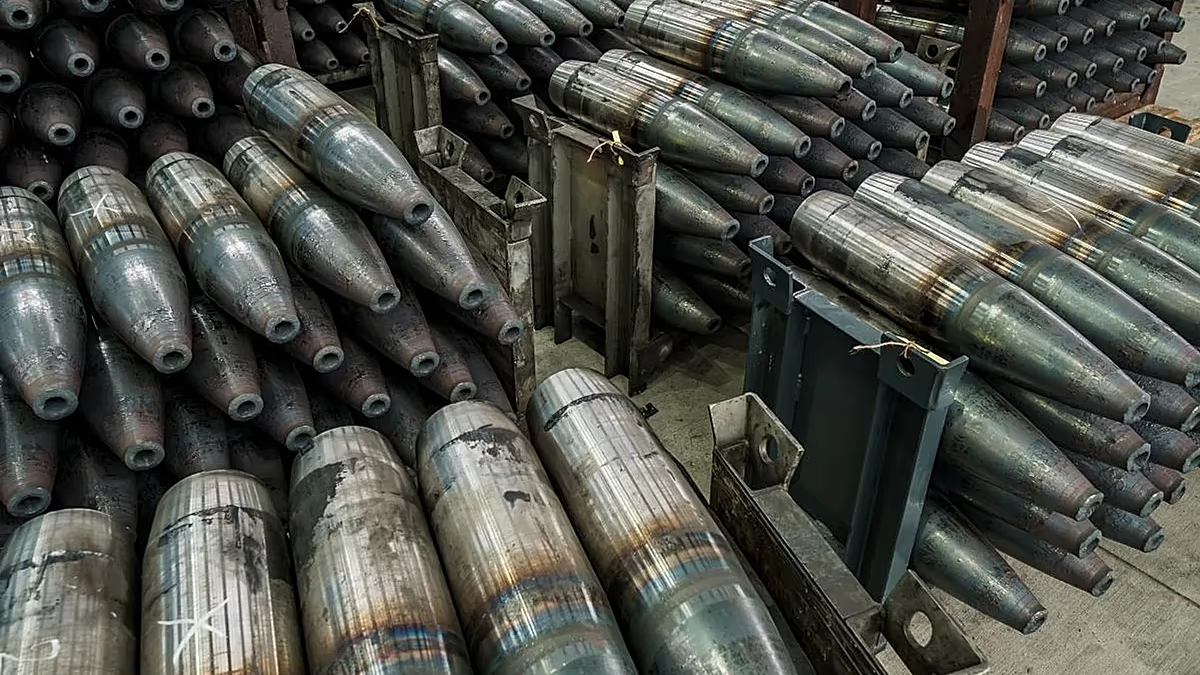
The SAFE scheme focuses on bolstering the procurement of several critical defence products. These include ammunition, missiles, and artillery systems, as well as advanced technologies like drones, counter-drone systems, and cybersecurity solutions. Furthermore, the programme prioritizes investments in air and missile defence, protection of critical infrastructure, space asset protection, artificial intelligence, and electronic warfare systems.
A key condition attached to the funding is a strong emphasis on European sourcing. Equipment purchased with SAFE funds must be predominantly European-made, with a maximum of 35% of component costs originating from outside the EU, the European Economic Area (EEA), or Ukraine. Canada, through a bilateral agreement, will have similar access to the scheme. This requirement aims to strengthen the European defence industrial base and reduce reliance on external suppliers.
The scheme offers a particular advantage to member states with lower credit ratings, enabling them to access financing at more favorable terms than they might achieve independently. Germany, possessing a strong credit rating, opted not to request funds through the SAFE mechanism. However, the overall demand for the scheme exceeded its initial budget, potentially paving the way for expansion.
EU ministers now have a four-week window to formally approve the investment plans. Following approval, the first payments are anticipated in March 2026. European Commission President Ursula von der Leyen indicated late last year that the high level of interest in SAFE could lead to an increase in the available funding beyond the initial €150 billion.
The approval of these plans marks a pivotal moment in the EU’s efforts to enhance its defence spending and strategic independence. This initiative is expected to stimulate innovation within the European military industry and improve the continent’s overall security posture. The focus on specific technologies and the requirement for European sourcing are designed to create a more resilient and competitive defence ecosystem.
Looking ahead, stakeholders will be closely monitoring the implementation of these investment plans and the impact on the European defence landscape. The success of the SAFE scheme will be crucial in determining the EU’s ability to address future security challenges and maintain its position as a global actor. For further information on the EU’s defence initiatives, visit the European Commission’s Directorate-General for Defence, Industry and Space website.