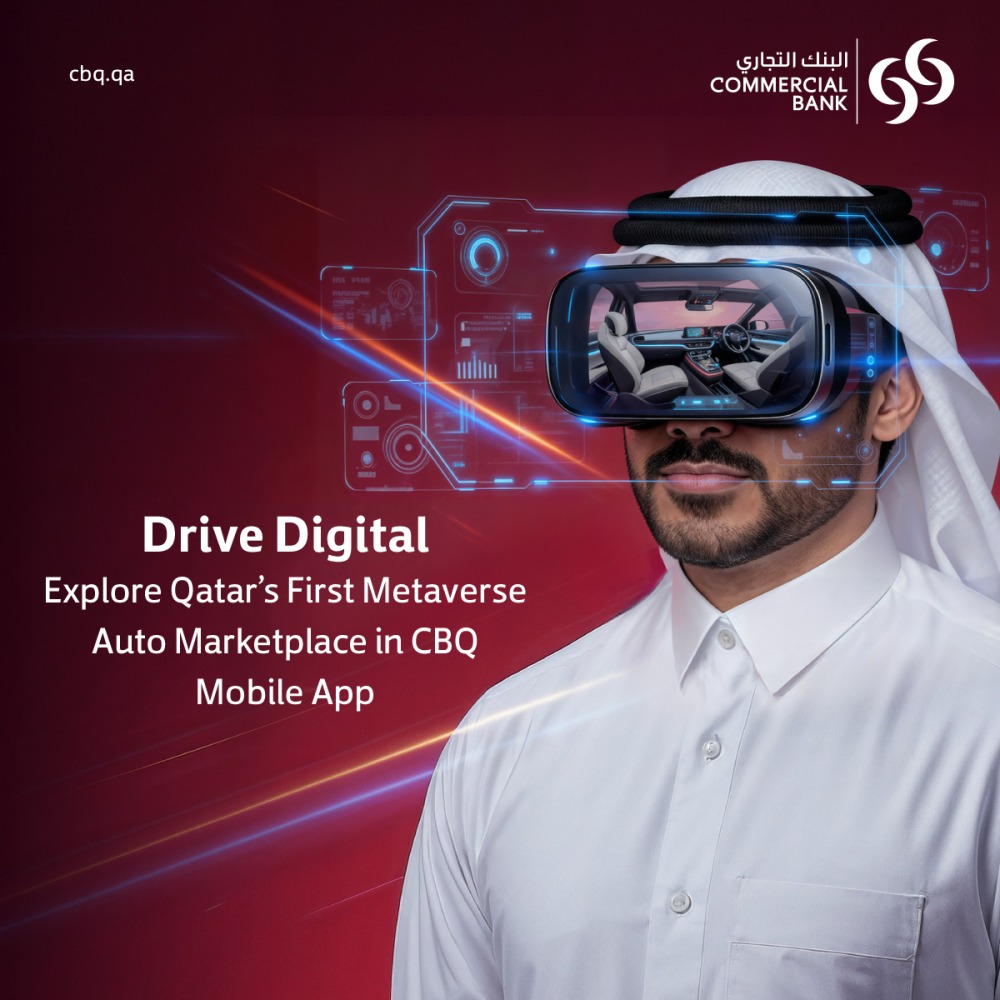

Commercial Bank of Qatar has launched the nation’s first Metaverse-enabled Auto Marketplace within its CBQ Mobile App, offering customers an immersive virtual car shopping experience. The new feature allows users to explore detailed 3D models of vehicles and initiate the car-buying process, including test drive scheduling and loan applications, directly from their smartphones. The launch, announced this week, positions Commercial Bank as a pioneer in integrating emerging technologies with financial services in the region.
The innovative marketplace is accessible through the existing CBQ Mobile App and is further enhanced by compatibility with Meta Quest (Oculus) virtual reality headsets. This allows customers to fully immerse themselves in a virtual showroom environment, examining vehicles in a way traditional online platforms cannot replicate. The service is currently available to customers in Qatar, with potential for regional expansion.
Commercial Bank Drives Digital Innovation with Metaverse Auto Marketplace
This move by Commercial Bank reflects a growing trend among financial institutions to explore the potential of the Metaverse and related technologies. While still in its early stages, the Metaverse offers opportunities for enhanced customer engagement and novel service delivery. According to industry analysts, banks are increasingly recognizing the need to adapt to evolving consumer preferences and embrace digital transformation to remain competitive.
Shahnawaz Rashid, EGM and Head of Retail Banking at Commercial Bank, stated the launch represents a step in redefining modern banking. He emphasized the bank’s commitment to customer-centricity and its ongoing efforts to drive meaningful digital innovation within Qatar’s financial sector. The bank has previously invested in technologies like biometric verification and real-time fraud protection.
How the Virtual Showroom Works
The CBQ Mobile App integration allows customers to browse available vehicles, view detailed specifications, and even “walk around” the cars in a 3D environment. Using a VR headset provides a more immersive experience, simulating the feeling of being physically present in a showroom.
Beyond the visual experience, the platform streamlines the purchasing process. Customers can schedule test drives at physical dealerships and submit applications for auto loans directly through the app. This integration aims to reduce friction and provide a more convenient end-to-end car buying journey.
However, the success of this initiative will depend on widespread adoption of VR technology among consumers. While VR headset ownership is increasing, it remains a relatively niche market. The bank will likely monitor usage patterns and gather customer feedback to refine the platform and potentially expand its features.
The launch of this Metaverse Auto Marketplace aligns with Qatar’s broader national vision for digital transformation, outlined in the Qatar National Vision 2030. The country is actively investing in technology and innovation to diversify its economy and enhance the quality of life for its citizens. This initiative demonstrates the potential for the financial sector to contribute to these goals.
Commercial Bank’s move also comes as other automotive brands globally are experimenting with virtual showrooms and Metaverse experiences. These efforts are largely focused on attracting younger, tech-savvy consumers and creating new brand engagement opportunities. The bank’s approach differs by embedding the experience directly within its existing banking infrastructure.
Looking ahead, Commercial Bank has not specified a timeline for further Metaverse integration. The bank will likely assess the performance of the Auto Marketplace and explore other potential applications of virtual and augmented reality within its suite of financial services. Monitoring customer adoption rates and the evolving landscape of Metaverse technology will be crucial in determining the bank’s next steps.
The long-term impact of this innovation on Qatar’s banking and automotive sectors remains to be seen, but it undoubtedly signals a shift towards more immersive and digitally-driven customer experiences.