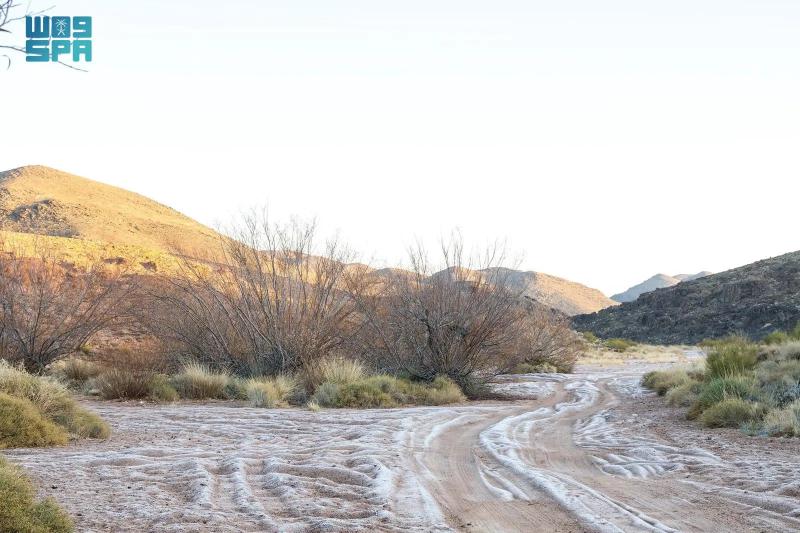

Several cities across Saudi Arabia are experiencing a significant cold wave, with temperatures dropping to freezing in some northern regions. The National Center for Meteorology (NCM) reported that frost formed in parts of Tabuk Province early Sunday, as unusually cold air continues to move south across the Kingdom. This cold snap is impacting daily life and prompting advisories from weather officials.
The coldest temperatures were recorded Sunday in the governorates of Arar, Qurayyat, and Turaif, all registering 0 degrees Celsius. Rafha and Sakaka followed closely with 3 and 4 degrees Celsius respectively. The NCM forecasts continued falling temperatures and active winds in a large portion of the country, including several major population centers.
Understanding the Current Cold Snap in Saudi Arabia
The current cold wave is an atypical weather pattern for much of Saudi Arabia, particularly during this time of year. While northern regions regularly experience cooler temperatures during the winter months, the extent of the drop and the geographic reach are notable. According to meteorologists, the situation is attributed to a strong high-pressure system originating over Eastern Europe and extending into the Middle East.
Regional Impact Beyond Tabuk
The effects of the cold weather are not limited to Tabuk. The NCM anticipates particularly strong winds in the holy cities of Makkah and Madinah. Cooler temperatures and increased wind activity are also predicted for Al-Jouf, the Northern Borders Region, Hail, Al-Qassim, Riyadh, and the Eastern Province, extending the impact of this cold snap across a substantial area.
The recent cold has brought unusual weather phenomena to areas not generally accustomed to such conditions. The formation of frost, as reported in Tabuk, is a clear indication of the significant temperature decrease and its impact on surface conditions. This poses potential challenges for agriculture and infrastructure in affected areas.
While freezing temperatures are not uncommon in the far northern reaches of the Kingdom, the widespread nature of this cold snap is drawing attention. The NCM has been issuing regular updates and warnings urging residents to take precautions against the cold, especially vulnerable populations.
These precautions include dressing warmly, particularly when outdoors, and ensuring adequate heating in homes. Additionally, drivers are cautioned about the potential for icy conditions on roads in higher elevations and open areas, especially during the early morning hours. The NCM suggests checking weather forecasts before traveling.
The impact on agricultural areas is a growing concern. Saudi Arabia, despite its desert climate, has invested heavily in agricultural development, and frost can cause significant damage to crops. The extent of any agricultural losses is not yet fully known and will be assessed in the coming days.
The current weather conditions also highlight the importance of preparedness for extreme weather events in a region increasingly experiencing climate variability. While the Kingdom is known for its heat, these episodes of intense cold demonstrate the need for robust infrastructure and public awareness campaigns.
A related development is an increase in demand for electricity as residents utilize heating systems. The Saudi Electricity Company (SEC) has confirmed increased load, but maintains that the power grid is stable and capable of meeting demand. They are reminding citizens to use energy efficiently during this winter weather.
In areas anticipating strong winds, securing loose objects outdoors is advised to prevent damage. The potential for dust storms, exacerbated by the dry conditions and strong winds, should also be considered. This will affect weather conditions in many regions.
The authorities are monitoring the situation closely, particularly in areas where the cold is most severe. Emergency services are on alert to respond to any incidents related to the weather, such as traffic accidents or medical emergencies. Residents are encouraged to report any severe weather impacts to the relevant authorities.
Looking ahead, the NCM anticipates the cold conditions to persist for several days. While the intensity of the cold may fluctuate, temperatures are expected to remain below average for most of the affected region. The duration of the cold snap is still subject to change based on the movement of the high-pressure system.
It remains crucial to monitor official weather updates from the NCM for the most accurate and timely information. The long-term effects of this cold wave, especially on agriculture and infrastructure, will become clearer as the week progresses. Continued observation of atmospheric patterns will be essential to refine forecasts and assess the overall impact.