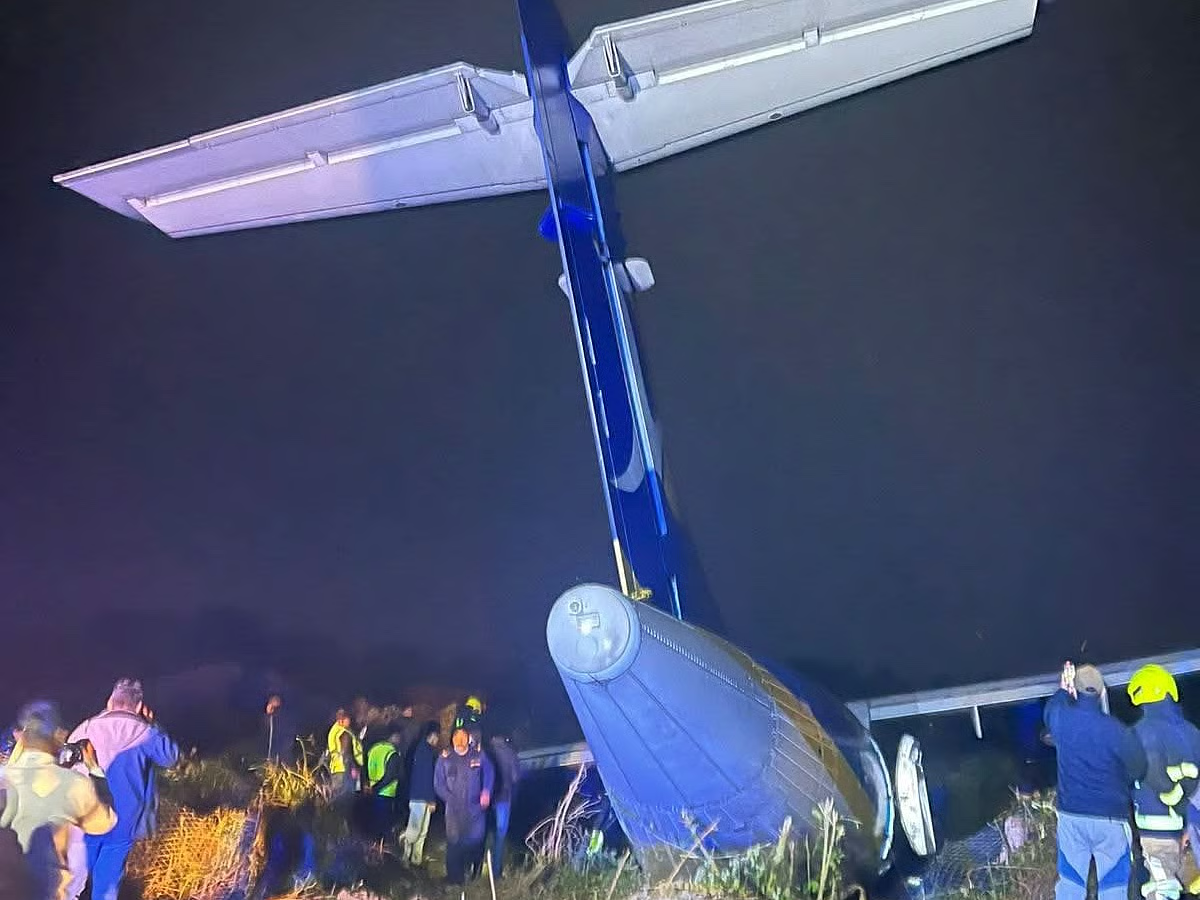

A Buddha Air passenger jet veered off the runway at Tribhuvan International Airport in Kathmandu, Nepal, on Monday morning. The incident, a Buddha Air mishap involving the aircraft’s landing gear, prompted a temporary closure of the airport and raised concerns about aviation safety in the region. All passengers and crew were safely evacuated, according to officials.
The aircraft, a ATR-72 turboprop carrying 68 passengers and crew, was arriving from Pokhara. The incident occurred around 8:30 AM local time (NPT) as the plane was attempting to land amidst reported favorable weather conditions. Initial reports suggest the plane’s landing gear may have experienced issues during touchdown.
Investigation Launched Following Buddha Air Runway Excursion
The Civil Aviation Authority of Nepal (CAAN) has immediately launched a full investigation into the cause of the Buddha Air incident. A team of experts will examine the aircraft’s flight data recorder and cockpit voice recorder, as well as interview the flight crew and ground personnel. The investigation will focus on determining whether mechanical failure, human error, or external factors contributed to the runway excursion.
Factors Under Scrutiny
Several aspects of the landing are being closely analyzed. These include:
- The performance of the aircraft’s braking systems.
- Adherence to standard operating procedures by the crew.
- Any potential runway condition issues, despite initial reports indicating favorable weather.
The airport was closed for approximately four hours following the incident to allow for the removal of the aircraft and assessment of the runway. Domestic and international flights experienced significant delays and cancellations as a result. Tribhuvan International Airport is the sole international airport serving the Kathmandu Valley, a major gateway for tourism and international aid.
Nepal’s aviation industry has faced scrutiny in recent years due to safety concerns and a history of accidents. The country’s mountainous terrain and challenging weather conditions contribute to increased risks for air travel. Regulations and infrastructure improvements are continuously underway to mitigate these challenges, but incidents continue to occur. A similar incident took place in January 2023 when a Yeti Airlines ATR 72 crashed near Pokhara, killing all 72 people on board.
According to the airline, no passengers sustained serious injuries during the evacuation. Passengers were provided with medical assistance and accommodation while arrangements were made for alternative travel options. The airline has pledged full cooperation with the ongoing investigation and is committed to ensuring the safety of its operations.
The ATR-72 is a commonly used aircraft in Nepal due to its ability to operate on short and challenging runways. However, the aircraft’s safety record has been subject to occasional review. European aviation regulators conducted a safety audit of Nepali airlines in 2023, identifying several areas needing improvement to meet international safety standards. This audit followed the Yeti Airlines crash and heightened concerns about the sector.
Nepal’s tourism sector, heavily reliant on air access to its remote regions, could feel repercussions from this event. Potential travelers may reconsider plans or demand increased safety assurances. The government recognizes the criticality of regaining confidence in the country’s air travel system and has emphasized its commitment to upholding rigorous safety standards. In addition to addressing the immediate aftermath of the Buddha Air accident, officials are enacting a more cautious approach towards airport operations.
The CAAN is also reviewing runway safety measures at Tribhuvan International Airport and other regional airports. These measures could include enhanced runway markings, improved lighting systems, and more frequent runway inspections. The ministry is working with international aviation bodies to implement best practices and further strengthen Nepal’s aviation safety infrastructure. This review will also touch on air traffic control protocols.
The incident highlights the importance of ongoing safety oversight and investment in aviation infrastructure in Nepal. While details surrounding the specific cause remain unclear, the focus is shifting towards preventing similar occurrences in the future. This includes addressing both technical and procedural aspects of air travel within the country.
The preliminary report from the investigation is expected within 30 days, according to the CAAN. This report will provide an initial assessment of the contributing factors and may lead to temporary operational adjustments for Buddha Air while the full investigation concludes. It remains uncertain how long it will take to complete the full investigation and make definitive findings, but all parties involved have stated their dedication to transparency during the process. Officials will continue to monitor the situation and assess potential risks as they arise.
Analysts are watching to see if this incident further impacts Nepal’s air safety rating with international organizations. A downgrade could lead to increased insurance costs for airlines and potentially restrict access to certain international routes. The resilience of both Buddha Air and the country’s tourism industry will be tested in the weeks and months following this event, as their response is critical in restoring public trust.