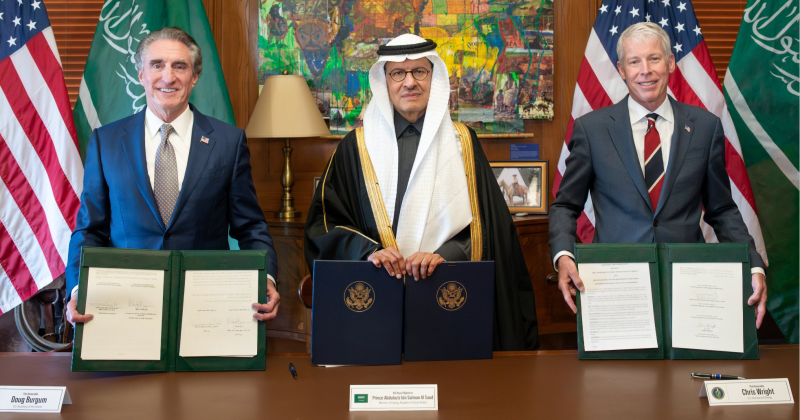

WASHINGTON — The United States and Saudi Arabia have finalized negotiations for a landmark agreement on civil nuclear cooperation, a move poised to reshape the energy landscape in the Middle East and strengthen the strategic partnership between the two nations. The agreement, often called a “123 Agreement” after Section 123 of the Atomic Energy Act, will allow for the potential transfer of U.S. nuclear energy technology to Saudi Arabia for peaceful applications. Both governments announced the completion of negotiations this week, signaling a significant step forward in their collaborative efforts.
The deal, reached after years of discussion, aims to facilitate collaboration on nuclear power plants and other applications of nuclear technology within the Kingdom. According to official statements, both countries are now focused on completing the necessary domestic legal processes required for the agreement’s formal signing and implementation. This development comes amid growing global interest in nuclear power as a carbon-free energy source.
Strengthening the U.S.-Saudi Nuclear Partnership
This 123 Agreement is a crucial component of the broader effort to deepen the strategic relationship between the U.S. and Saudi Arabia. It establishes a legal framework for cooperation in areas like research, development, and the deployment of advanced nuclear technologies. The agreement also includes provisions designed to ensure adherence to international standards for nuclear safety and security, as well as safeguards against proliferation.
The Ministry of Energy in Saudi Arabia stated that the partnership will enable the Kingdom to leverage cutting-edge U.S. nuclear energy technologies for peaceful purposes. This aligns with Saudi Arabia’s ambitious plans to diversify its energy sources and reduce its reliance on fossil fuels, as outlined in its Vision 2030 plan. The Kingdom has expressed interest in expanding its energy portfolio to include a substantial contribution from nuclear power.
Key Provisions and Safeguards
A central element of the agreement is the commitment to non-proliferation. Both the U.S. and Saudi Arabia have emphasized their dedication to preventing the diversion of nuclear materials for non-peaceful purposes. The agreement incorporates robust safeguards and verification measures to ensure compliance with international treaties and regulations.
Additionally, the agreement outlines a process for administrative arrangements to support its implementation. These arrangements will further clarify the terms of cooperation and establish mechanisms for ongoing monitoring and oversight. The U.S. Department of Energy and its Saudi counterpart will play key roles in coordinating these efforts.
Implications for U.S. Nuclear Industry and Energy Security
The completion of this agreement is expected to create significant opportunities for U.S. nuclear energy companies. It opens the door for them to participate in potential nuclear power plant projects in Saudi Arabia, offering a new market for their technologies and expertise. This could lead to job creation and increased investment in the U.S. nuclear sector.
However, the agreement has also drawn scrutiny from some observers concerned about the potential for nuclear proliferation in the region. Critics argue that expanding nuclear capabilities in the Middle East could exacerbate existing tensions and increase the risk of an arms race. Proponents counter that the agreement’s safeguards and the close oversight by the U.S. government will mitigate these risks. The deal also comes as the U.S. seeks to maintain its influence in the region amidst growing competition from other global powers.
Meanwhile, the agreement could contribute to global energy security by diversifying energy sources and reducing dependence on traditional fossil fuels. Nuclear power is a reliable and low-carbon energy source, and its expansion could help mitigate climate change. The development of nuclear infrastructure in Saudi Arabia could also serve as a model for other countries in the region seeking to diversify their energy mix. The agreement also supports broader U.S. goals of promoting energy independence and reducing global carbon emissions.
Regional Context and Future Developments
Saudi Arabia’s pursuit of nuclear power is not occurring in isolation. Several other countries in the Middle East are also exploring nuclear energy options, including the United Arab Emirates, which already operates a nuclear power plant. This regional trend is driven by factors such as growing energy demand, concerns about climate change, and the desire for greater energy security. The U.S. is actively engaging with other countries in the region to promote responsible nuclear development.
In contrast to some other nations, Saudi Arabia has not publicly committed to a specific timeline for building nuclear power plants. The agreement provides the framework for potential future projects, but the actual construction of nuclear facilities will depend on a variety of factors, including financing, regulatory approvals, and public acceptance. The Kingdom is also exploring other renewable energy sources, such as solar and wind power, as part of its broader energy strategy. The development of renewable energy sources is a key component of Saudi Arabia’s Vision 2030.
The next step involves finalizing the domestic legal procedures in both the U.S. and Saudi Arabia. This process is expected to take several months, and the timing will depend on the respective legislative calendars. Once these procedures are completed, the agreement can be formally signed and enter into force. Observers will be closely watching for any potential challenges or delays in this process, as well as the specific details of the administrative arrangements that will be put in place to support the agreement’s implementation.