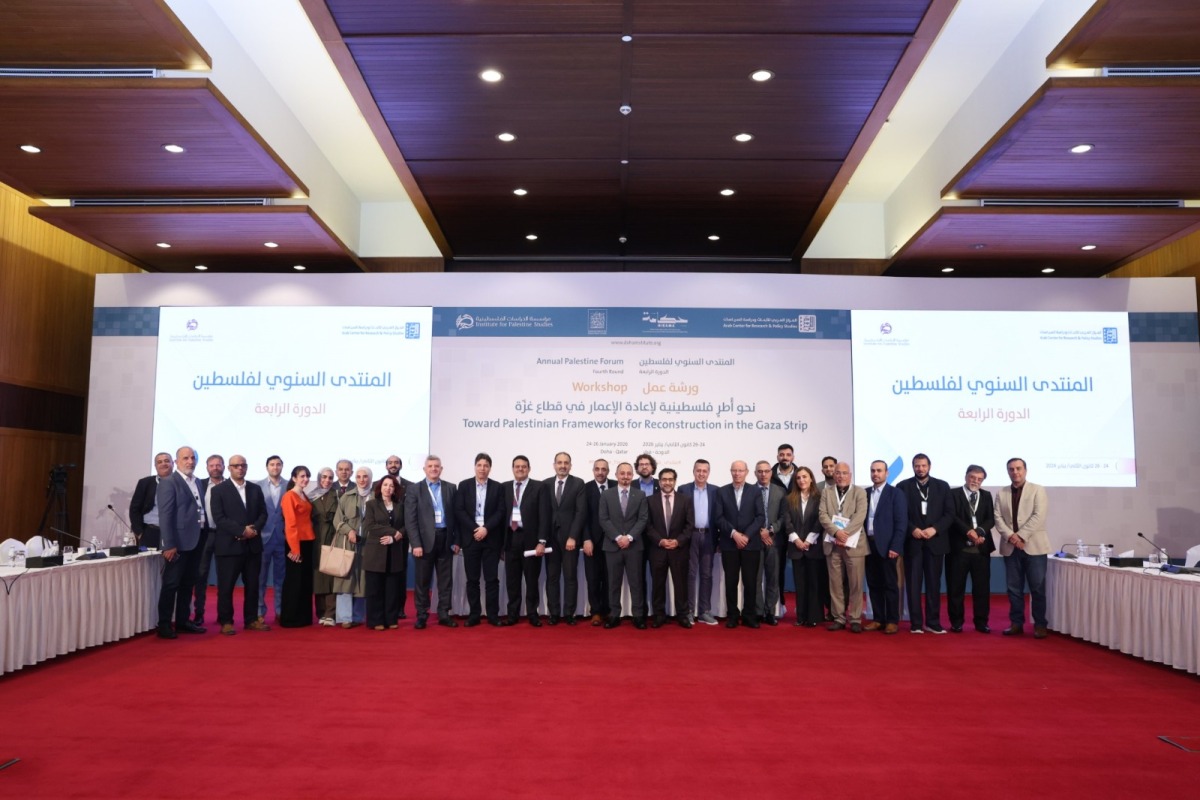

Doha, Qatar – A three-day workshop focused on Gaza reconstruction, titled “Towards Palestinian Frameworks for Reconstruction in the Gaza Strip,” concluded in Doha this week. Organized by the Center for Conflict and Humanitarian Studies (CHS) in collaboration with the Hikama Journal of Public Administration and Public Policy, the event brought together scholars, researchers, and Palestinian experts to discuss independent and sustainable recovery pathways for the region amidst the ongoing conflict. The workshop ran concurrently with the fourth Annual Palestine Forum.
The event, held from January 27th to 29th, convened participants to present and debate twelve peer-reviewed papers across four panel discussions, supplemented by dedicated roundtables featuring direct input from Palestinian stakeholders. This initiative reflects a growing emphasis on Palestinian agency in shaping the future of the Gaza Strip, particularly as international proposals for rebuilding emerge.
The Importance of Palestinian-Led Gaza Reconstruction
CHS Director Dr. Ghassan Elkahlout emphasized the critical timing of the workshop, noting concerns that external reconstruction plans may prioritize administrative control over Palestinian rights and sovereignty. He argued that current proposals risk framing the situation as a purely technical project, rather than addressing the underlying political issues. According to Dr. Elkahlout, a focus on projects and tutelage could effectively exclude Palestinians from decisions about their land and future.
The workshop’s discussions centered on the need for any reconstruction efforts to be firmly rooted in the Palestinians’ right to self-determination and their continued presence on their land. This principle was repeatedly underscored as non-negotiable by participants throughout the three days. Abdel Fattah Madi, Editor-in-Chief of Hikama Journal, added that the workshop is part of a larger special issue examining reconstruction policies across the Arab world following periods of conflict.
Addressing Immediate Humanitarian Needs
A significant portion of the workshop addressed the dire humanitarian situation in Gaza and the limitations of current recovery efforts. Participants explored the challenges of providing aid and essential services within a conflict zone, and the long-term consequences of displacement and infrastructure damage. The discussions highlighted the need for a comprehensive approach that goes beyond immediate relief to address the root causes of vulnerability.
Governance and Civilian Protection
Governance structures and the protection of civilians were also key themes. Experts debated the requirements for establishing effective and accountable governance in the aftermath of conflict, and the importance of ensuring the safety and security of the population. The role of international law and the need for accountability for violations were also discussed. The concept of sustainable development goals was raised in the context of long-term stability.
Reconstruction Policies and Economic Viability
The workshop delved into the complexities of reconstruction policies, analyzing successful and unsuccessful approaches from other conflict-affected regions. Participants examined the economic challenges facing Gaza, including the blockade, limited access to resources, and the destruction of productive assets. Discussions focused on strategies for fostering economic viability and creating opportunities for sustainable livelihoods. The impact of the conflict on fragility and conflict was a recurring point of analysis.
The event also served as a platform for Palestinian experts to share their perspectives and priorities directly with researchers and policymakers. This direct engagement is intended to ensure that reconstruction plans are informed by the lived experiences and needs of the people they are meant to serve. The inclusion of Palestinian voices is seen as crucial for building trust and ensuring the long-term success of any recovery initiative.
Looking ahead, the Hikama Journal will publish a special issue incorporating the research presented at the workshop, providing a valuable resource for policymakers and practitioners. The CHS plans to continue its work on Palestinian-led reconstruction, with further research and advocacy efforts expected in the coming months. The ultimate direction of Gaza reconstruction remains uncertain, dependent on the evolving political and security landscape, and the extent to which Palestinian agency is genuinely prioritized in international discussions. Monitoring the implementation of any future plans and the degree of Palestinian involvement will be critical.
The ongoing conflict continues to present significant obstacles to any meaningful Gaza reconstruction efforts. The scale of the destruction and the complexity of the political situation require a sustained and coordinated response. OCHA (the United Nations Office for the Coordination of Humanitarian Affairs) provides regular updates on the humanitarian situation in the region.
Furthermore, the broader issue of Middle East policy significantly influences the prospects for long-term stability and reconstruction in Gaza.