
China’s Yangtze River Economic Belt is undergoing a remarkable transformation, evolving from a major industrial engine to a model of sustainable development. Over the past decade, this crucial region has not only experienced significant economic growth – with its regional GDP more than doubling – but has also made substantial strides in ecological protection. This article delves into the successes, strategies, and future outlook of this pivotal economic powerhouse, examining how China balances economic ambition with environmental responsibility.
A Decade of Growth and Transformation in the Yangtze River Economic Belt
Launched in early 2016, the Yangtze River Economic Belt initiative aimed to revitalize the region surrounding China’s longest waterway, the 6,300-kilometer Yangtze River. The goal was ambitious: to create a “golden economic belt” characterized by ecological beauty, efficient transportation, economic coordination, a unified market, and robust scientific innovation. Recent data, presented at a press conference by the National Development and Reform Commission, demonstrates significant progress towards these objectives.
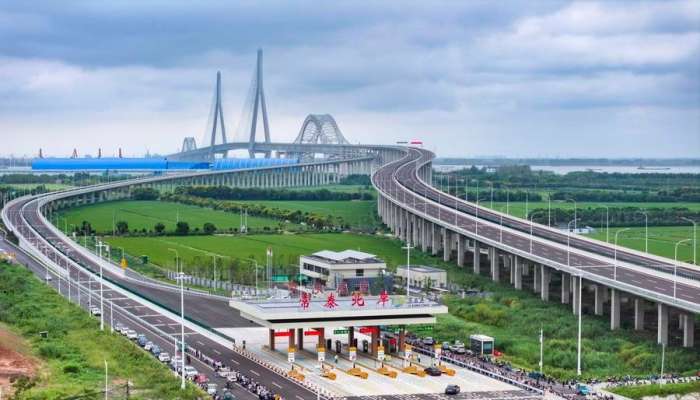
Currently, the economic belt contributes a substantial 47.3% of China’s national economic output, a notable increase from 42.2% ten years ago. This growth hasn’t come at the expense of the environment, however. A key focus has been improving water quality, and the results are impressive. The proportion of Yangtze River sections with good water quality has risen dramatically from 67% to 96.5%. Simultaneously, the river remains a vital transportation artery, with annual cargo throughput surging by 71% to 4.2 billion tonnes.
Prioritizing Ecological Protection and Water Quality
The improvements in water quality within the Yangtze River Economic Belt are a testament to concerted efforts in pollution control and ecological restoration. Officials have highlighted a systematic approach to management and risk prevention as crucial to this success. Over 90% of black and malodorous water bodies in county-level cities have been successfully remediated.
Restoring the River’s Ecosystem
Beyond tackling pollution, China has actively worked to restore the river’s biodiversity. A significant step was the implementation of a full fishing ban in 332 conservation areas in January 2020, later expanded in 2021 to a 10-year moratorium along the main streams and major tributaries. This bold move, while impacting some industries, has already yielded positive results.
Monitoring data reveals a rise in indigenous fish species. Between 2021 and 2024, 344 species were recorded, a 36-species increase compared to pre-ban levels. The resurgence of flagship species, like the critically endangered finless porpoise, further indicates a revitalized ecosystem. The total phosphorus level in the Yangtze River Basin has also decreased by over 40% in the last decade, a key indicator of improved water health. This demonstrates a commitment to sustainable development that goes beyond mere economic indicators.
Fostering Innovation and Industrial Upgrading
The Yangtze River Economic Belt isn’t just about environmental recovery; it’s also becoming a leading hub for technological innovation. The region is witnessing the emergence of globally competitive companies in fields like artificial intelligence (AI) and robotics. Companies like DeepSeek (AI) and Unitree Robotics are prime examples of this burgeoning innovation.
The government has strategically invested in science and technology infrastructure, establishing three major innovation centers and eight national laboratories along the river. These facilities are driving breakthroughs in core technologies, including AI, quantum information, integrated circuits, and life sciences.
Furthermore, the economic belt is strengthening its manufacturing depth. Complete industrial chains have been built in key sectors like electronic information, automobiles, pharmaceuticals, and chemicals. Currently, 41 national-level advanced manufacturing clusters and 30 clusters focused on strategic emerging industries are flourishing within the region. This focus on high-tech industries is crucial for long-term economic resilience and reducing reliance on environmentally intensive sectors.
Balancing Growth with Green Development
The Yangtze River Economic Belt faces the challenge of maintaining its economic momentum while minimizing its environmental footprint. It currently accounts for roughly one-third of China’s total energy consumption and carbon emissions, despite generating nearly half of the country’s GDP. This highlights the region’s critical role in China’s broader green development strategy.
Policymakers are committed to accelerating the green transformation of traditional industries and fostering the growth of locally tailored green and low-carbon sectors. This includes investing in renewable energy sources, promoting energy efficiency, and implementing stricter environmental regulations. The goal is to better align economic development with environmental protection, ensuring that future growth is both prosperous and sustainable. The region is also actively promoting circular economy principles to reduce waste and maximize resource utilization.
In conclusion, the Yangtze River Economic Belt represents a compelling case study in China’s evolving approach to economic development. The past decade has seen remarkable progress in both economic growth and ecological restoration. By prioritizing innovation, investing in green technologies, and implementing stringent environmental policies, the region is charting a course towards a future where economic prosperity and environmental sustainability go hand in hand. Continued monitoring, adaptive management, and international collaboration will be essential to ensure the long-term success of this ambitious initiative and serve as a model for other regions striving for balanced and sustainable growth.