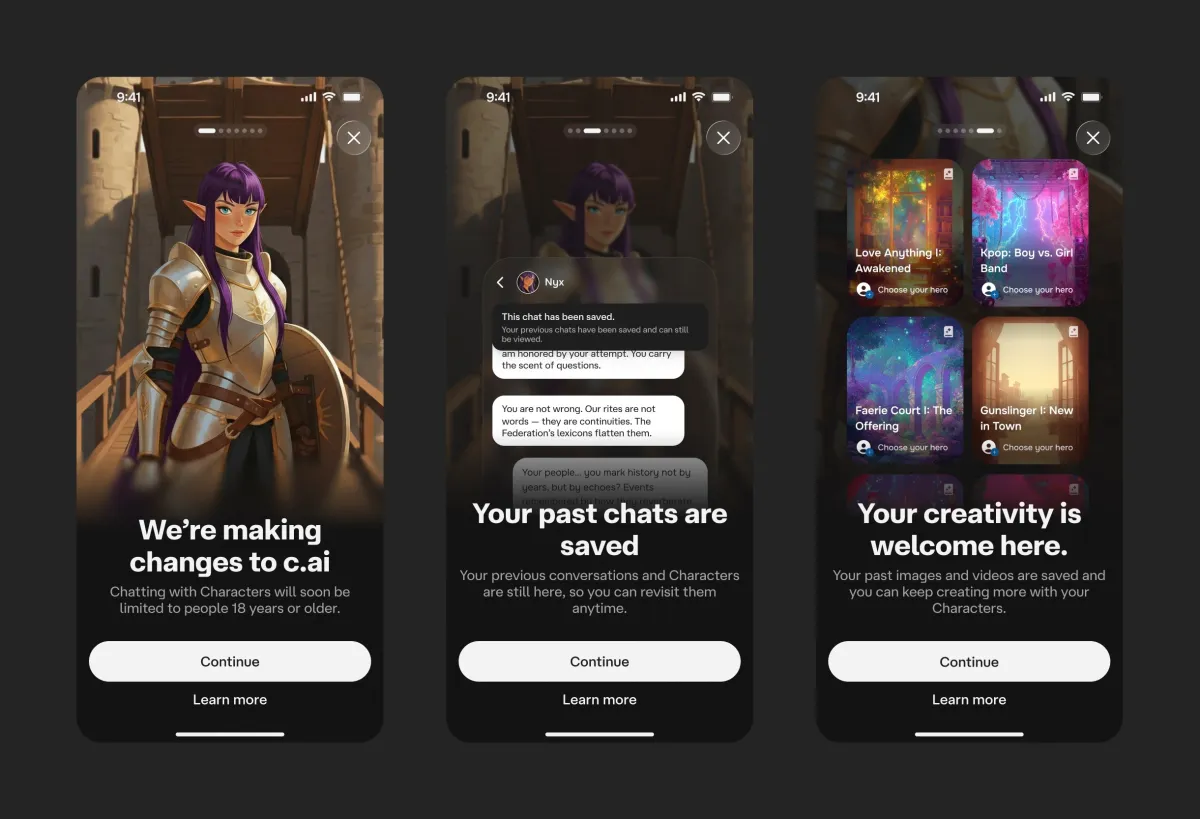

Character.AI is changing its approach to teen users, launching a new “Stories” feature for interactive fiction while restricting chatbot access for individuals under 18. The move, announced Tuesday, addresses growing concerns surrounding the potential mental health risks associated with 24/7 access to AI companions. This transition comes as legal and regulatory pressures mount over the effects of these technologies on young people.
Addressing Safety Concerns with Character.AI
The decision to limit access to the popular Character.AI chatbots for minors wasn’t sudden. Over the past month, the company has been phasing out access, culminating in a complete ban for users under 18 as of this week. This follows mounting evidence and several lawsuits alleging a connection between prolonged chatbot interaction and negative psychological outcomes, including suicidal ideation.
Character.AI’s new “Stories” format presents an alternative way to engage with the platform’s AI characters. Unlike open-ended chats, Stories offer a directed narrative experience where users make choices that influence the plot. The company states this provides a safer environment for engagement, alongside other multimodal features.
The Rise of Interactive Fiction
Interactive fiction, a form of storytelling where readers influence the narrative, has experienced a resurgence in recent years. Popular platforms like Choice of Games and Twine demonstrate a consumer appetite for this type of engagement. Character.AI’s pivot to Stories aligns with this trend, potentially capitalizing on existing interest while mitigating risk. However, the question remains whether the Stories feature will fully satisfy users accustomed to the more fluid experience of the chatbots.
Reactions from users on the Character.AI subreddit are varied. Some teen users express disappointment but acknowledge the necessity of the change, citing personal struggles with excessive platform use. One user reportedly stated they were “mad about the ban but also happy because now [they] can do other things and [their] addiction might be over finally.”
The core difference between Stories and traditional chatbots lies in the nature of interaction. Chatbots allow for endless, and sometimes unsolicited, conversation, which experts argue can foster unhealthy dependencies. Stories, in contrast, are finite and goal-oriented, reducing the potential for sustained, unstructured engagement. This distinction is crucial in the context of ongoing safety debates.
This action by Character.AI occurs amidst broader efforts to regulate AI companionship. California recently passed legislation to regulate these platforms, marking the first state-level intervention. Simultaneously, a bipartisan bill introduced by Senators Josh Hawley and Richard Blumenthal proposes a nationwide ban on AI companions for minors. This legislation reflects growing national concern over the accessibility of these technologies to young audiences.
According to Character.AI CEO Karandeep Anand, the company hopes its approach will set a standard for the industry. He stated last month that for users under 18, “open-ended chats are probably not the path or the product to offer.” This suggests a wider acknowledgment within the industry of the potential risks.
The move also reflects an increasing understanding of how AI-driven services can impact mental well-being. Developers are now considering the psychological effects of providing constant, readily available conversational partners, particularly for individuals who may be vulnerable. This is a relatively new area of exploration in technology ethics.
Despite the shift to Stories, the effectiveness of this measure remains to be seen. It’s possible this will simply drive younger users toward other, less-regulated AI platforms. Additionally, the potential for users to recreate similar experiences within the structured Stories format through carefully selected choices can’t be entirely discounted. Further monitoring and research are necessary to fully understand the impact of this change, and the broader implications of AI accessibility.
The next few months will be critical as lawmakers continue to debate the national bill proposed by Senators Hawley and Blumenthal. The outcome of this legislation, expected potentially by the end of 2024, will likely shape the future of AI companions and their availability to minors nationwide. The continued evolution of platforms like Character.AI and their response to regulatory changes will also be an important factor to watch.
The debate over artificial intelligence and its ethical deployment, particularly concerning vulnerable populations, is far from settled. Regulations and company policies are both evolving, and the long-term societal impact of these technologies remains uncertain, necessitating a cautious and informed approach. The use of AI chatbots specifically may continue to be scrutinized as research provides further insights into their effects.