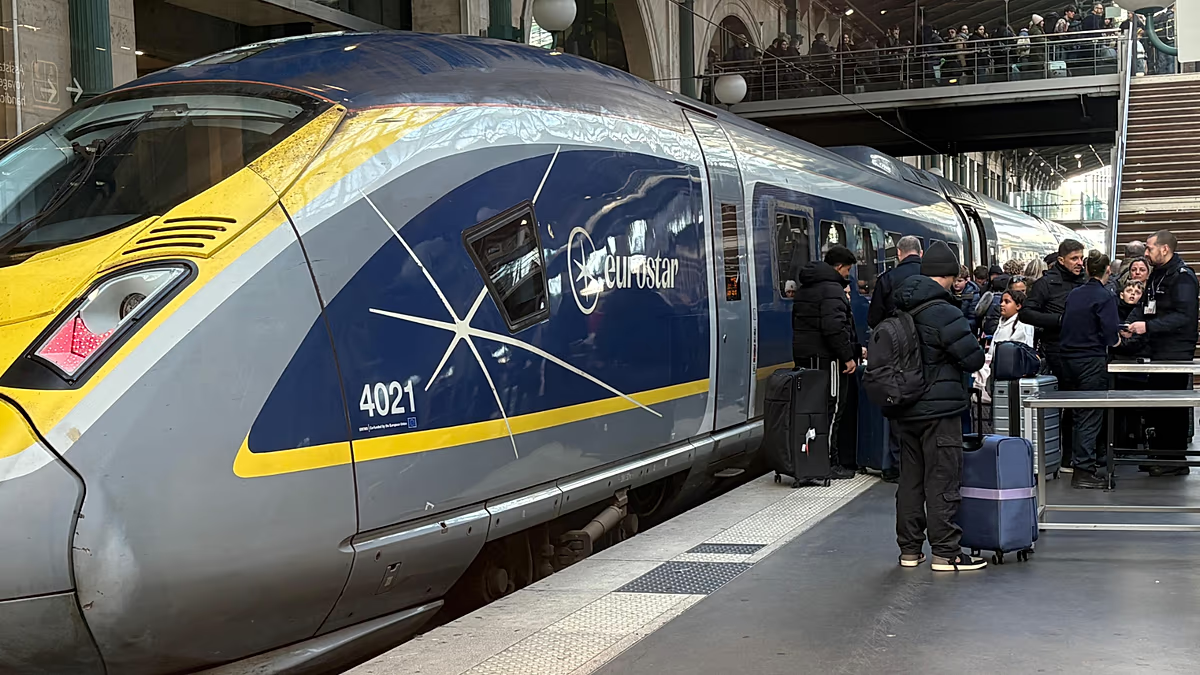

Cross-Channel train travel faced significant disruption on Tuesday and into Wednesday as a result of power malfunctions and a broken-down train within the Channel Tunnel. While services have resumed in both directions, Eurostar, the primary passenger operator, continues to warn travelers of potential delays and cancellations. The issues impacted thousands of passengers traveling between the United Kingdom and continental Europe during the busy end-of-year holiday period.
Trains began running again through the 50-kilometer undersea link on Wednesday, according to Eurotunnel, which reported the tunnel was operating at “full capacity” following overnight repairs to a power fault. However, the ramifications of Tuesday’s events continue to be felt, with revised schedules and limited availability remaining in place.
Channel Tunnel Disruptions: A Breakdown of the Issues
The initial disruption stemmed from a power failure inside the Channel Tunnel itself. Eurotunnel has not yet released a detailed explanation regarding the cause of the fault. Adding to the complexity, a separate power malfunction occurred on the UK side, impacting Eurostar services and causing considerable delays for passengers.
Specifically, an overhead power cable fell onto a Eurostar train traveling from London to Paris near the Folkestone entrance. Removing the train, and its passengers, proved particularly challenging, as efforts were hampered by limited power within the carriage. One passenger, Ghislain Planque, described being stuck for approximately 11 hours with intermittent electricity, resulting in a lack of heating, air conditioning, and phone-charging capabilities, according to BFMTV.
Passenger Impacts and Travel Alternatives
The extensive disruptions led to a cascade of cancellations affecting Eurostar routes to Paris, Brussels, and Amsterdam. Many travelers found themselves scrambling for alternative transportation options, including flights and buses, pushing demand and prices upwards. The situation underscores the limited redundancy available for cross-Channel travel at this scale.
Eurostar reported significant delays to trains in both directions on Wednesday, in addition to some early morning cancellations, demonstrating the knock-on effects of Tuesday’s problems. Passengers are advised to check the Eurostar website for real-time updates on their journey status and explore potential delay refund policies.
The event highlights the vulnerability of crucial infrastructure to unforeseen incidents, especially during peak travel times. The Channel Tunnel represents a vital artery for trade and tourism between the UK and Europe, and even temporary closures can have considerable economic consequences.
While details surrounding the initial power failure are still emerging, experts suggest the combination of aging infrastructure and an increased demand on the power grid during colder months could be contributing factors. Further investigation is expected to determine the precise cause of both power malfunctions.
Ongoing repairs and inspections are being conducted to prevent similar incidents from occurring in the future. Eurotunnel has stated its commitment to maintaining the safe and reliable operation of the Channel Tunnel, but the incident raises broader questions about the resilience of international transportation networks. The system’s ability to swiftly recover from significant failures will be a key area of review.
Travelers planning to use the Channel Tunnel in the coming days should remain vigilant and frequently consult Eurostar and Eurotunnel websites for the latest information. Eurostar’s service disruption page offers comprehensive guidance and allows passengers to manage their bookings in light of ongoing challenges.
Additional sources • AP