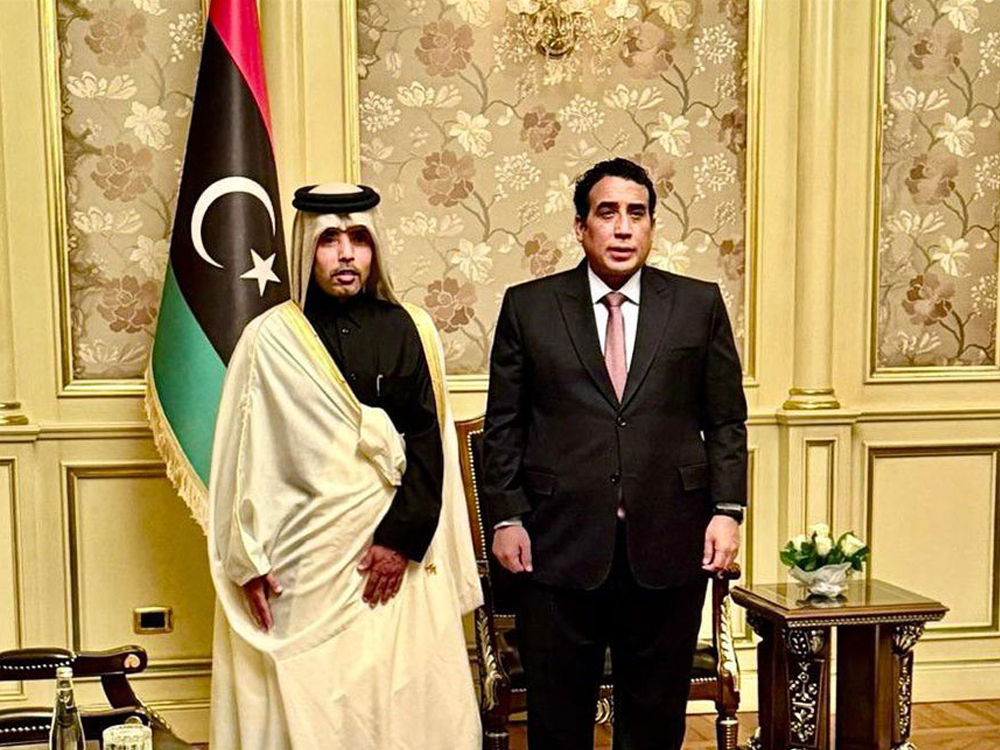

Libya and Qatar are strengthening diplomatic ties, as evidenced by a recent meeting between Libyan Presidential Council Chairman Dr. Mohamed Al Menfi and Qatari Ambassador to Libya Dr. Khalid Mohammed bin Zaben Al Dosari. The discussion, held in Tripoli, focused on bolstering Libya-Qatar relations and exploring avenues for increased cooperation. This meeting signals continued Qatari engagement in Libya’s political and economic landscape following years of instability.
The meeting took place in Tripoli on January 25, 2024, according to reports from the Libyan Presidential Council. While specific details of the discussions weren’t immediately released, the focus was confirmed to be on enhancing bilateral cooperation between the two nations. This comes amid ongoing efforts to stabilize Libya and rebuild its infrastructure following a decade of conflict.
Strengthening Libya-Qatar Relations
The renewed focus on Libya-Qatar relations is part of a broader trend of increased international engagement with the North African nation. Qatar has historically played a role in Libyan affairs, including mediation efforts and providing humanitarian aid. This latest meeting suggests a desire to deepen that involvement, particularly in areas of mutual economic benefit.
Areas of Potential Cooperation
Several sectors are likely to be central to future collaboration. These include:
Energy cooperation is a key area, given Qatar’s position as a major energy producer and Libya’s significant oil reserves. Investment in Libya’s energy infrastructure could be a significant outcome of strengthened ties. Additionally, Qatar’s sovereign wealth fund could potentially play a role in supporting Libya’s economic diversification efforts.
Infrastructure development is another crucial area. Libya’s infrastructure has suffered extensive damage during years of conflict, and Qatar’s expertise and financial resources could be valuable in reconstruction projects. This includes rebuilding roads, hospitals, and schools, as well as improving essential services like water and electricity.
Political and security cooperation is also expected to be on the agenda. Qatar has previously supported dialogue and reconciliation efforts in Libya, and could continue to play a mediating role between different factions. This is particularly important as Libya prepares for potential elections.
However, challenges remain. Libya’s political landscape is still fragmented, with competing claims to legitimacy and ongoing security concerns. These factors could complicate efforts to implement any agreements reached between the two countries. The ongoing political instability represents a significant risk to foreign investment.
Meanwhile, Qatar is navigating its own regional geopolitical considerations. Its relationships with other key players in the region, such as Egypt and the United Arab Emirates, will also influence its approach to Libya. These external dynamics add another layer of complexity to the situation.
In contrast to some other international actors, Qatar has maintained a relatively consistent level of engagement with Libya throughout the period of conflict. This consistent approach may position it as a trusted partner for the Libyan government as it seeks to rebuild and stabilize the country. The Libyan government is actively seeking foreign investment to diversify its economy and reduce its reliance on oil revenues.
The meeting also comes as Libya continues to work towards holding long-delayed elections. According to the United Nations Support Mission in Libya (UNSMIL), a stable political framework is essential for attracting foreign investment and ensuring long-term stability. The success of these elections will be a key indicator of Libya’s progress towards a more peaceful and prosperous future.
Looking ahead, further discussions are expected to take place between Libyan and Qatari officials to develop concrete plans for cooperation. The timeline for these plans remains uncertain, dependent on the evolving political situation in Libya and regional dynamics. Observers will be watching for announcements regarding specific investment projects and agreements in the coming months, as well as any progress towards a unified Libyan government and a clear path to elections. UNSMIL continues to play a key role in facilitating dialogue and supporting Libya’s transition.