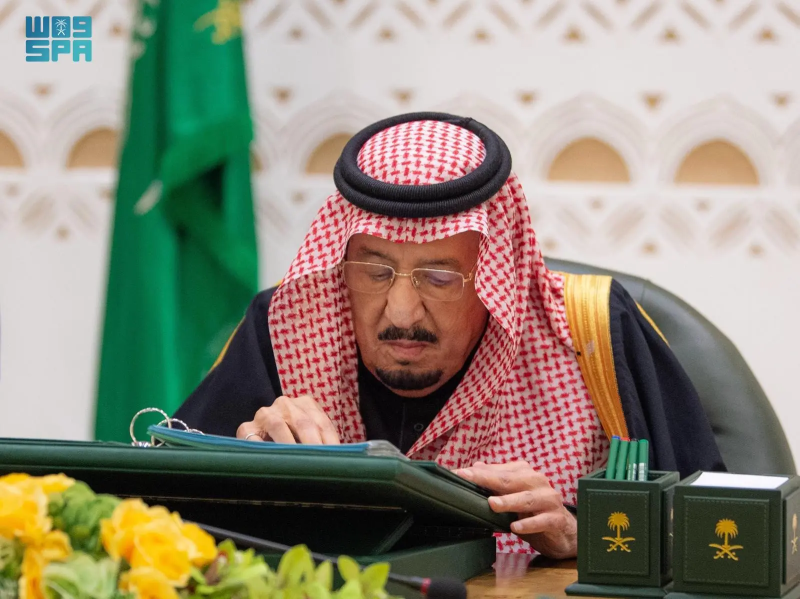

RIYADH — The Saudi Cabinet, chaired by King Salman, affirmed the Kingdom’s commitment to bolstering Yemen’s security and stability while simultaneously advancing its own digital infrastructure and international collaborations. The Council of Ministers convened in Riyadh on Tuesday to address regional developments, domestic initiatives, and a series of international agreements. These actions underscore Saudi Arabia’s multifaceted approach to regional challenges and its Vision 2030 goals.
Discussions centered on the ongoing situation in Yemen, with the Cabinet expressing support for a comprehensive conference in Riyadh aimed at resolving issues facing southern factions. Additionally, the Council reviewed the Kingdom’s continued humanitarian aid efforts for Gaza and recent diplomatic engagements with several nations. These developments highlight Saudi Arabia’s role as a key regional player and humanitarian contributor.
Saudi Arabia Focuses on Yemen and Regional Stability
The Cabinet reiterated its welcome of Yemeni Presidential Leadership Council President Dr. Rashad Al-Alimi’s proposal to host a conference for all southern factions in Riyadh. According to the Saudi Press Agency, the goal is to achieve a just and lasting solution that addresses the legitimate aspirations of the Yemeni people. This initiative reflects Saudi Arabia’s long-standing efforts to mediate and facilitate a peaceful resolution to the conflict in Yemen.
Humanitarian Aid to Gaza
The Kingdom is intensifying its aid delivery to the Gaza Strip through air, sea, and land routes, the Ministry of Media reported. These efforts are being directed under the guidance of King Salman and Crown Prince Mohammed bin Salman, demonstrating the Kingdom’s consistent commitment to providing humanitarian assistance to the Palestinian people. The aid aims to alleviate the suffering of civilians impacted by the ongoing conflict.
Meanwhile, the Cabinet reviewed recent telephone conversations between Crown Prince Mohammed bin Salman and leaders from Türkiye, Syria, Qatar, and Pakistan. These discussions focused on strengthening bilateral relations and addressing pressing regional and international issues. These diplomatic engagements demonstrate Saudi Arabia’s proactive approach to maintaining regional dialogue.
Investing in Digital Transformation and Economic Diversification
Domestically, the Cabinet emphasized the importance of strengthening Saudi Arabia’s position in advanced technologies and building a robust digital ecosystem. This aligns with the objectives of Saudi Vision 2030, which aims to establish a sustainable, data- and artificial intelligence-driven economy. The Kingdom is actively pursuing initiatives to attract investment and enhance the competitiveness of its national economy.
A significant milestone in this effort is the launch of “Hexagon,” the world’s largest government data center project in Riyadh. The Cabinet commended this project as a strategic step that reinforces Saudi Arabia’s position as a global hub for data and innovation. Hexagon is expected to ensure data sovereignty and security, fostering growth in the digital economy. This investment in digital infrastructure is crucial for the Kingdom’s future economic development.
Additionally, the Council approved draft rules and procedures for the National Minerals Program and regulations for the National Commission for Education, Culture and Science. The National Program for the Development of the Information Technology Sector was also renewed until the end of 2030, signaling a continued commitment to technological advancement.
International Cooperation Agreements
The Cabinet approved several agreements designed to foster international collaboration in key sectors. These include a headquarters agreement with the Regional Center for Quality and Excellence in Education, and a memorandum of understanding (MoU) with the Netherlands focusing on innovations in environment, water, and agriculture. These partnerships aim to leverage international expertise and promote sustainable development.
Further agreements authorized discussions for tourism cooperation with Trinidad and Tobago and China, as well as cooperation in earth sciences with Kazakhstan. Other approved agreements focused on competition protection with Oman and combating terrorism with Zambia. A MoU with Morocco was also approved to address vegetation development and desertification. These agreements demonstrate Saudi Arabia’s commitment to expanding its global partnerships and addressing shared challenges. The focus on international partnerships is a key component of Vision 2030.
Looking ahead, the implementation of these agreements and programs will be closely monitored. The success of the Riyadh conference on Yemen remains a key focus, as does the continued delivery of humanitarian aid to Gaza. The Kingdom’s progress in developing its digital infrastructure and diversifying its economy will also be crucial to watch in the coming months, with further announcements expected regarding the rollout of Vision 2030 initiatives.