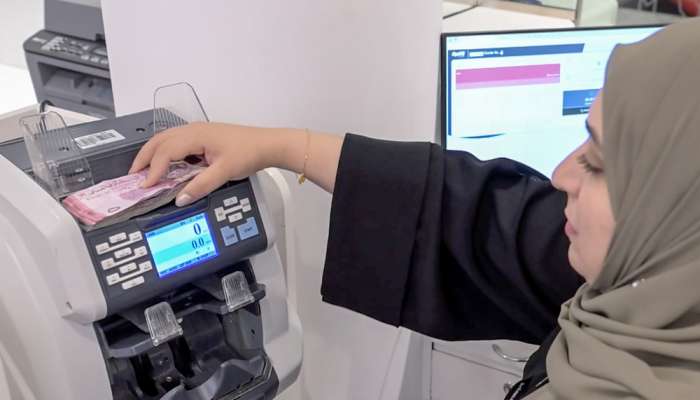

The Sultanate of Oman’s financial landscape is showing positive movement, with the latest data from the Central Bank of Oman (CBO) revealing a 4.3 percent year-on-year increase in the broad money supply reaching OMR25.7 billion by the end of September 2025. This growth signals evolving economic activity and shifts in financial behavior within the country. Understanding these changes is crucial for investors, policymakers, and anyone interested in the economic health of Oman.
Oman’s Broad Money Supply Growth: A Detailed Look
The increase in the broad money supply isn’t uniform across all monetary components. The CBO statistics highlight a significant divergence in the performance of different money aggregates. Notably, narrow money witnessed a substantial surge of 13 percent, indicating increased liquidity and transactional activity. Simultaneously, quasi-money, composing savings and time deposits, alongside certificates of deposit and foreign currency holdings, grew by a more modest 1 percent.
This picture provides a nuanced understanding of where the money is flowing within the Omani economy. The larger growth in narrow money suggests that individuals and businesses are more actively using funds for day-to-day transactions – potentially a sign of increased confidence and economic expansion. The slower growth in quasi-money might indicate a slight preference for more immediate spending or investment opportunities.
Breakdown of Monetary Components
Examining the specific components further clarifies these trends. Cash held by the public actually decreased by 2.13 percent during the period. This seemingly counterintuitive decline aligns with global trends toward greater digital payments and reduced reliance on physical currency.
On the other hand, demand deposits – funds readily available for withdrawal – experienced a robust increase of 16.2 percent. This strong growth likely reflects increased business activity and a preference for holding funds in easily accessible accounts, furthering the expansion of the broad money supply.
Interest Rate Trends and Their Impact
Alongside the expansion of the money supply, interest rate movements also provide valuable insights. The weighted average interest rate on Omani Rial deposits saw a slight decrease, moving from 2.679 percent in September 2024 to 2.568 percent in September 2025. Similarly, loan interest rates edged down from 5.604 percent to 5.479 percent over the same timeframe.
These decreases in interest rates, while seemingly small, can have a significant impact on borrowing and investment. Lower loan rates encourage businesses to seek financing for expansion and innovation, contributing to economic growth. Reduced deposit rates, conversely, might incentivize individuals to explore investment options beyond traditional savings accounts, redirecting funds towards potentially more productive uses.
Interbank Lending and US Federal Reserve Policy
The overnight interbank lending market, a key barometer of liquidity and short-term funding costs, also exhibited changing dynamics. The average interest rate in this market fell considerably, from 4.896 percent in September 2024 to 3.815 percent in September 2025. This decline was directly linked to falling rates on repurchase operations, which dropped from 5.790 percent to 4.892 percent.
Crucially, these movements were explicitly described by the CBO as being “in line with the policies of the US Federal Reserve.” Oman, like many countries, maintains a currency peg to the US dollar. Therefore, adjustments made by the US Federal Reserve regarding interest rates inevitably have ripple effects throughout the Omani financial system, influencing monetary policy and lending conditions. This interconnectedness highlights the global nature of financial markets and the importance of monitoring international trends.
Implications for Oman’s Economic Outlook
The growth in the broad money supply, coupled with decreasing interest rates, paints a cautiously optimistic picture of Oman’s economic trajectory. The increased liquidity could fuel investment and consumption, supporting economic diversification efforts outlined in the Oman Vision 2040. The decreased reliance on cash and the increasing popularity of demand deposits indicate a growing sophistication of the Omani financial system and a greater embrace of digital financial tools.
However, it’s essential to consider the potential downsides. A rapid increase in the money supply, if not matched by corresponding growth in the real economy, could lead to inflationary pressures. Therefore, careful monitoring of inflation rates and proactive economic indicators is critical for the CBO.
Furthermore, the close alignment with US Federal Reserve policy means Oman’s economic responses are influenced by external factors. While this can provide stability, it also limits the CBO’s independent maneuvering room when addressing purely domestic economic challenges. Analyzing financial market data will be crucial for future strategy.
In conclusion, the 4.3 percent growth in Oman’s broad money supply signifies a period of financial evolution. Driven by increases in narrow money and demand deposits, and mirrored by adjustments in interest rates influenced by US policy, the Sultanate’s financial system is demonstrating adaptation and potential for growth. Staying informed about these trends and their underlying dynamics will be key to understanding Oman’s economic future. For further insights into the Omani economy, explore the latest reports from the Central Bank of Oman and relevant government agencies.