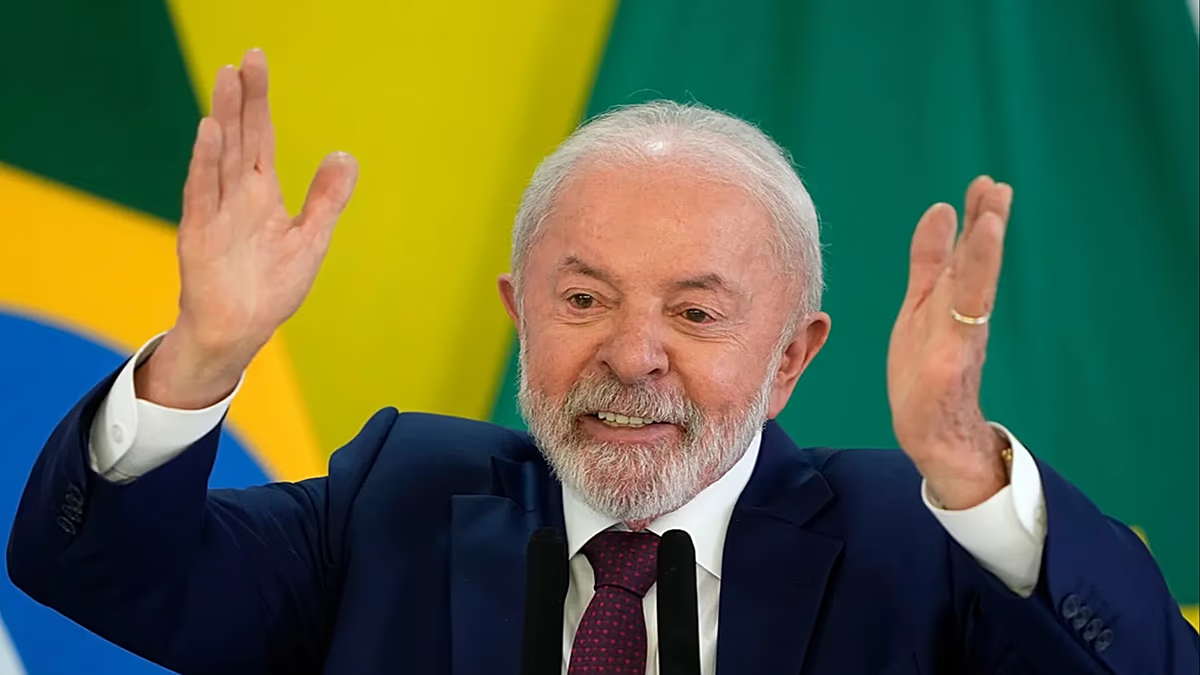

Brazil’s President Luiz Inácio Lula da Silva expressed hope for a January signing of the long-negotiated Mercosur-European Union trade deal, but the agreement faces continued hurdles stemming from European agricultural concerns. While top EU officials aimed to finalize the pact during a recent summit in Brazil, the signature has been delayed due to opposition from several member states. The future of this pivotal trade agreement and its impact on global commerce remain uncertain.
European Commission President Ursula von der Leyen announced on Friday a “few extra weeks” would be needed to resolve issues with EU nations before a signing could occur. Demonstrations by European farmers, coupled with staunch opposition from France and Italy, have cast a shadow over a deal that has been under discussion for over two decades.
The Sticking Point: Agricultural Concerns in the EU-Mercosur Trade Deal
The central point of contention lies in the agricultural sector. European farmers fear a surge of cheaper agricultural imports from South America, which they argue are produced under less stringent environmental and agricultural standards. This influx, they contend, could undermine their livelihoods and create unfair competition.
According to Lula, the delay is, in part, due to a request for more time from Italian Premier Giorgia Meloni. Von der Leyen requires the support of at least two-thirds of EU countries to secure the agreement. Italy’s opposition, combined with others, would provide enough votes to effectively veto the signature.
Lula addressed fellow South American leaders at a summit in Foz do Iguacu, emphasizing the importance of the deal. He stated the meeting was scheduled only after initial signals indicated a forthcoming agreement from European negotiators. He further noted that Mercosur is actively exploring alternative trade partnerships should the EU deal falter.
Lula’s Criticism of European Hesitation
The Brazilian President did not hesitate to voice his frustration. “Without political will and courage from leaders, it won’t be possible to finish a negotiation that has dragged for 26 years,” Lula declared, adding that Mercosur will “continue to work with other partners.” He highlighted the significant interest from other nations eager to forge trade agreements with the South American bloc.
If finalized, the trade deal would represent a massive economic zone encompassing 780 million people and approximately a quarter of the world’s GDP. It would progressively eliminate tariffs on the vast majority of goods traded between the two regions. This represents a significant opportunity for economic growth on both continents.
The European Union stands to benefit through increased exports of vehicles, machinery, wines, and spirits to Latin America. In return, the agreement would facilitate the import of South American commodities such as meat, sugar, rice, honey, and soybeans into Europe. This expanded trade would have widespread implications for food security and agricultural markets.
France has been a leading voice in opposition, citing concerns over the impact on its farmers. President Emmanuel Macron indicated on Thursday that he could not commit to supporting the deal in the immediate future. He revealed discussions with leaders from Italy, Poland, Belgium, Austria, and Ireland regarding a postponement of the agreement to address agricultural anxieties.
However, Lula countered this notion, asserting that Macron alone does not have the power to obstruct the agreement. He expressed optimism that the deal would ultimately be reached for the benefit of all involved, acknowledging the long process of negotiation. Reuters provides further coverage of the ongoing deliberations and the concerns of various stakeholders.
The ongoing negotiations emphasize the complexities of international trade agreements and the need to balance economic gains with the protection of domestic interests. The outcome will likely shape trade relations between Europe and South America for years to come.
Looking ahead, all eyes will be on Italy and France as their positions will be crucial in determining the fate of the Mercosur deal. Analysts predict continued intense discussions in the coming weeks. Stay informed on this developing story as it unfolds and impacts the global economic landscape.