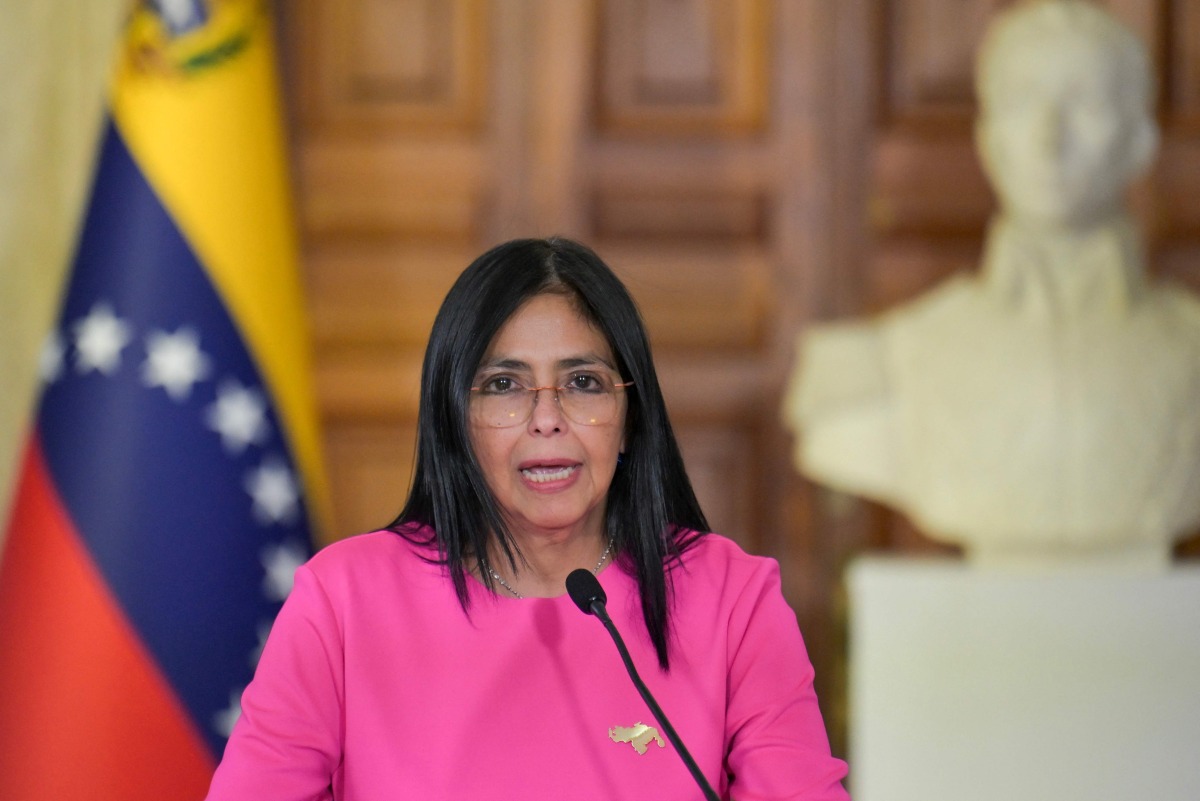

Brazil has officially recognized Venezuela’s Vice President Delcy Rodriguez as the acting head of state amid escalating tensions following reported U.S. actions within Venezuelan territory. The move, announced Saturday by Brazil’s interim Foreign Minister Maria Laura da Rocha, signals a significant shift in regional diplomacy concerning the Venezuela political crisis. Brazil’s position comes alongside strong condemnation of what it terms a U.S. attack on Venezuela and the reported capture of President Nicolas Maduro and his wife.
The announcement was made in Brasilia, with the Brazilian Foreign Ministry further stating that President Luiz Inacio Lula da Silva reaffirmed his previous stance opposing external interference in Venezuela’s affairs. Defense Minister Jose Mucio reported the situation along the border in Roraima state remains stable, despite the deployment of substantial military resources. This development adds another layer of complexity to the already fragile political landscape in the region.
Brazil’s Recognition of Venezuela’s Vice President
Brazil’s decision to recognize Rodriguez is a direct response to the unfolding events in Venezuela, which remain largely unconfirmed by independent sources. According to the Brazilian Foreign Ministry, President Lula da Silva has consistently advocated for a peaceful resolution to the political instability in Venezuela and respects national sovereignty. This stance aligns with Brazil’s long-held policy of non-intervention in the internal affairs of other nations.
Border Security and Military Deployment
The Brazilian government has taken steps to bolster security along its border with Venezuela. Defense Minister Mucio stated that 10,000 military personnel have been deployed to the Amazon region, with 2,300 specifically stationed in Roraima state. This deployment is intended to maintain stability and prevent any potential spillover of conflict into Brazilian territory.
However, the ministry emphasized that the increased military presence is a precautionary measure and not an indication of an imminent threat. Brazilian authorities are closely monitoring the situation and coordinating with neighboring countries to ensure regional security. The deployment also addresses concerns about potential humanitarian impacts, such as an influx of refugees.
Condemnation of U.S. Actions
A key component of Brazil’s response is its strong condemnation of alleged U.S. involvement in Venezuela. The Brazilian Foreign Ministry statement explicitly criticized what it described as a U.S. attack on Venezuela and the reported detention of President Maduro and his wife. This condemnation reflects a growing sentiment within Latin America regarding perceived U.S. interference in the region.
Additionally, Brazil’s position underscores its commitment to multilateralism and international law. The ministry reiterated its support for safeguarding the sovereignty of all nations and opposing any form of territorial aggression. This aligns with Brazil’s broader foreign policy objectives of promoting regional stability and cooperation.
In contrast, the United States government has not yet issued a comprehensive statement addressing the specific allegations made by Brazil. Limited reports suggest the U.S. is investigating claims of unauthorized military operations, but details remain scarce. The lack of transparency from both sides is contributing to the escalating tensions and uncertainty surrounding the Venezuelan government.
The situation remains fluid and highly sensitive. The next steps will likely involve further diplomatic efforts by Brazil and other regional actors to de-escalate tensions and facilitate a dialogue between the involved parties. Monitoring the response from the United States and verifying the reports of Maduro’s detention will be crucial in the coming days. The potential for further escalation, and the impact on regional stability, remains a significant concern.