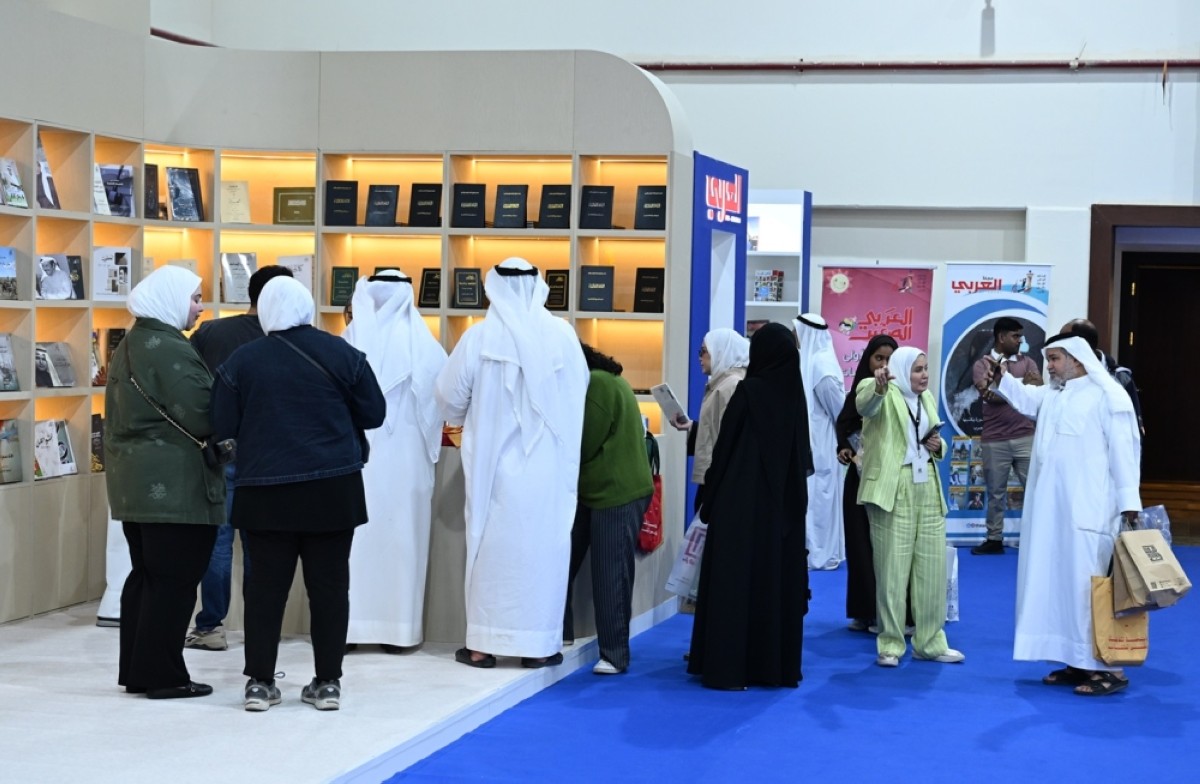

The 48th Kuwait International Book Fair, recently concluded in Kuwait City, served as a powerful testament to the nation’s enduring commitment to culture, media, and literacy. Held under the patronage of His Highness the Prime Minister Sheikh Ahmad Abdullah Al-Ahmad Al-Sabah, the event drew nearly half a million visitors and underscored the evolution of Kuwaiti media from its humble beginnings to its current position as a regional cultural force. This year’s fair was particularly significant, coinciding with Kuwait’s designation as the Arab Capital of Culture and Media for 2025.
A Historical Journey Through Kuwaiti Media
The book fair wasn’t simply a showcase of current publications; it was a reflective journey through the history of information dissemination in Kuwait. A dedicated dialogue session within the “Culture Pavilion” brought together leading media professionals to discuss the past, present, and future of the industry. Dr. Ahmed Al-Haidar, Head of the Media Department at the International University of Science and Technology, provided a fascinating historical overview.
Early Publications and the Rise of Broadcast Media
Dr. Al-Haidar highlighted that the seeds of Kuwaiti media were sown with the publication of Kuwait Magazine in 1928, though it was initially printed abroad. This was followed by Kazma Magazine in 1948, marking a crucial step towards establishing a local publishing presence. However, it was the launch of Al-Arabi Magazine in 1958 that truly cemented Kuwait’s cultural contribution to the Arab world. Its widespread readership and impactful content earned it recognition as a significant cultural gift from Kuwait.
The development of broadcast media followed a similar trajectory. Radio broadcasting began as a private venture in 1951, transitioning to a government service in 1961 alongside the launch of Kuwait’s official television network. This period also saw the establishment of the National Council for Culture, Arts and Letters and the inaugural Kuwait Book Fair in 1975, solidifying Kuwait’s commitment to cultural enrichment. Dr. Al-Haidar identified three distinct phases of media development: an experimental period up to 1961, a nationally and Arab-focused era until 1990, and a post-1990 phase with a greater emphasis on local issues.
Kuwait’s Cultural Influence and Soft Power
Dr. Fawaz Al-Ajmi, Professor of Media at Kuwait University, emphasized Kuwait’s growing cultural influence and its role as a proponent of soft power in the region. He noted the nation’s dedication to maintaining high standards of excellence, even amidst the rapid advancements in technology, particularly the proliferation of social media.
He praised the contributions of Kuwaiti youth and the private sector in amplifying Kuwait’s voice on regional cultural and media platforms. Initiatives like Al-Arabi Magazine and innovative social media campaigns are demonstrably enhancing Kuwait’s presence and impact. This focus on cultural output is a key component of Kuwait’s strategy as it prepares to take on the mantle of Arab Capital of Culture and Media in 2025.
Navigating the Future of Media with Artificial Intelligence
The conversation at the book fair didn’t shy away from the challenges and opportunities presented by emerging technologies. Dr. Hussein Ibrahim, Associate Professor in the Media Department at Kuwait University, addressed the future of media in the age of artificial intelligence (AI). He discussed the inevitable transition from traditional media to “smart media” and the ethical considerations surrounding AI-driven content creation.
Dr. Ibrahim stressed the importance of harnessing AI responsibly, ensuring it serves media professionals and upholds the integrity of journalism and cultural communication. Maintaining high standards of quality and ethical practice will be paramount as AI becomes increasingly integrated into the media landscape. This requires a proactive approach to education and the development of clear guidelines for responsible AI implementation within the media industry.
A Resounding Success: Fair Statistics and Initiatives
The 48th Kuwait International Book Fair, held from November 19th to 28th, was a resounding success by all metrics. Approximately 477,560 visitors explored over 287,000 titles from 611 publishing houses representing 33 Arab and international countries. The event featured 433 direct participants, 178 through agents, and welcomed 39 first-time exhibitors. Notably, around 35,000 of the titles on display were newly released.
Beyond the book sales, the fair offered a vibrant cultural program encompassing workshops, discussions, seminars, lectures, and panel sessions held across the Cultural Pavilion, Cultural Café, and Children’s Pavilion. The “I Am the Author” initiative, which produced 1,240 books by children, and the Arab Publishers Professional Program, hosting 84 publishing houses, further demonstrated the fair’s commitment to fostering growth and development within the regional publishing industry. Mohammed bin Al Zubair, recognized as the fair’s cultural figure, embodies the spirit of dedication to Arab culture that permeated the entire event.
In conclusion, the 48th Kuwait International Book Fair was more than just a book sale; it was a celebration of Kuwaiti media’s rich history, its current cultural influence, and its forward-looking vision for the future. As Kuwait prepares to embrace its role as the Arab Capital of Culture and Media in 2025, the fair served as a powerful launchpad, showcasing the nation’s unwavering commitment to literacy, cultural exchange, and the responsible evolution of its media landscape. The event’s success encourages continued investment in cultural initiatives and a proactive approach to navigating the challenges and opportunities of the digital age.