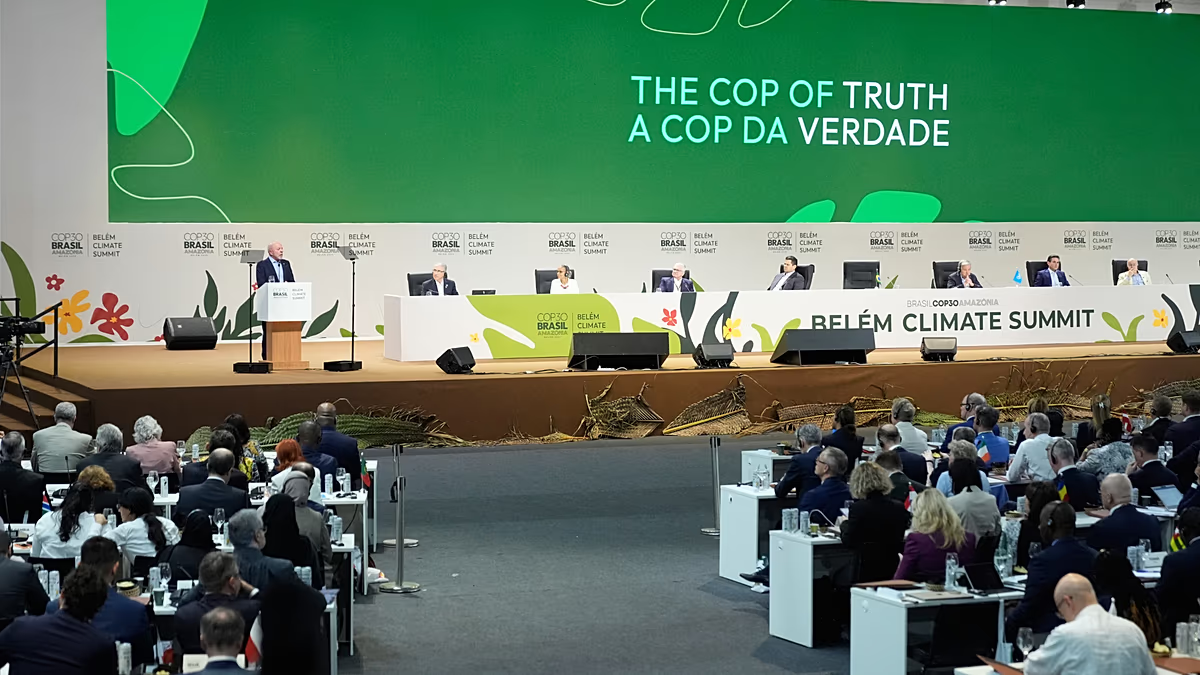

The world’s biggest polluters, including the United States, China, and India, are notably absent from the COP30 climate summit, which begins on Monday in Belém, Brazil. The absence of these major emitters, responsible for nearly half of the world’s emissions, leaves the European Union to spearhead efforts to address climate change and provide financing for developing countries.
As European leaders gather at COP30 to discuss climate mitigation and financing, they face a challenging task. The EU must balance its commitment to combating climate change with shifting priorities at home, including rearming and boosting defense capabilities. Meanwhile, the US, China, and India are focusing on bolstering their national industrial capacities and domestic agendas.
Climate Financing at a Crossroads
The absence of major polluters at COP30 poses significant challenges for climate financing. Developing countries are seeking substantial financial support to address the impacts of climate change, including flooding, heat waves, and food security challenges. The Global South is calling for at least $1.3 trillion annually from the world’s wealthiest nations, a significant increase from the $300 billion pledged last year at COP29 in Baku.
The European Union has been a leader in climate financing, contributing €42.7 billion in international public and private finance in 2024 alone, according to the European Council. European Commission President Ursula von der Leyen emphasized the EU’s commitment to climate finance, stating that the bloc will continue to mobilize investment in the clean transition worldwide through the Global Gateway initiative.
However, critics argue that the COP summits have become ineffective, with some viewing them as a means to extract funds from taxpayers without delivering meaningful results. Austrian European lawmaker Roman Haider criticized the EU’s energy and climate transition, arguing that it is making Europe poorer by offshoring jobs and industries to countries with less stringent rules.
Climate Action Amidst Skepticism
COP30 begins at a moment of both urgency and skepticism. Climate scientists stress that faster action is needed to limit global warming to below 1.5°C. In contrast, critics argue that the summit won’t lead to significant changes. Environmental groups remain united in their climate advocacy, urging EU leaders to deliver an ambitious and fair global package of outcomes and restore faith in international cooperation.
Chiara Martinelli, director at the NGO Climate Action Network Europe, emphasized the need for the EU to remain committed to climate action, even in the face of skepticism. “The EU’s political force at COP30 must be unwavering and tirelessly working to close the emissions, finance, justice, and solidarity gaps — working with others to keep 1.5°C alive,” she said.
As COP30 progresses, the focus will be on whether the EU can effectively lead global climate efforts and secure meaningful commitments from other nations. The summit’s outcome will have significant implications for the future of climate action and the ability of developing countries to address the impacts of climate change.