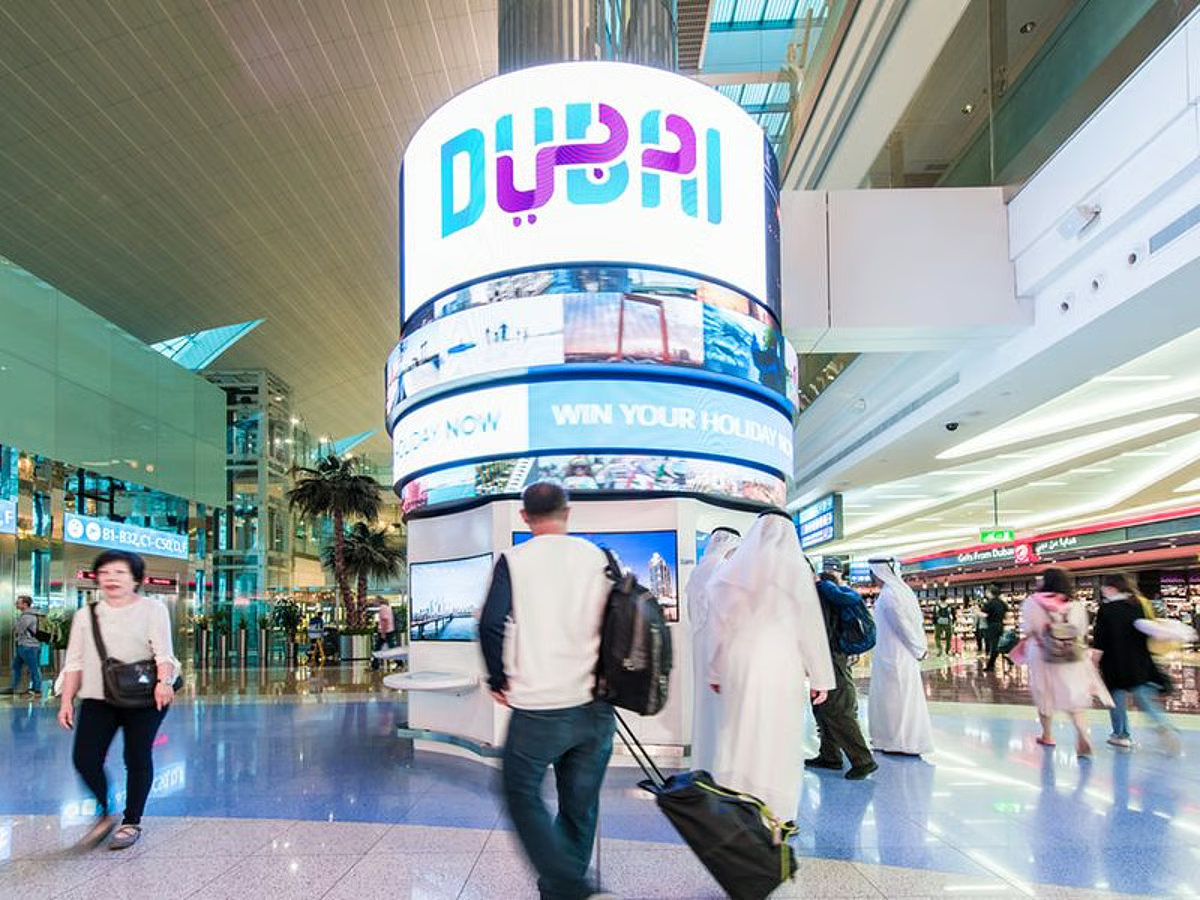

Dubai’s airport traffic is experiencing significant growth, driven by increased demand from Saudi Arabia, Europe, and other international markets. Passenger numbers at Dubai International (DXB) and Dubai World Central (DWC) are climbing as airlines deploy larger aircraft and expand routes. This surge in Dubai airport traffic highlights the emirate’s continued strength as a global travel hub, according to recent data from Dubai Airports.
Strong Demand Fuels Dubai Airport Traffic Growth
The growth isn’t limited to a single region. Europe and Central Asia are showing a notable increase in passenger volume this winter, with new services from Kazakhstan’s FlyArystan and the resumption of flights from Austrian Airlines to Vienna. This expansion demonstrates a broadening of Dubai’s connectivity within these key markets.
However, the most substantial increase is coming from Saudi Arabia. The Kingdom has become DXB’s second-largest market, representing 7.8% of all passengers. Combined traffic across both DXB and DWC from Saudi Arabia reached 6.3 million passengers and continues to rise, indicating a strong and growing travel corridor.
Regional Connectivity Expands
Beyond Saudi Arabia, demand from South Asia and the wider Middle East is bolstering Dubai’s point-to-point travel options. New routes connecting Dubai to cities like Sari in Iran and Lahore in Pakistan are contributing to this trend. This expansion caters to both leisure travelers and the significant expatriate populations in the region.
Dubai Airports’ Vice President of Research, Robert Whitehouse, stated that the growth in direct traffic reflects a “balanced mix of inbound visitors, outbound travel from residents and the many people choosing to make Dubai their home.” This diversification is seen as a key factor in the resilience of the airport network.
DWC’s Rising Role in Managing Capacity
To accommodate the increasing passenger numbers, Dubai World Central (DWC) is playing a more prominent role. Airlines are utilizing available slots at DWC to supplement operations at DXB, particularly during peak seasons. This dual-airport strategy is designed to alleviate pressure on DXB and ensure smooth travel experiences.
DWC reported welcoming 1.1 million passengers in the first ten months of the year, a 36.6% increase. This growth is supported by demand from the Commonwealth of Independent States (CIS), the Gulf Cooperation Council (GCC), and Western European markets. The airport’s expansion is a key component of Dubai’s long-term aviation strategy.
Paul Griffiths, CEO of Dubai Airports, emphasized that the dual-airport system is central to Dubai’s ambitions as a global aviation and tourism leader. By working in tandem, DXB and DWC can absorb rising demand and maintain Dubai’s competitive edge in the international travel market. This coordinated approach is crucial for handling future growth and potential disruptions.
The increase in air travel to Dubai is also linked to the city’s ongoing economic development and its position as a major business and leisure destination. Investments in infrastructure, including the expansion of both airports, are designed to support this growth. The overall passenger experience is a key focus, with efforts to streamline processes and enhance facilities.
Looking ahead, Dubai Airports anticipates continued growth in international tourism and resident travel. The focus will remain on optimizing capacity at both DXB and DWC, and on attracting new airlines and routes. However, global economic conditions and geopolitical factors could influence future traffic patterns, making accurate forecasting challenging. The next major data release, covering the full year 2024, is expected in January and will provide a clearer picture of the sustained growth trajectory.