
Protests are sweeping across Iran in early 2026, ignited by a dramatic collapse of the Iranian rial and rising living costs. Demonstrations began in the Tehran Bazaar on December 28th and have spread to cities including Mashhad and Isfahan, but this unrest is distinct from previous economic protests. Analysts describe a “Rebellion of the de-classed,” fueled by a growing sense of economic desperation among Iran’s middle class, who are finding their education and skills no longer guarantee a stable future.
The Great Downgrade: Iran’s Middle Class Protests
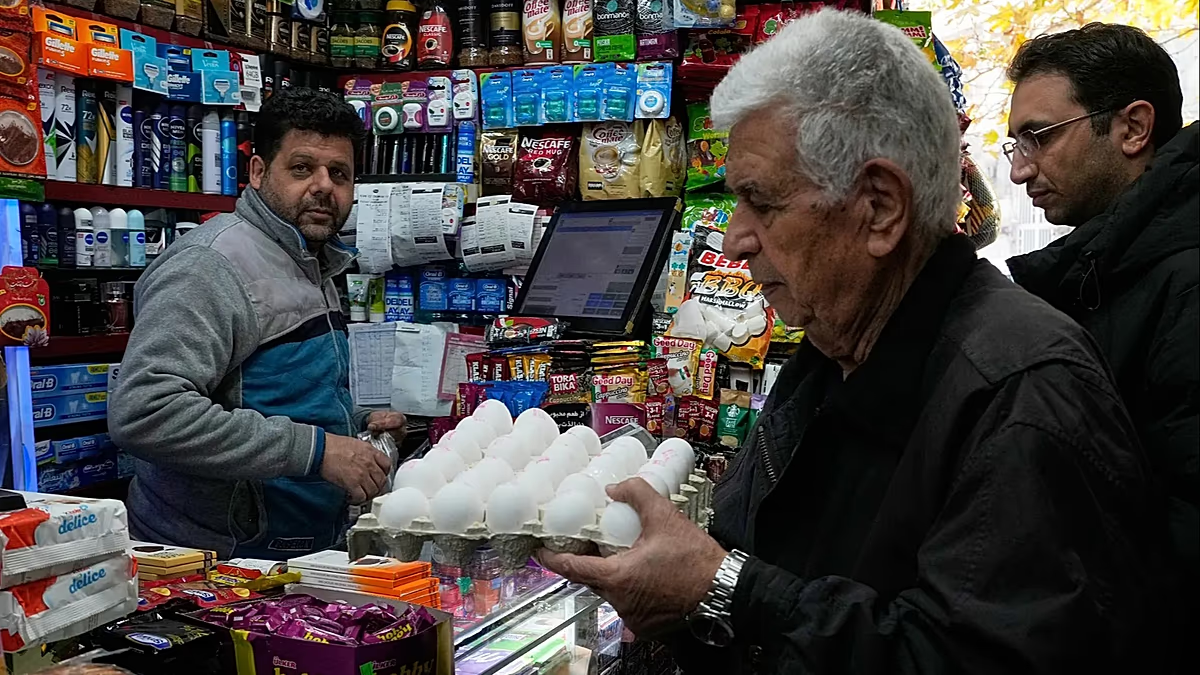
The current wave of protests represents a significant shift in Iranian social dynamics. While economic hardship is a key driver, the protests are rooted in a broader sense of societal frustration and a loss of social standing. This phenomenon, dubbed “The Great Downgrade,” sees professionals – including doctors, software engineers, and artists – unable to afford basic necessities like housing or updated technology, despite their qualifications. According to official statistics, public purchasing power has plummeted by 94% over the past eight years, coinciding with a 3,319% surge in the USD exchange rate.
However, the issue extends beyond mere affordability. Many protesters feel they are losing access to a “normal life,” including reliable internet access, personal freedoms, and job security. The cost of these elements has risen to the point of being a luxury, creating a deep sense of resentment.
A “Futureless Present” and Status Rage
The economic situation has created a sense of temporal stagnation for many Iranians. In a healthy economy, time is an asset, allowing individuals to work towards long-term goals. In Iran, however, inflation erodes savings faster than they can accumulate, trapping a generation in a “temporal straitjacket” focused solely on immediate survival. This fuels a profound “status rage,” as individuals experience a regression to past decades despite global advancements.
Meanwhile, those already marginalized are facing even more dire circumstances. Skyrocketing prices for essential goods like housing and protein are pushing vulnerable populations below a “floor of survival,” with reports of people being forced to live in increasingly desperate conditions. This is particularly poignant given the government’s historical promises to support the underprivileged (mostazafin).
The Alliance of “Empty Stomachs, Full Minds”
Traditionally, the middle class has often aligned with the state to avoid social unrest. In Iran, however, the middle class increasingly identifies with the struggles of other segments of society. This has fostered an “alliance of empty stomachs, full minds,” where workers facing unpaid wages stand alongside students uncertain about their future employment prospects. This shared experience is driving a unified national movement.
The demands of the protesters are not focused on political power, but rather on the basic right to a stable and dignified existence. They are asking “How can we live?” rather than “Who will govern?” Subsidies and charitable handouts are seen as insufficient, failing to address the underlying political mismanagement that protesters believe is the root cause of their economic woes.
A New Political Paradigm?
The protests in Iran represent a potential shift in the country’s political landscape. Driven by a globally connected generation and a devastated Iranian economy, the movement reflects a growing willingness to challenge the status quo. The cost of silence, protesters believe, now outweighs the risks of dissent. The goal is not necessarily to replace one ideology with another, but to create space for a “normal life” and a visible future, free from the constraints of an all-encompassing state ideology.
Looking ahead, the situation remains volatile. The government’s response to the protests will be crucial in determining the future trajectory of the country. Observers should watch for signs of further escalation, as well as any indications of willingness from the government to address the underlying economic and social grievances driving the unrest. Continued monitoring of social media and independent news sources will be essential to understanding the evolving dynamics on the ground.