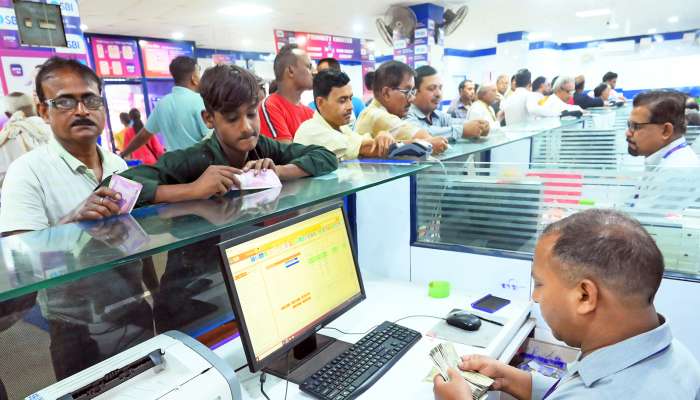

The Indian banking sector is demonstrating increasing financial strength, with a notable decline in non-performing assets (NPAs). A recent report by CareEdge Ratings reveals a positive trend in asset quality, signaling a healthier financial landscape for the country’s banks. This improvement is crucial for sustained economic growth and increased lending capacity. The report highlights significant progress made in the second quarter of FY26, offering a promising outlook for the sector.
Steady Decline in Non-Performing Assets Signals Banking Sector Health
The CareEdge Ratings report paints a picture of improving financial health within the Indian banking system. The Gross Non-Performing Asset (GNPA) ratio for Scheduled Commercial Banks (SCBs) has improved to 2.1% as of Q2FY26, a significant drop from the 2.6% recorded in the same period last year. This translates to a year-on-year decline of 11.1%, bringing the total value of GNPA down to Rs 4.05 lakh crore.
This positive movement isn’t a fluke. Several factors are contributing to this encouraging trend. Strong recovery efforts, healthy upgrades of existing loans, a reduction in new loans slipping into NPA status, and proactive portfolio clean-up through write-offs and sales to Asset Reconstruction Companies (ARCs) are all playing a vital role.
Key Drivers of NPA Reduction
- Robust Recovery Mechanisms: Banks are becoming more effective at recovering dues from borrowers.
- Proactive Write-offs: Recognizing and writing off unrecoverable loans allows banks to focus on healthier assets.
- ARC Sales: Selling distressed assets to ARCs frees up capital and reduces the NPA burden.
- Tighter Underwriting Standards: More stringent loan approval processes are minimizing future risk.
Net NPA Ratio Remains Stable, Reflecting Consistent Improvement
Alongside the decline in gross NPAs, the Net Non-Performing Asset (NNPA) ratio has remained remarkably stable at 0.5% for three consecutive quarters. This consistency, compared to 0.6% in Q2FY25, is supported by a 9.9% year-on-year decrease in NNPAs, now totaling Rs 0.88 lakh crore.
Sequentially, both GNPAs and NNPAs saw declines of 4.2% and 5.1% respectively, quarter-on-quarter. This sustained improvement is driven by lower incremental slippages, successful recoveries, loan upgrades, and increased resolutions through ARC sales. This indicates a systemic improvement in asset quality across the entire banking sector.
Broad-Based Improvement Across Sectors and Banks
The report further indicates that the downward trend in sectoral GNPAs as a percentage of total advances is continuing across all segments within public sector banks (PSBs). This broad-based improvement is fueled by a significant reduction in fresh loan defaults, consistent write-offs, and the implementation of stricter lending criteria, particularly in the retail loan segment. This is a positive sign, demonstrating that the improvements aren’t limited to specific sectors but are widespread. Credit growth is also a key indicator, showing a healthy increase.
Credit Growth Outpaces Deposit Growth
Credit offtake experienced a robust growth of 11.7% year-on-year, outpacing deposit growth which stood at 9.7% during the quarter. While an increase in deposit mobilization is anticipated in the second half of FY26, overall credit growth is expected to remain moderate. This disparity between credit and deposit growth requires monitoring, as it could potentially lead to liquidity challenges if not addressed. Maintaining a healthy balance sheet is crucial for banks to sustain this positive momentum.
Future Outlook: Resilience with Cautious Optimism
The report projects that asset quality will likely remain resilient, supported by contained slippages and ongoing recovery efforts. The SCB GNPA ratio is forecasted to stay within the 2.3-2.4% range by the end of FY26. This suggests a continued, albeit moderate, improvement in the banking sector’s financial health. However, the report also sounds a note of caution.
Stress in low-ticket unsecured personal loans and the microfinance segment remains a concern. Additionally, potential negative impacts from U.S. tariff actions, a slowdown in global economic growth, and changes in domestic regulations could pose risks to both credit expansion and asset quality in the coming quarters. Careful monitoring of these external factors is essential. Financial stability depends on proactive risk management.
In conclusion, the decline in non-performing assets (NPAs) represents a significant positive development for the Indian banking sector. The improvements in both GNPA and NNPA ratios, coupled with healthy credit growth, indicate a strengthening financial system. However, vigilance regarding emerging risks and continued focus on prudent lending practices are crucial to sustain this positive trajectory and ensure long-term stability. Readers interested in learning more about the Indian banking sector can explore reports from the Reserve Bank of India and other financial institutions.