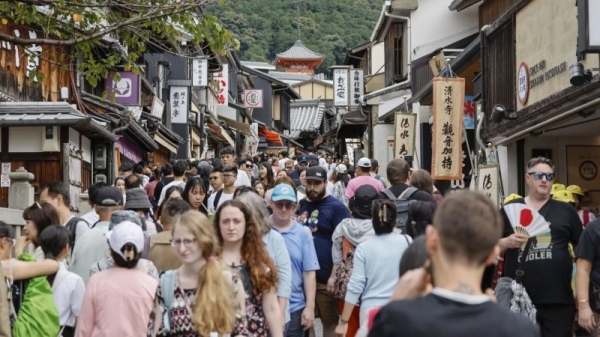

Historic towns crowded with travelers, beaches overwhelmed by tourists, and unruly behavior by visitors are becoming increasingly common in parts of Asia. Overtourism is affecting renowned destinations across the region, impacting residents’ quality of life and threatening the iconic spots that attract tourists in the first place.
Places like Kyoto in Japan, Bali in Indonesia, and Phuket in Thailand are experiencing significant challenges due to the large influx of visitors. The issue is not the lack of space, but rather the concentration of tourists in specific areas, leading to overcrowding and strain on local infrastructure.
Overtourism: A Growing Concern
The Pacific Asia Travel Association reports that travel in Asia has made a spectacular recovery from the pandemic pause, with Northeast Asia leading the way with a 20% tourism growth during the first six months of 2025. However, this growth has come at a cost, with many popular destinations struggling to cope with the large number of visitors.
In Kyoto, for example, a combined total of more than 56 million international and domestic tourists visited the historic city in 2024, leading to overcrowding and strain on local infrastructure. Residents have complained about the negative impact of tourism on their daily lives, including congestion on public transportation and disrespectful behavior by foreign tourists.
Addressing the Issue
Authorities in some destinations are taking steps to address the issue of overtourism. For example, the Philippine government closed the island of Boracay to tourists for six months in 2018 to reform the tourism scene and give the island’s environment a chance to recover.
In Thailand, the national park authority has banned tourism at Maya Bay for four years and now imposes a two-month closure each year to allow the marine and shoreline ecosystems to recover. However, enforcing these measures can be challenging, and some tourists continue to disregard the rules.
Balancing Economic Growth and Local Needs
The struggle to balance tourism-fueled economic growth with the needs of local residents is a complex issue. Governments in the region have identified travel and tourism as a key pillar of economic growth, but this has led to concerns about the impact of tourism on local communities.
According to Gary Bowerman, a travel and consumer trends analyst, governments are often reluctant to take tough measures to limit tourism, as they do not want to be seen as “locking up tourists.” However, some destinations are exploring alternative approaches, such as promoting off-season travel and encouraging visitors to explore lesser-known areas.
As the tourism industry continues to grow in Asia, it remains to be seen how destinations will balance the needs of visitors with those of local residents. The implementation of effective measures to manage tourism and mitigate its negative impacts will be crucial in ensuring the long-term sustainability of the industry.