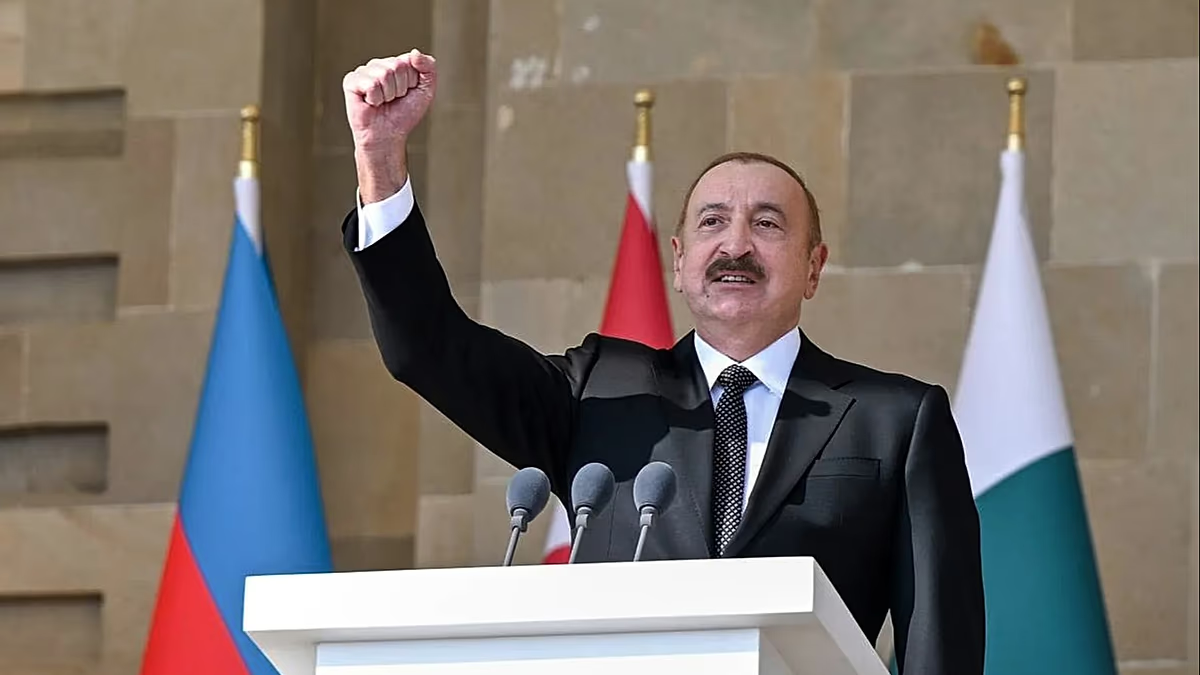

Azerbaijan’s President Ilham Aliyev stated on January 20, 2026, that the global landscape is shifting towards a system defined by power dynamics rather than international law. Speaking at the World Economic Forum in Davos, Aliyev emphasized the importance of national strength in navigating this evolving World Economic Forum environment. He also addressed regional stability concerns, particularly regarding Iran, and highlighted Azerbaijan’s growing role as a key energy supplier to Europe.
Aliyev’s comments came during an exclusive interview where he discussed the changing nature of international relations and Azerbaijan’s strategic positioning. He expressed hope for continued stability in the South Caucasus region, a historically volatile area, and underscored the nation’s commitment to peaceful coexistence with its neighbors. The president also announced the commencement of natural gas deliveries to Germany and Austria, expanding Azerbaijan’s energy reach.
Azerbaijan’s Expanding Role in European Energy Security
Azerbaijan has rapidly become a significant player in European energy markets, particularly as the continent seeks to diversify its supply sources. According to Aliyev, the country now supplies natural gas to 16 nations, including ten members of the European Union. This extensive network positions Azerbaijan as a leading global provider of pipeline gas, a crucial distinction in a market increasingly focused on secure and reliable energy infrastructure.
The new gas supplies to Germany and Austria are part of a broader effort to reduce Europe’s dependence on Russian energy. This diversification strategy gained momentum following the 2022 energy crisis and has been a key priority for many European governments. Azerbaijan’s Southern Gas Corridor, a network of pipelines delivering gas from the Caspian Sea to Europe, has been instrumental in this shift.
Geopolitical Implications of Energy Supply
Aliyev’s assertion that “the rule of strength” is increasingly prevalent in international relations reflects a growing sentiment among some world leaders. This perspective suggests a move away from multilateral institutions and a greater emphasis on bilateral agreements and national interests. The increased importance of energy security, as demonstrated by Azerbaijan’s role, is a key factor driving this trend.
However, the president also stressed the importance of regional stability, particularly in light of concerns about potential unrest in Iran. Instability in Iran could have significant repercussions for the entire South Caucasus region, potentially disrupting energy transit routes and exacerbating existing conflicts. Azerbaijan shares a border with Iran and has expressed concerns about Iranian military exercises near its territory.
The timing of Aliyev’s statements is noteworthy, coinciding with ongoing discussions about the future of the global order and the role of various nations within it. His emphasis on national strength and strategic partnerships suggests a proactive approach to navigating a more competitive and unpredictable international environment. The country’s economic strength, derived largely from its energy resources, allows it to pursue an independent foreign policy.
The expansion of Azerbaijan’s gas exports is not without its challenges. Competition from other suppliers, including liquefied natural gas (LNG) from the United States and Qatar, remains fierce. Additionally, the long-term sustainability of fossil fuel demand is a growing concern as the world transitions towards renewable energy sources. Despite these challenges, Azerbaijan is positioning itself to remain a relevant energy provider for decades to come.
Looking ahead, the situation in the South Caucasus will continue to be a key area to watch. The relationship between Azerbaijan and Armenia remains fragile, despite recent peace talks. Furthermore, the evolving geopolitical landscape in the Middle East and Central Asia could have a significant impact on the region’s stability and Azerbaijan’s role within it. Monitoring Azerbaijan’s energy policies and its diplomatic efforts will be crucial for understanding the broader shifts in global power dynamics.
For further insights into Azerbaijan’s energy sector and its geopolitical significance, explore resources from the International Energy Agency.