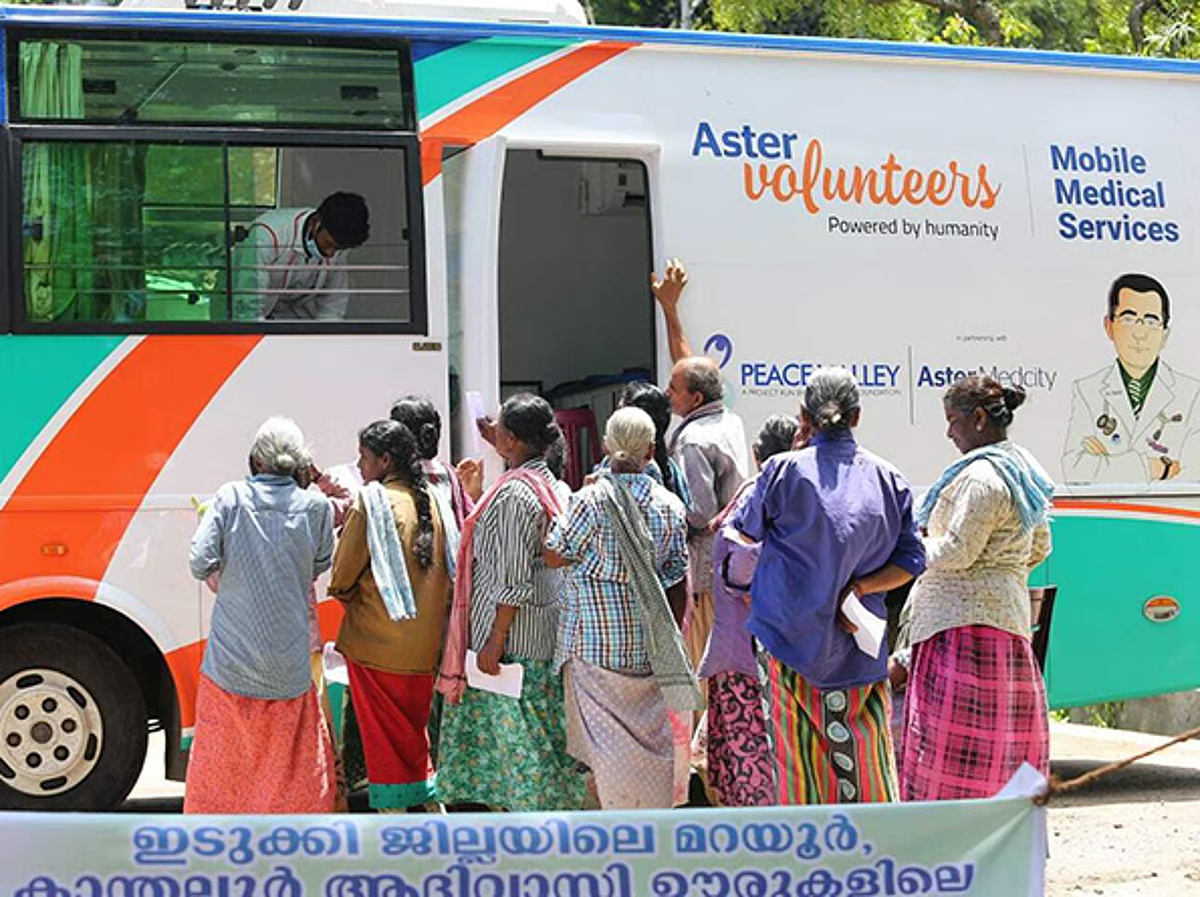

Dubai, UAE – Aster DM Healthcare, a leading healthcare provider in the Middle East and India, has announced a significant expansion of its humanitarian efforts through its Aster Volunteers program. The organization aims to establish 100 mobile medical services (MMS) units across the Middle East, Africa, and South Asia by December 11, 2027, coinciding with its 40th Foundation Day. This initiative will also focus on growing its volunteer network to 100,000 individuals, with a goal of reaching 8 million beneficiaries globally.
Currently operating in 20 countries, Aster Volunteers provides healthcare access to underserved communities. The expansion will add five new nations in Africa and the Middle East to its reach. The organization has already deployed 67 MMS units, delivering primary healthcare directly to populations facing geographical or economic barriers.
Expanding Access to Healthcare with Mobile Medical Services
The expansion of mobile medical services is a direct response to the growing need for accessible healthcare in developing regions. According to the World Health Organization, millions lack access to basic medical care due to factors like poverty, remote location, and inadequate infrastructure. Aster Volunteers seeks to address these disparities by bringing essential services directly to those who need them most. This includes preventative care, diagnostics, and treatment for common illnesses.
Focus on Oncology in India
A key component of the expansion will be a dedicated focus on cancer care in India. Aster DM Foundation has pledged Rs120 crore (approximately $14.5 million USD) over the next three years to improve radiation and oncology services within its Indian hospitals. This investment will fund the establishment of five free Radiation Therapy Units, increasing access to advanced cancer treatment for economically disadvantaged patients.
Recent Deployments in Chad and India
The organization recently launched its 67th MMS unit in Chad, in collaboration with the country’s Ministry of Health. Simultaneously, the 66th unit was deployed in India, partnering with Ganpat University in Mehsana, Gujarat. Both units are equipped with Internet of Things (IoT)-enabled telemedicine capabilities, diagnostic tools, medicine dispensing systems, and consultation rooms. Furthermore, they incorporate solar-powered health education spaces, emphasizing a commitment to sustainable healthcare solutions.
Since its inception, the MMS program has provided medical attention to over 2.6 million people across India, the Middle East, and Africa. Each unit functions as a comprehensive healthcare center, offering a full spectrum of services from initial consultations and diagnostic testing to treatment and vital community health education.
Dr. Azad Moopen, Founder Chairman of Aster DM Healthcare, stated that healthcare is a fundamental right, not a privilege. He emphasized that scaling the AVMMS program to 100 units reflects the organization’s dedication to compassionate care, social responsibility, and building healthier communities worldwide.
The initiative aligns with broader global health goals, including the United Nations Sustainable Development Goal 3, which focuses on ensuring healthy lives and promoting well-being for all. Aster Volunteers’ approach emphasizes preventative care and community engagement, aiming to create lasting improvements in health outcomes. Healthcare access is a critical issue in many of the target regions, and this expansion represents a substantial investment in addressing that need.
Beyond the expansion of medical services, Aster DM Healthcare has also committed to environmental sustainability. The company has pledged to plant one tree for every employee (Asterian) by 2027, demonstrating a holistic approach to social and environmental responsibility. This commitment to global health extends beyond treating illness to fostering a healthier planet.
Looking ahead, the success of the expansion will depend on continued partnerships with local governments, universities, and community organizations. The organization will need to navigate logistical challenges related to operating in diverse and often remote locations. Monitoring the impact of the new MMS units and the volunteer network will be crucial to ensuring the program’s effectiveness and making necessary adjustments. The next major milestone will be the assessment of progress towards the 100-unit goal in late 2025, with a focus on the integration of telemedicine and the impact on key health indicators.