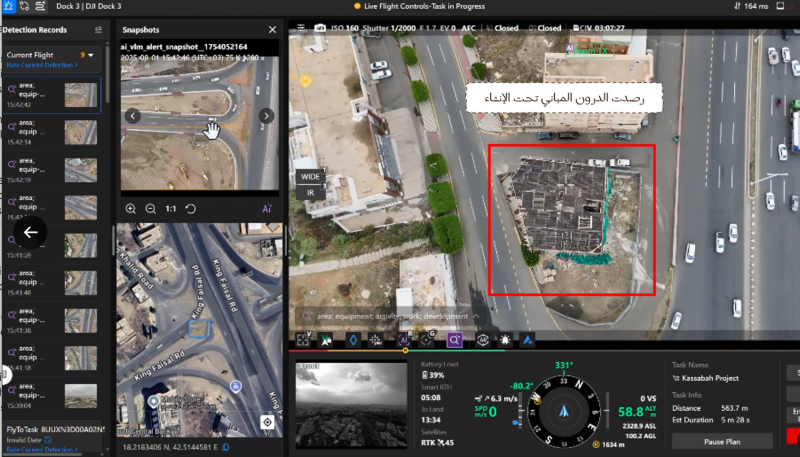

The Asir region of Saudi Arabia is pioneering the use of drone technology in municipal operations, launching the Kingdom’s first pilot program for unmanned aerial vehicles in local government work. Implemented in Abha and Khamis Mushait, the initiative aims to improve efficiency, oversight, and service delivery across the region. The program, a collaboration between the Asir Emirate, the Ministry of Municipalities and Housing, and other relevant authorities, began trial runs in February.
Asir Mayor Abdullah Al Jali announced the program’s initial success on Tuesday, highlighting its potential to transform how municipalities manage projects and respond to citizen needs. The deployment of drones represents a significant step towards Saudi Arabia’s broader digital transformation goals, aligning with the Vision 2030 plan to diversify the economy and improve public services. This move comes as municipalities globally explore innovative technologies to address urban challenges.
The Rise of Drone Technology in Saudi Arabian Municipalities
The core function of the drones is autonomous operation, utilizing artificial intelligence to perform tasks without direct human control. This allows for continuous monitoring of municipal projects and proactive identification of issues. According to Al Jali, the drones are capable of detecting unauthorized construction, illegal waste dumping, and land encroachments. They also play a crucial role in identifying and responding to emergency situations.
Enhanced Monitoring and Regulatory Oversight
A key benefit of the program is the enhanced ability to enforce municipal regulations. The drones provide a comprehensive overview of the region, enabling authorities to quickly identify and address violations. This is particularly important in a rapidly developing area like Asir, where maintaining order and adhering to building codes are critical. The Ministry of Municipalities and Housing has emphasized the importance of consistent enforcement for sustainable urban growth.
Additionally, the drones are equipped to conduct high-speed, accurate topographic surveys. This capability streamlines the process of planning and approving construction projects, reducing delays and improving the overall efficiency of municipal services. Traditional surveying methods are often time-consuming and labor-intensive; drones offer a faster and more cost-effective alternative.
Accelerating Services and Improving Transparency
The implementation of drone operations is expected to accelerate various municipal processes, including the issuance of permits and the approval of development plans. By automating data collection and analysis, the drones reduce the administrative burden on municipal staff, allowing them to focus on more complex tasks. This aligns with the Kingdom’s broader efforts to improve the ease of doing business and attract investment.
Furthermore, the use of drones is intended to increase transparency in municipal operations. The data collected by the drones is readily available to relevant authorities, providing a clear and objective record of project progress and regulatory compliance. This can help to build public trust and reduce opportunities for corruption. The program also supports the use of geospatial data for better urban planning.
However, the program is not without its challenges. Ensuring data privacy and security is paramount, and authorities are likely to implement strict protocols to protect sensitive information. Additionally, integrating the drone data into existing municipal systems requires careful planning and coordination. The success of the program hinges on effective data management and analysis.
Meanwhile, the Asir Emirate is actively exploring additional applications for the drone technology. Plans are underway to trial the use of drones for responding to resident reports and tracking maintenance and cleanliness efforts. This expansion reflects a commitment to leveraging technology to improve the quality of life for residents across the region. The use of aerial surveying is also being considered for environmental monitoring.
In contrast to traditional methods, drones offer a scalable and adaptable solution for addressing a wide range of municipal challenges. The initial phase of the program has focused on Abha and Khamis Mushait, but authorities intend to expand the program to other cities and towns within the Asir region. This phased approach allows for careful evaluation and refinement of the technology before widespread deployment.
Looking ahead, the Asir region plans to evaluate the results of the pilot program and develop a comprehensive framework for the integration of drones into municipal operations. A report detailing the program’s findings and recommendations is expected to be released by the end of the year. The Ministry of Municipalities and Housing will then assess the feasibility of replicating the program in other regions of Saudi Arabia, potentially establishing a national standard for drone technology in local government. The long-term impact of this initiative remains to be seen, but it represents a significant step towards a more efficient and technologically advanced municipal sector in Saudi Arabia.