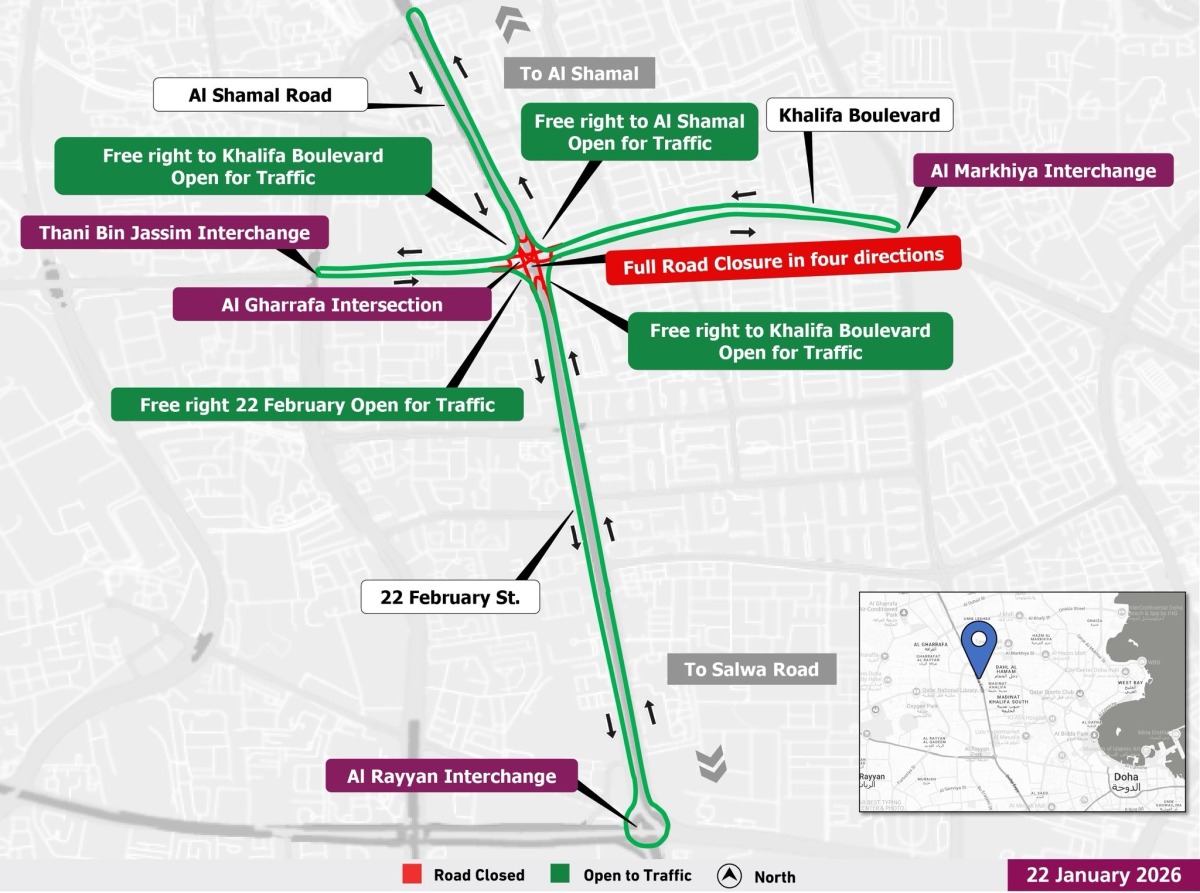

Doha, Qatar – The Public Works Authority (Ashghal) has announced a temporary full closure of the Al Gharaffa Interchange, a key transportation hub in Doha, from 2:00 AM to 10:00 AM on Friday, January 23, 2026. While the majority of the interchange will be inaccessible, Ashghal confirmed that free right lanes will remain open to all traffic. This Al Gharaffa Interchange closure is necessary to facilitate essential road maintenance work, impacting commuters throughout the region.
The closure affects all directions of the interchange, prompting Ashghal to urge motorists to exercise caution, adhere to posted speed limits, and utilize the designated diversion routes. Drivers are also encouraged to consider alternative routes through nearby streets to mitigate potential delays. A map detailing the diversions has been released by Ashghal to assist road users.
Understanding the Al Gharaffa Interchange Closure and its Impact
The Al Gharaffa Interchange is a significant multi-level intersection connecting several major roadways, including the Doha Expressway and Al Shamal Road. It serves a large volume of traffic daily, making its maintenance crucial for the overall efficiency and safety of Doha’s road network. According to Ashghal, preventative maintenance is a key component of Qatar’s infrastructure strategy.
Why is Maintenance Needed?
Regular road maintenance is vital to address wear and tear caused by heavy traffic and environmental factors. This includes repairing asphalt, reinforcing structural components, and ensuring proper drainage systems are functioning optimally. Without such upkeep, roadways can deteriorate, leading to increased accident risks and costly repairs in the future.
However, performing this maintenance during peak hours would cause substantial disruption. Therefore, Ashghal has scheduled the work during a period of relatively lower traffic volume – overnight on a Friday morning. This approach aims to minimize the impact on daily commuters as much as possible.
Diversion Routes and Traffic Management
Ashghal has implemented a comprehensive traffic management plan to guide drivers around the road closure. The availability of free right lanes is intended to provide a continuous flow for some traffic. Detailed diversion routes are being publicized through various channels, including Ashghal’s website, social media platforms, and local news outlets.
Motorists traveling to and from areas connected by the interchange should anticipate increased travel times. Planning journeys in advance and allowing extra time are strongly recommended. The use of traffic apps, such as Google Maps or Waze, can provide real-time updates on road conditions and suggest alternative routes.
This isn’t the first time Ashghal has implemented temporary closures for maintenance. Similar procedures were followed for work on the Luqta Interchange and other key junctions throughout Doha, demonstrating a consistent approach to infrastructure improvements. These proactive measures are part of Qatar’s ongoing preparations for major events and long-term urban development.
The timing of the closure, coinciding with a Friday, is a strategic decision. Fridays typically experience lower traffic volumes due to the weekend and prayer times. Nevertheless, the complete closure of the interchange will inevitably affect those who need to travel during those hours. The Doha Expressway, in particular, is expected to see increased congestion on surrounding routes.
In contrast to complete closures, Ashghal often employs lane reduction strategies for less disruptive maintenance. However, the scope of the work at Al Gharaffa Interchange necessitates a full closure to ensure the safety of both workers and road users. The authority emphasizes its commitment to completing the maintenance as quickly and efficiently as possible.
Looking ahead, Ashghal has not yet announced a definitive timeline for the completion of the maintenance work. The duration will depend on the extent of the repairs required and any unforeseen challenges encountered during the process. Road users should continue to monitor Ashghal’s official channels for updates and potential extensions to the traffic diversion. Further announcements regarding similar maintenance projects across Doha are also anticipated in the coming months as part of the ongoing infrastructure development program.
It remains to be seen how effectively the diversion routes will manage the displaced traffic flow. Monitoring traffic patterns during and after the closure will be crucial for Ashghal to assess the effectiveness of its plan and make adjustments for future projects. The success of this operation will also influence public perception of Ashghal’s ability to maintain vital infrastructure with minimal disruption.
Ashghal’s website provides further information.
Google Maps can assist with route planning.
Waze is another useful traffic app.