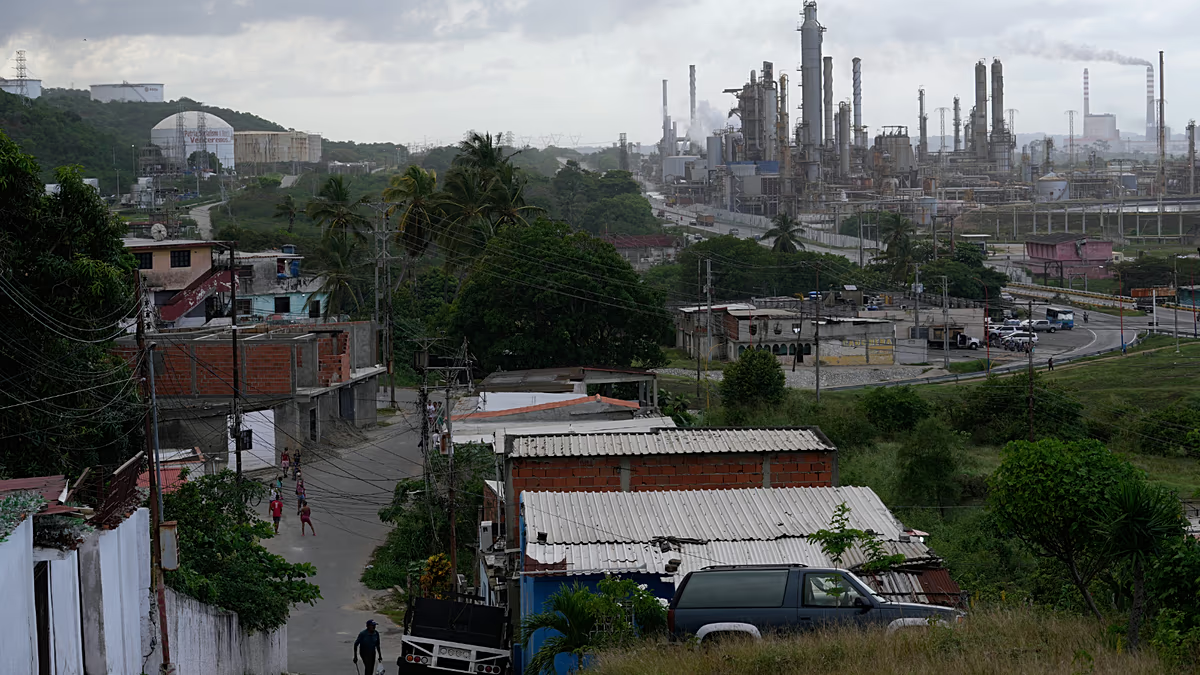

US President Donald Trump’s ambition to control Venezuela’s oil and unlock substantial profits for American companies faces significant hurdles, according to industry analysts and experts. While Trump has stated his desire to leverage Venezuela’s vast reserves – the largest proven in the world – the practicalities of such a move remain unclear, including questions of investment, cooperation with local authorities, and the sheer scale of infrastructure repairs needed. The plan hinges largely on US companies being willing and able to revitalize Venezuela’s struggling energy sector.
The pronouncements come after a reported US-backed operation removed Nicolás Maduro from power, replacing him with Delcy Rodríguez. This action, while politically decisive, introduces new layers of complexity to any potential US involvement in Venezuela’s oil industry, including concerns about legal challenges and long-term political stability. The future of Venezuela’s oil production and the degree of US control remain highly uncertain.
The Potential of Venezuelan Oil Reserves
Trump believes that gaining control of Venezuela’s oil would bolster US energy dominance and provide considerable geopolitical leverage. According to a recent analysis by Goldman Sachs, combining Venezuela’s oil reserves with those of neighboring Guyana, where US companies are heavily invested, and domestic US reserves could give the United States approximately 30% of global oil reserves. The bank estimates that oil production could increase to 1.4 million barrels per day within two years, and potentially reach 2.5 million barrels per day within a decade, under US influence.
Logistical and Financial Challenges
However, realizing this potential requires massive investment. Much of Venezuela’s oil infrastructure – including wells, pipelines, and refineries – is outdated, poorly maintained, or completely non-operational. Restoring production to pre-sanctions levels could cost tens, if not hundreds, of billions of dollars, according to Peter McNally of Third Bridge. This includes not only physical rebuilding but also retraining a workforce diminished by years of underinvestment.
Trump has suggested US companies would be reimbursed for their investments through future oil sales, but the specifics are vague. Ole Hansen, an analyst at Saxo Bank, points out that US oil majors are primarily responsible to their shareholders, and the potential returns may not justify the significant risks and costs, even with partial reimbursement.
Another factor is the need for legal and regulatory reform in Venezuela. The industry was nationalized in the 1970s, and further restricted in the 2000s through forced joint ventures with the state oil company, Petróleos de Venezuela, S.A. (PDVSA). Opening the sector to larger foreign investment will require a significant overhaul of these policies.
Political and Legal Complications
The recent change in leadership, while aligned with US interests, doesn’t automatically resolve the political and legal obstacles. The new administration led by Delcy Rodríguez retains many key figures from the Maduro regime, including military and interior ministry leaders. US Secretary of State Marco Rubio has suggested a policy of “oil quarantine” which could further complicate any agreements.
Several US companies, including Exxon Mobil and ConocoPhillips, had assets nationalized under Hugo Chávez. Trump has characterized this as a “theft” and demanded compensation. ConocoPhillips is currently owed approximately $10 billion for the 2007 expropriation and remains cautious about re-entering the Venezuelan market. The company stated it is “monitoring developments” but refrained from speculating on future investments.
Furthermore, the removal of Maduro and the subsequent political transition raise questions about the legitimacy of any agreements made with the new government. US sanctions against Venezuela also remain in place, potentially deterring investment.
Experts like Mark Christian of CHRIS Well Consulting emphasize that American firms will require assurances of payment and security before returning, and the removal of existing sanctions. Ed Hirs, an energy fellow at the University of Houston, cautions that historical precedents aren’t encouraging, citing the limited benefits to US companies from previous regime changes in oil-rich nations like Iraq and Libya.
The situation remains fluid. Investors are closely watching for signs of policy clarity, legal resolutions regarding past nationalizations, and concrete steps to ensure a stable and secure operating environment. The future of US involvement in Venezuela’s vital oil sector, and whether Trump’s vision of controlling Venezuela through energy will come to fruition, depends on navigating these complex challenges.
Keep up-to-date with developments in Venezuelan politics and energy as the situation continues to evolve and shape the global oil market.