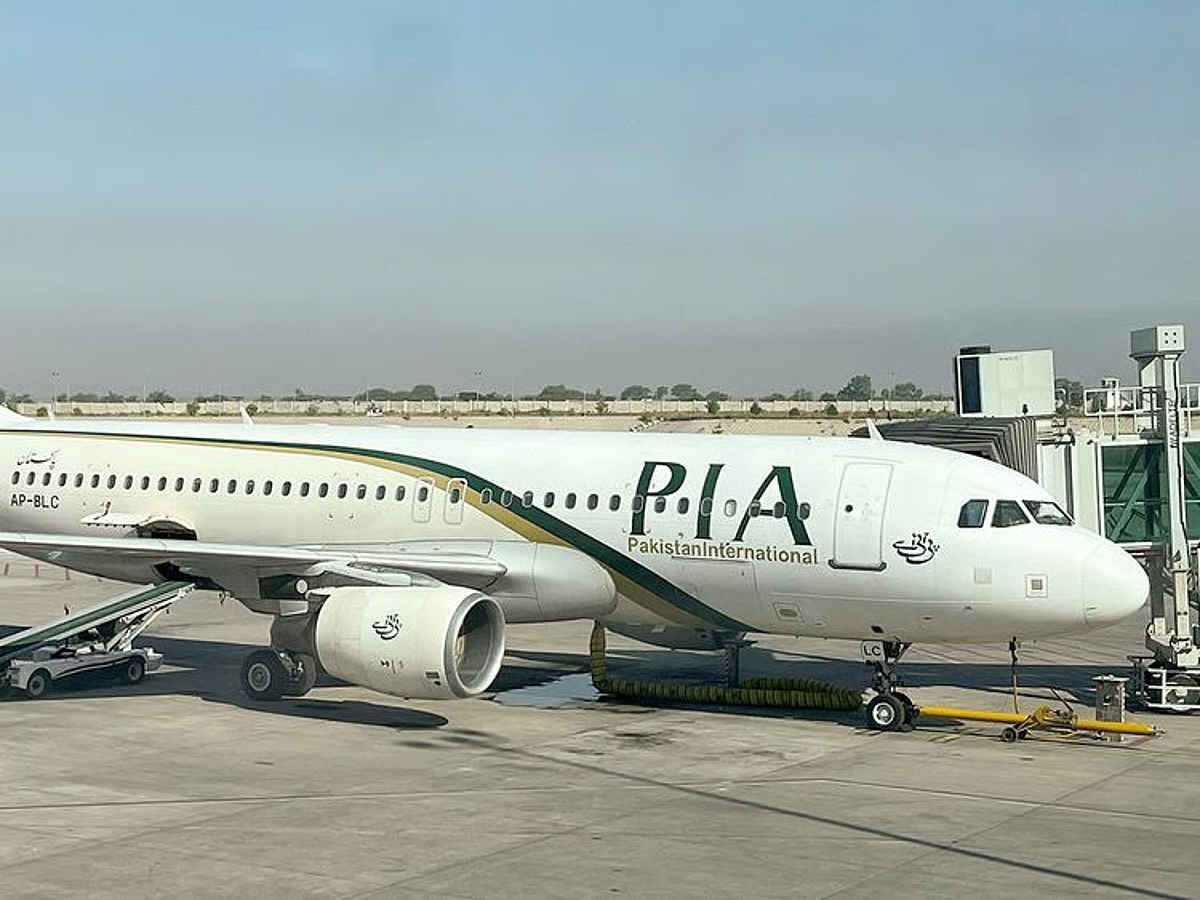

A consortium led by the Arif Habib Group has submitted the highest bid for Pakistan International Airlines (PIA), marking a significant step in the country’s ongoing privatization efforts. The group’s offer, details of which remain largely undisclosed, was revealed following the deadline for bids on Thursday. This development regarding the PIA privatization is a key component of the International Monetary Fund’s (IMF) conditions for continued financial assistance to Pakistan.
The Ministry of Aviation confirmed receiving multiple expressions of interest, but the Arif Habib Group’s bid was identified as the most financially sound. The process aims to restructure the national flag carrier, which has been burdened by substantial debt and operational losses for years. The government hopes the PIA privatization will attract foreign investment and improve the airline’s efficiency and service quality.
Arif Habib Group Emerges as Frontrunner in PIA Privatization
The Arif Habib Group, a prominent Pakistani conglomerate with interests in financial services, power generation, and real estate, has long been speculated as a potential bidder for PIA. Their involvement signals a strong domestic commitment to revitalizing the airline. The consortium also includes other significant investors, though their identities have not been fully publicized by the government.
Background on PIA’s Financial Struggles
PIA has faced mounting financial difficulties for over two decades. Years of mismanagement, political interference, and a competitive aviation landscape have contributed to its substantial debt, estimated to exceed PKR 450 billion (approximately $1.6 billion USD). The airline has struggled to modernize its fleet and compete effectively with private carriers.
Successive governments have attempted to restructure PIA, including previous, unsuccessful privatization attempts. These efforts were often hampered by labor union opposition and concerns about job security. The current administration, however, appears determined to proceed with the sale as a condition of securing further loans from the IMF.
Details of the Bidding Process
The bidding process, overseen by the Privatisation Commission, involved a pre-qualification stage followed by the submission of financial proposals. Several international airlines and investment firms initially expressed interest, but ultimately, the Arif Habib Group’s bid proved the most competitive. According to sources within the Ministry of Aviation, the evaluation criteria focused on the financial strength of the bidders, their proposed business plans for PIA, and their commitment to maintaining essential services.
The government has stated its intention to retain a minority stake in PIA, even after privatization. This is intended to ensure national interests are protected and that the airline continues to serve key domestic routes. However, the extent of the government’s remaining ownership is still subject to negotiation.
Implications for Pakistan’s Aviation Sector
The successful privatization of PIA could have far-reaching consequences for Pakistan’s aviation industry. A more efficient and financially stable PIA could stimulate competition and improve overall service standards. This could also lead to increased tourism and economic activity.
However, the process is not without its challenges. Concerns remain about potential job losses and the impact on PIA employees. The government has pledged to address these concerns through a comprehensive restructuring plan, including potential retraining and redeployment programs. The airline industry in Pakistan is also heavily regulated, and any changes to PIA’s operations will need to comply with existing regulations.
Furthermore, the deal’s success hinges on the new owners’ ability to navigate the complex political and economic landscape of Pakistan. Maintaining public trust and ensuring transparency throughout the transition will be crucial. The national carrier has a strong symbolic value for many Pakistanis, and any perceived mismanagement or exploitation could lead to public backlash.
The privatization is also expected to have a positive impact on the country’s overall economic situation. The influx of investment could help to bolster Pakistan’s foreign exchange reserves and reduce its reliance on external debt. Additionally, a more profitable PIA would contribute to increased tax revenues for the government.
Next Steps and Potential Hurdles
Following the acceptance of the Arif Habib Group’s bid, the next phase involves detailed negotiations regarding the terms of the sale. This includes finalizing the valuation of PIA, determining the extent of the government’s remaining stake, and agreeing on a comprehensive restructuring plan. The Privatisation Commission expects these negotiations to conclude within the next few months.
Several potential hurdles remain. Labor unions may continue to oppose the privatization, potentially leading to strikes or protests. Additionally, regulatory approvals from various government agencies will be required before the deal can be finalized. The current political climate in Pakistan, marked by instability and uncertainty, could also complicate the process. The finalization of the PIA sale is dependent on navigating these challenges effectively.
The government is also under pressure to ensure that the privatization process is conducted fairly and transparently. Allegations of corruption or favoritism could undermine public confidence and jeopardize the entire deal. Therefore, maintaining a high level of accountability will be paramount. The Ministry of Finance is closely monitoring the situation, recognizing the importance of this transaction to Pakistan’s economic stability.
Ultimately, the future of PIA remains uncertain. While the Arif Habib Group’s bid represents a significant step forward, the successful completion of the privatization process will require careful planning, effective negotiation, and a commitment to addressing the concerns of all stakeholders. The deadline for completing the transaction, as stipulated by the IMF, is currently set for the end of the fiscal year.