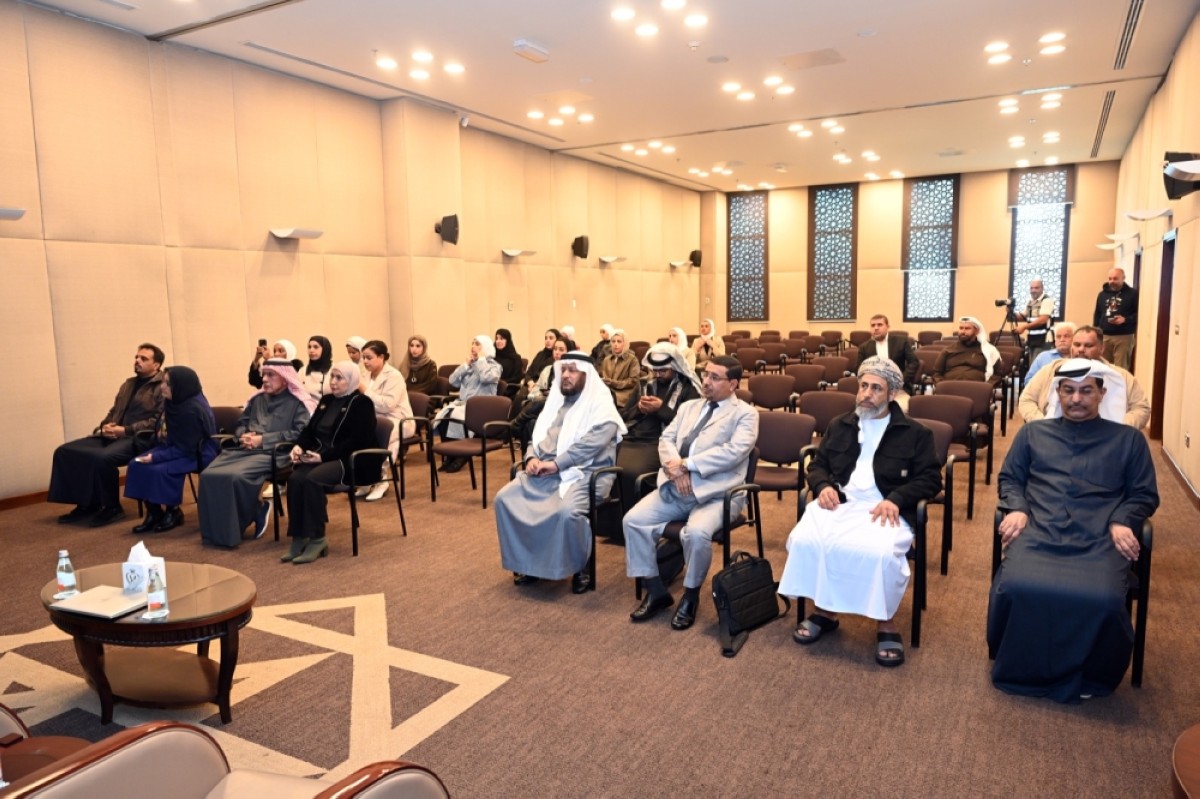

As globalization continues to reshape societies worldwide, the preservation of cultural identity has become increasingly vital. In Kuwait, recent discussions at the Arab Culture and Media Capital GCC Countries Forum highlighted the critical role of the Arabic language in safeguarding this identity for Arab nations. The forum, held on World Arabic Language Day and coinciding with Kuwait’s designation as the Capital of Arab Culture and Media, served as a platform to emphasize the need for renewed commitment to the language’s vitality.
The Arabic Language: More Than Just Communication
Director General of the Kuwait National Library, Siham Al-Azmi, powerfully articulated the significance of the Arabic language, stating it is far more than a mere tool for communication. She described it as a “guardian of faith,” a “safety valve for identity,” and a “guarantee of continuity and survival.” This sentiment underscores a growing concern within Arab societies about the potential erosion of their cultural heritage in the face of dominant global influences.
The Kuwait National Library has consistently championed the Arabic language through annual celebrations of World Arabic Language Day. These events aren’t simply ceremonial; they involve meticulous documentation of activities and making these resources accessible to both researchers and the general public. This dedication reflects a deep understanding of the language’s “lofty status and central place in the conscience of the Arab nation.”
Al-Azmi further explained that the forum’s timing – aligned with both World Arabic Language Day and Kuwait’s cultural designation – was deliberate. It signified a collective dedication to the Arabic language not only as a means of expression but as a “deep-rooted bond of unity,” a reflection of identity, and a defining characteristic of Arab civilization. The historical and spiritual weight of the language was also emphasized, acknowledging its role as the vessel for Islam’s message and the foundation upon which a globally recognized civilization was built.
Strengthening Arabic in a Globalized World: Regional and International Efforts
The need for proactive preservation extends beyond national borders. Dr. Laila Al-Sabaan, President of the Global Council for the Arabic Language, stressed the importance of sustained care and attention for the language at both regional and international levels. Her remarks highlighted a long-fought battle for recognition, recalling the decade-long campaign to establish Arabic as an official language at the United Nations – a goal that was ultimately achieved.
Kuwait’s consistent celebration of World Arabic Language Day, observed annually on December 18th, was specifically lauded as a demonstration of the country’s long-standing commitment. This commitment isn’t just about maintaining the language; it’s about fostering it as a vibrant, living element of identity, culture, and global presence.
Dr. Al-Sabaan’s emphasis on international attention is crucial. In an increasingly interconnected world, ensuring the Arabic language has a voice on global platforms is essential for cultural exchange and understanding. This also involves promoting Arabic literature, art, and scholarship internationally.
Fostering Cultural Dialogue and Shared Heritage
The forum’s broader aim was to uncover common cultural ground among Gulf states and strengthen cultural dialogue. This focus on regional collaboration is vital, as shared linguistic and cultural roots can serve as a powerful force for unity and cooperation. The underlying principle, as Dr. Al-Sabaan articulated, is that humanity’s true legacy lies in inclusive cultural values that benefit present and future generations.
Several insightful presentations contributed to this dialogue. Dr. Hassan Al-Nuaimi explored “Cultural Renaissance and Its Transformations in the Gulf States: Saudi Arabia and Kuwait,” while Dr. Khaled Al-Kindi examined “Kuwait and Oman: Cultural Bonds and Shared Visions.” These sessions aimed to identify the unique contributions of each nation while highlighting the enduring connections that bind them.
Continued Exploration of Arabic Culture and Linguistic Nuances
The forum’s program continued on Tuesday with further explorations of cultural ties. Dr. Yahya Al-Mahdi presented on “Cultural Movement in Qatar and Kuwait: International Manifestations and Expressions,” followed by Dr. Omar Basarih’s discussion of “Cultural Ties Between Kuwait and Yemen.” A particularly interesting presentation by Dr. Leila Al-Sabaan focused on “A Lexicon of Kuwaiti Dialect Vocabulary Using Symbols,” showcasing the richness and diversity within the Arabic language itself.
Adding a tangible dimension to the discussions, the Kuwaiti Heritage Society organized an exhibition showcasing a collection of rare Arabic books and magazines. These historical publications offered a glimpse into the past, documenting the history of Kuwait and other Arab countries, and further emphasizing the enduring legacy of Arabic scholarship and literature. This exhibition served as a powerful reminder of the importance of preserving and celebrating the written word in Arabic.
In conclusion, the Arab Culture and Media Capital GCC Countries Forum in Kuwait served as a timely and important reminder of the critical role the Arabic language plays in preserving cultural identity and fostering regional unity. The discussions and presentations highlighted the need for sustained effort, both nationally and internationally, to ensure the language continues to thrive as a vibrant expression of Arab civilization and a vital link to its rich history and future. The forum’s success underscores a growing awareness of these challenges and a collective commitment to safeguarding this invaluable cultural treasure for generations to come.