
New York – Foreign ministers from several key nations across the Middle East and Asia have jointly reaffirmed their support for the United Nations Relief and Works Agency for Palestine Refugees in the Near East (UNRWA), emphasizing its critical role in providing essential services and protecting the rights of Palestinian refugees amidst escalating regional challenges. The statement, released following concerns over recent Israeli actions and the ongoing humanitarian crisis in Gaza, underscores the agency’s unique position and the potential consequences of diminished capacity. This renewed backing comes as UNRWA continues to navigate complex political and logistical hurdles in delivering aid.
The Vital Role of UNRWA in a Shifting Landscape
The ministers of Saudi Arabia, Egypt, Jordan, the United Arab Emirates, Indonesia, Pakistan, Turkey, and Qatar highlighted UNRWA’s decades-long mandate, originally established by U.N. General Assembly Resolution 302 in 1949. This mandate centers on providing education, healthcare, social services, and emergency assistance to Palestinian refugees and their descendants. The recent three-year renewal of UNRWA’s mandate by the General Assembly was cited as evidence of continued international confidence in the organization.
However, the ministers expressed strong condemnation of a recent Israeli incursion into UNRWA’s headquarters in the Sheikh Jarrah neighborhood of occupied East Jerusalem. They characterized this action as a violation of international law and the established inviolability of U.N. premises. This incident has raised concerns about the operational safety of UNRWA staff and the ability to deliver aid effectively.
Humanitarian Crisis in Gaza Amplifies UNRWA’s Importance
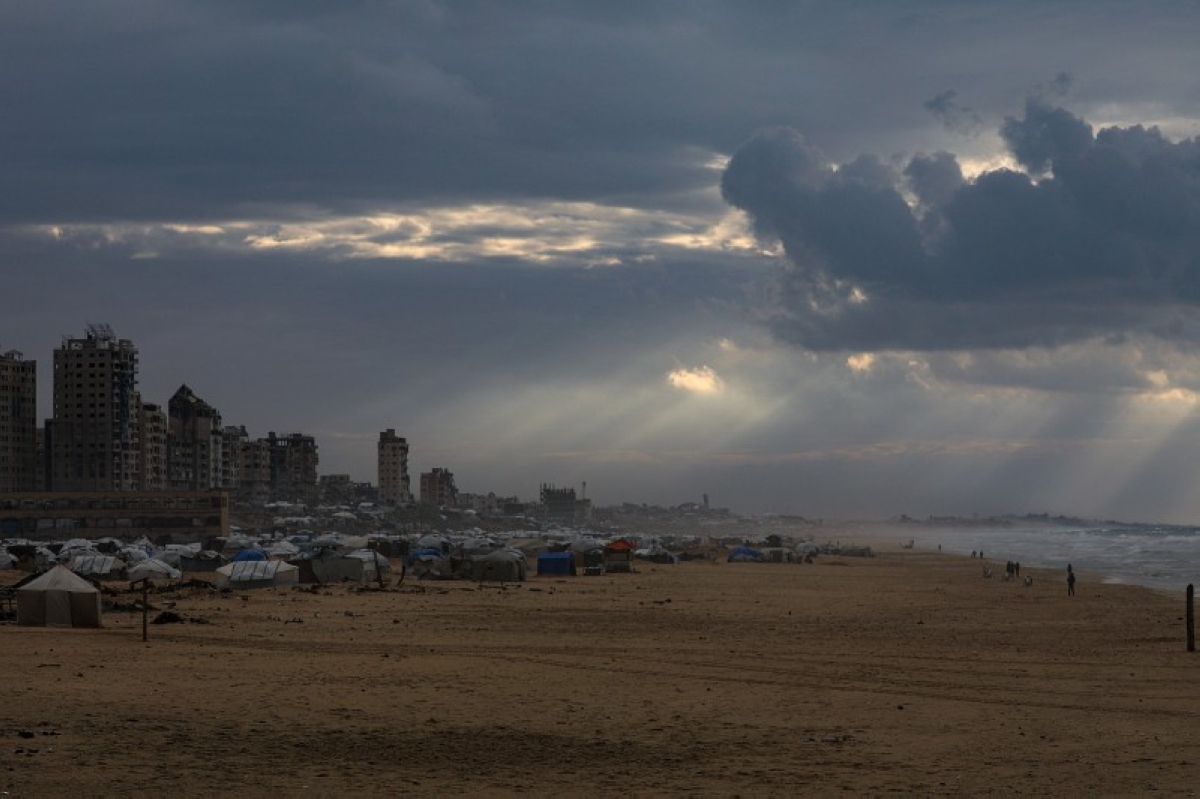
The statement specifically addressed the unprecedented humanitarian crisis unfolding in Gaza, where UNRWA plays a central role in distributing aid. According to the ministers, the agency’s extensive network of distribution centers is crucial for ensuring that food, relief supplies, and basic necessities reach those in need fairly and efficiently, in accordance with U.N. Security Council Resolution 2803.
UNRWA schools and health facilities continue to operate as lifelines for Palestinian refugees in Gaza, providing essential education and healthcare services despite the extremely difficult conditions. The ministers emphasized that this support is vital for enabling Palestinians to remain on their land and sustain their communities. The ongoing conflict has significantly strained resources and increased the demand for UNRWA’s services.
Irreplaceable Infrastructure and Expertise
The joint statement asserted that UNRWA’s role is “irreplaceable,” arguing that no other organization possesses the necessary infrastructure, expertise, and on-the-ground presence to adequately address the needs of Palestinian refugees. This includes a deep understanding of the specific vulnerabilities and challenges faced by the refugee population across its five areas of operation: Gaza, the West Bank, Jordan, Lebanon, and Syria.
Any weakening of UNRWA’s capacity, the ministers warned, would have serious humanitarian, social, and political repercussions throughout the region. This concern stems from the potential for increased instability, displacement, and radicalization if the basic needs of Palestinian refugees are not met. The potential impact on regional security is a key consideration for these nations.
Funding and Political Support Remain Critical
The ministers collectively called on the international community to ensure sufficient and sustainable funding for UNRWA. They stressed the need for both financial contributions and the provision of political and operational space to allow the agency to continue its vital work. Recent funding shortfalls have threatened UNRWA’s ability to maintain its current level of services, prompting appeals for increased support from member states.
Supporting UNRWA, the statement continued, is a cornerstone of regional stability, the protection of human dignity, and the safeguarding of Palestinian refugee rights. This support is viewed as essential until a just and lasting resolution to the Israeli-Palestinian conflict is achieved, in accordance with international law and relevant U.N. resolutions, including General Assembly Resolution 194, which addresses the right of return for Palestinian refugees. The issue of Palestinian rights remains a central tenet of foreign policy for many of the signatory nations.
The ministers also referenced the advisory opinion issued by the International Court of Justice on October 22, 2025, which reportedly clarifies Israel’s obligation to not obstruct UNRWA’s work and, instead, facilitate its operations as an occupying power. This legal framework underscores the international community’s expectations regarding access and cooperation with the agency.
The situation surrounding UNRWA is further complicated by the broader geopolitical context, including ongoing diplomatic efforts to de-escalate tensions in the region and address the root causes of the conflict. The agency’s ability to operate effectively is often intertwined with the progress – or lack thereof – in these negotiations. Relatedly, discussions around long-term solutions for Palestinian refugees, including resettlement and compensation, continue to be a sensitive and challenging aspect of the peace process.
Looking ahead, the international community will be closely monitoring Israel’s response to the ICJ advisory opinion and its commitment to ensuring UNRWA’s unimpeded access to Palestinian refugees. The agency’s financial stability will also be a key area of focus, with ongoing fundraising efforts crucial to maintaining its operations. The next major assessment of UNRWA’s impact and funding needs is scheduled for late 2026, and the outcome of that review will likely shape the agency’s future trajectory.