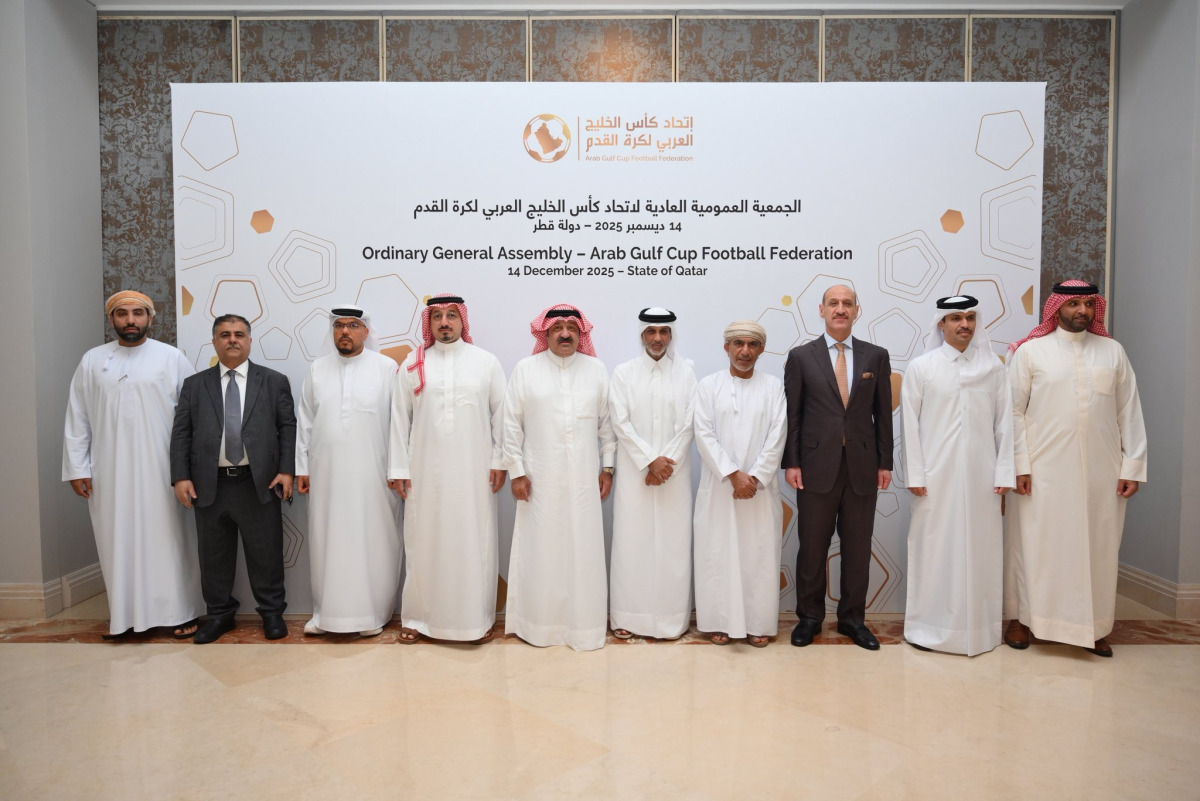

Doha, Qatar – The Arab Gulf Cup Football Federation (AGCFF) convened its General Assembly meeting yesterday in Doha, chaired by Qatar’s Minister of Sports and Youth and AGCFF President, Sheikh Hamad bin Khalifa bin Ahmed Al Thani. Key decisions included the approval of Saudi Arabia and Iraq to host upcoming Gulf Cup tournaments for youth age groups. The meeting also reviewed preparations for the 27th Gulf Cup, slated for Saudi Arabia in 2026, and discussed broader strategies for developing football across the region.
The AGCFF confirmed that Saudi Arabia will host the under-15 tournament, while Iraq will welcome the under-23 competition in Basra. Specific dates for both events are pending review by the federation’s Competitions Committee, taking into account the international football calendar. Jassim Al-Rumaihi, the AGCFF Secretary General, announced these decisions following the assembly, highlighting the importance of youth development within Gulf football.
Future of the Gulf Cup: Youth Tournaments and Saudi Arabia 2026
The decision to award hosting rights to Saudi Arabia and Iraq reflects the AGCFF’s commitment to expanding the reach of the Gulf Cup and fostering football talent throughout the member nations. This move aims to provide valuable competitive experience for young players and contribute to the long-term growth of the sport in the Gulf region. The selection of Basra as a host city for the under-23 tournament is particularly significant, as it represents an opportunity to further develop football infrastructure in Iraq.
Additionally, the assembly addressed the logistical planning for the 27th Gulf Cup, scheduled to take place in Saudi Arabia from September 23 to October 6, 2026. The timing was strategically chosen to avoid clashes with Saudi Arabia’s hosting of the 2027 AFC Asian Cup, ensuring adequate preparation and resource allocation for both major tournaments.
Preparations and Inspections for Saudi Arabia 2026
The AGCFF will initiate a series of inspection visits to Saudi Arabia to monitor the progress of preparations for the 27th Gulf Cup. These visits will involve assessing the readiness of stadiums, training facilities, and other essential infrastructure. The inspection committee will also explore contingency plans and alternative arrangements, as is standard practice for major sporting events. According to the AGCFF, these measures are crucial for delivering a successful and memorable tournament.
Qatar received praise during the meeting for its successful organization of the recent Under-17 and Under-23 Gulf Cup tournaments. The federation noted that the events were well-received by participating teams and left a positive impression on the broader football community. This positive feedback underscores Qatar’s growing reputation as a capable host of international sporting competitions, and its continued investment in sports infrastructure. The success of these tournaments also serves as a benchmark for future hosts, including Saudi Arabia and Iraq.
The General Assembly also reviewed and approved the financial and administrative reports presented by the AGCFF’s Executive Office. These reports detailed the federation’s activities and financial performance over the past year, demonstrating transparency and accountability in its operations. The focus on financial stability is seen as vital for the long-term sustainability of the Gulf Cup and its associated development programs.
The broader discussion centered on sustaining the positive momentum of Gulf football and enhancing the quality of tournaments at all levels. Member states shared proposals and ideas aimed at improving competition formats, strengthening youth development initiatives, and promoting greater collaboration within the region. The AGCFF emphasized the importance of a unified approach to address the challenges and opportunities facing Gulf football. This includes exploring potential partnerships with international football organizations and investing in coach education programs.
Looking ahead, the AGCFF’s Competitions Committee will now work to finalize the dates for the under-15 and under-23 Gulf Cup tournaments, aligning them with the international football calendar. The committee’s recommendations will be presented to the Executive Office for approval. Further details regarding the tournament formats, participating teams, and logistical arrangements are expected to be announced in the coming months. The readiness of Iraq and Saudi Arabia will be closely monitored, and any potential challenges will be addressed proactively to ensure the successful delivery of these important youth competitions.
The next key deadline will be the completion of the initial inspection reports from Saudi Arabia, expected within the next quarter. Observers will be watching to see how the AGCFF balances the need for modern facilities with the desire to engage local communities in the tournament preparations. The long-term impact of these youth tournaments on the development of footballing talent in the Gulf region remains a key area of interest.