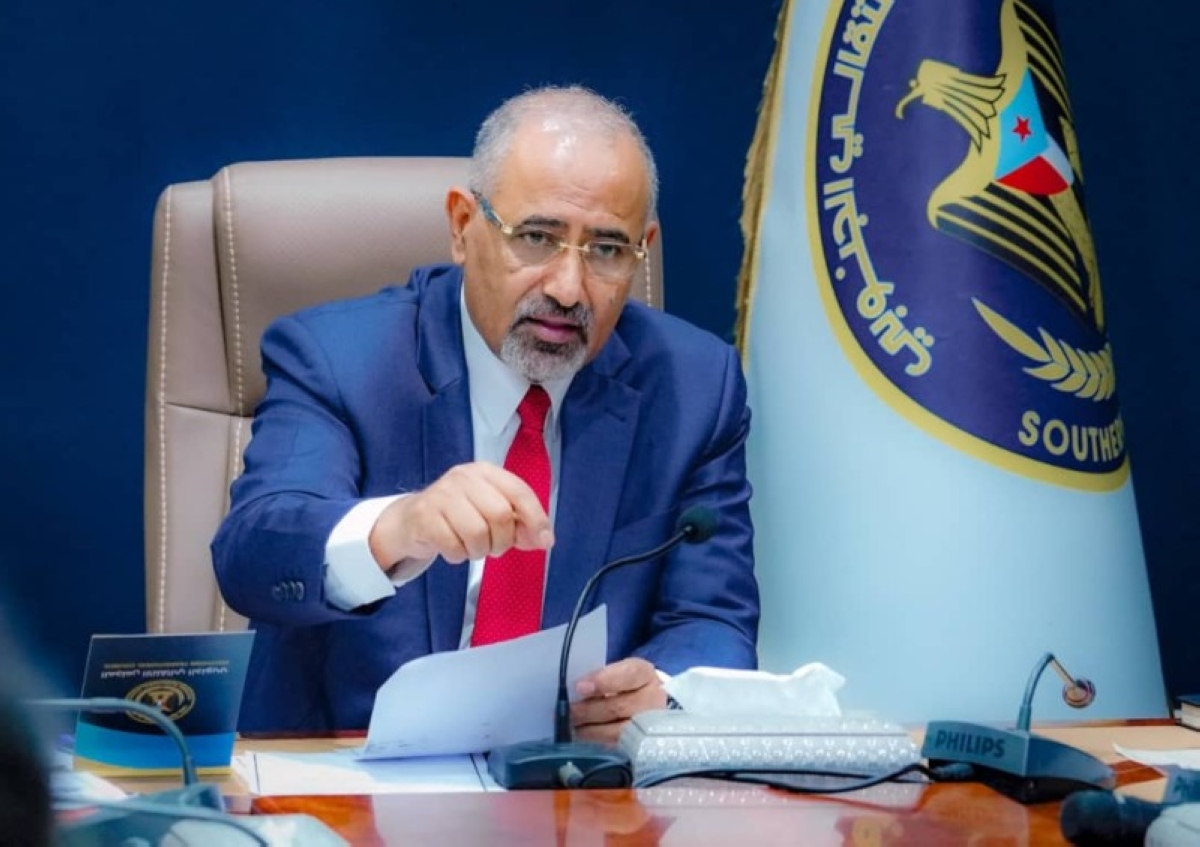

Aidarus Al-Zoubaidi, a prominent figure in Yemen’s Southern Transitional Council (STC), reportedly fled the country earlier this week following escalating tensions with the internationally recognized government. The Arab Coalition, leading military operations in Yemen, confirmed Al-Zoubaidi’s departure, detailing a complex route involving sea and air travel culminating in his arrival in Abu Dhabi. This development raises questions about the future of the STC and the ongoing efforts to achieve peace in Yemen.
According to a statement released by the Joint Forces Command on Thursday, Al-Zoubaidi left Aden late on January 7th, utilizing both maritime and aerial transport to reach the United Arab Emirates. The coalition tracked his movements, revealing a circuitous route designed to evade detection and maintain operational security. This incident occurs against a backdrop of fragile peace talks and persistent instability in the region.
The Escape of Aidarus Al-Zoubaidi: A Detailed Account
The Arab Coalition’s investigation indicates that Al-Zoubaidi initially departed Aden aboard the vessel BAMEDHAF, which sailed toward Somaliland. The ship reportedly deactivated its identification systems during a portion of the journey, suggesting an attempt to conceal its course. BAMEDHAF arrived in Berbera, Somalia, around noon on January 8th.
Following his arrival in Somalia, Al-Zoubaidi reportedly contacted Major General Awad Saeed bin Musleh Al-Hababi, a commander in the UAE Armed Forces. He informed Al-Hababi of his location and coordinated further transport. This contact highlights the continued close relationship between the STC and the UAE, despite the latter’s official withdrawal from direct combat operations in Yemen.
An Ilyushin Il-76 aircraft, flight number MZB-9102, then transported Al-Zoubaidi and his companions. The flight path involved a stop in Mogadishu, Somalia, with the aircraft also briefly disabling its tracking systems over the Gulf of Oman before landing at Al Reef military airport in Abu Dhabi on January 8th. The coalition noted this aircraft type is often used in the Libya-Ethiopia-Somalia region, areas known for ongoing conflicts.
Maritime Connections and Previous Allegations
The vessel BAMEDHAF is flagged in Saint Kitts and Nevis. The coalition drew attention to the fact that another ship, the GREENLAND, flying the same flag, was previously linked to the transportation of combat vehicles and weapons to the port of Mukalla. This connection, cited in a previous coalition statement from December 30, 2025, raises concerns about potential arms smuggling routes.
The coalition has stated it is continuing to monitor individuals who were reportedly in contact with Al-Zoubaidi prior to his departure from Aden, including former Aden governor Ahmed Hamid Lamlas and Security Belt Forces commander Mohsen Al-Wali. Communications with these individuals have reportedly ceased, leading to speculation about their potential involvement or knowledge of the escape plan.
Background on the Southern Transitional Council and Yemen’s Conflict
The Southern Transitional Council, led by Al-Zoubaidi, advocates for the independence of South Yemen. The STC has clashed repeatedly with forces loyal to the Yemeni government, creating a separate layer of conflict within the larger civil war. The group’s power base is primarily in Aden and other southern provinces, and it has received significant support from the UAE. The Yemen conflict, a complex struggle involving various factions and regional powers, began in earnest in 2014.
The Arab Coalition, primarily consisting of Saudi Arabia and the UAE, intervened in 2015 to restore the internationally recognized government of President Abdrabbuh Mansur Hadi after Houthi rebels seized control of the capital, Sanaa. While the UAE has officially reduced its direct military role, it continues to exert considerable influence in southern Yemen, supporting the STC. The recent events have further complicated the already fragile political landscape and can affect the stability in Aden.
Recent months have seen increased tensions between the STC and the Presidential Leadership Council (PLC), the body established to represent the Yemeni government. Disagreements over power-sharing and the implementation of peace agreements have fueled these tensions, leading to fears of further escalation of violence. This situation underscores the difficulties in forging a unified front against the Houthi rebels and achieving a lasting resolution to the conflict. The current political crisis in Yemen is further deepened by this event.
The coalition reaffirmed its commitment to supporting the Yemeni government and working with local authorities to maintain security and stability, as well as to counter any acts of violence targeting civilians. This statement signals a determination to prevent a further unraveling of the security situation in the wake of Al-Zoubaidi’s departure. The coalition’s actions will be closely watched by regional and international stakeholders.
Looking ahead, the coming weeks will likely see increased diplomatic efforts to address the fallout from Al-Zoubaidi’s escape. The UAE’s response, and whether it confirms or denies providing assistance, will be critical. The Yemeni government is expected to demand answers regarding the circumstances surrounding the incident and the UAE’s role. Further, the extent of potential fallout within the STC itself, and whether internal divisions widen, remains uncertain, but could significantly alter the dynamics of the conflict. The United Nations’ special envoy for Yemen will undoubtedly intensify negotiations to prevent further destabilization.